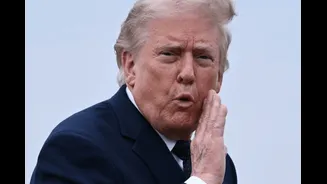






US President Donald Trump has privately told aides that he does not intend to resume a full-scale war with Iran unless Tehran kills American troops, according to a report by The Wall Street Journal (WSJ),
signalling his reluctance to reignite the Middle East conflict despite mounting tensions and repeated ceasefire violations.
The report comes as fresh hostilities between the United States and Iran have tested a fragile ceasefire that took effect in April, with missile and drone attacks targeting regional US assets and key infrastructure in the Gulf.
According to the report, Trump has conveyed to senior aides that he would consider ending the ceasefire only if Iran directly causes American military casualties.
The stance suggests that the President may be willing to tolerate limited flare-ups and sporadic attacks for an extended period rather than risk another all-out regional war.
The latest tensions follow some of the most intense fighting since the ceasefire was implemented.
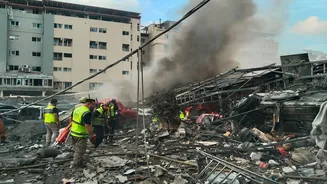
Iran reportedly launched missiles and drones at regional US bases and Kuwait International Airport, where one person was killed.
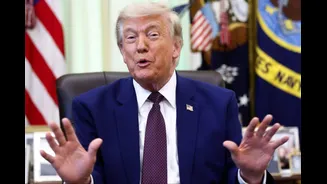
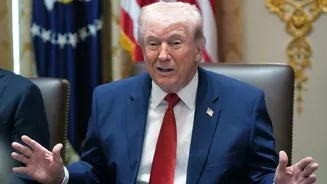
Despite the renewed violence, Trump struck an optimistic tone when speaking to reporters at the White House on Wednesday.
“In that part of the world, ceasefire is when you’re shooting in a more moderate manner,” Trump said.
The President added that the situation remained under control and suggested that diplomacy was still making progress.
“It takes two to tango. We hit them very hard on something else, and so they were responding,” he said.
AFP reported that Trump also expressed confidence that an agreement could be reached soon, telling reporters, “It could happen over the weekend,” while adding, “I hear the negotiation itself is going very well, actually.”
DIPLOMATIC DILEMMA FOR TRUMP
According to the WSJ report, repeated Iranian attacks have increased pressure on Trump and raised concerns within the administration about the long-term viability of the ceasefire.
The report said Trump continues to insist publicly that a comprehensive agreement is within reach, one that would reopen the Strait of Hormuz, dismantle Iran’s nuclear programme and eliminate its stockpile of enriched uranium.
At the same time, he has indicated he is not rushing toward a final settlement.
In an interview cited by WSJ, Trump said it was unlikely, though still possible, that the US blockade of Iran could continue until Labour Day.
The administration has reportedly been working on a memorandum of understanding with Tehran that would establish a framework for negotiations over roughly 60 days.
However, it was reported that Trump rejected Iran’s latest proposal last week, telling aides that Tehran must make substantial concessions upfront before receiving any economic benefits.
Iran, meanwhile, has maintained that negotiations over its nuclear programme can only proceed if the US first unfreezes Iranian assets or provides financial relief.
IRAN WARNS OF ESCALATION
Iranian Foreign Minister Abbas Araghchi said communications with Washington remain open but acknowledged that “no tangible progress” had been achieved in negotiations, AFP reported.
“Communications with the Americans have not been cut off, and messages have been exchanged regarding the need to stop aggression against Beirut, but no tangible progress has been made in the negotiation process,” Araghchi was quoted as saying.
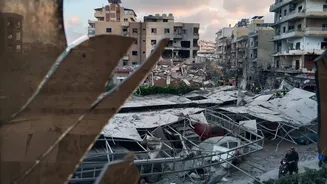
He also warned that any Israeli attack on Beirut would trigger a “full-scale resumption” of the conflict.
“Our armed forces are ready to strike Israel if it attacks Beirut,” he said, according to AFP.