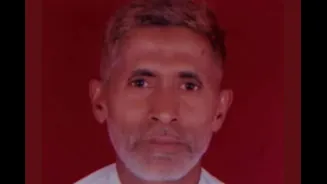










A fast-track court in Uttar Pradesh’s Gautam Budh Nagar on Tuesday rejected the state’s application to withdraw all charges case against the accused in the 2015 Dadri lynching case. Earlier in the day,
the wife of the victim, Mohammad Akhlaq, moved the Allahabad High Court (HC) against the UP government’s proposal.
Akhlaq was lynched by a mob in the Dadri area of Gautam Budh Nagar in 2015 over the allegations that he had eaten beef during Eid and had stored it for later consumption as well.
The police had initially lodged the First Information Report (FIR) under various sections of the Indian Penal Code (IPC), including the charge of murder. A total of 18 accused were arrested in connection with the lynching, including three minors. One of the accused died in 2016, while the remaining 14 are currently out on bail.
Additional District Judge Saurabh Dwivedi on Tuesday dismissed the Public Prosecutor’s plea under Section 321 of the Criminal Procedure Code (CrPC). The court also directed the day-to-day hearing of the case and also passed order to ensure the protection of the evidence related to the case, LiveLaw reported.
The state government’s proposal
The state government had sought the court’s permission to withdraw the case against all the accused. Yusuf Saifi, the counsel for Akhlaq’s family, had earlier said the court has asked both sides to present their views on December 23.
The lawyer said the prosecution had moved the application to withdraw the case pending before the court. Acting on directions from the state government and the joint director of prosecution, the application was filed by the assistant district government advocate (criminal).
According to officials, the application stated that the withdrawal was sought in the interest of maintaining social harmony.
What UP government said in its proposal
In its application to withdraw the case against the men accused of lynching Akhlaq, the Uttar Pradesh government has made the same argument that it had made while opposing their bail, the Indian Express reported.
While granting bail to the accused Punit and Arun in April 2017, the Allahabad High Court had put on record the key argument of the defence: that there were inconsistencies and contradictions in the statements of the main prosecution witnesses on which the prosecution had built its case, the report said.
The counsel for the defence had relied on the statements of Akhlaq’s wife Ikraman, which were recorded on September 29, 2015 and October 13, 2015. “…In the said statement also she did not disclose the name of applicant as assailant,” the court noted in its order, referring to the argument put forward by the lawyer for Punit and Arun.
The state had filed a plea under section 321 of the CrPC which provides that the Public Prosecutor or Assistant Public Prosecutor may file an application for withdrawal from prosecution with the consent of the court. Under section 321, the court has the power to determine whether the withdrawal from prosecution, as sought by the prosecutor, is appropriate and whether it would result in a miscarriage of justice.
What Akhlaq’s wife said in her plea in HC
Akhlaq’s wife has challenged the Government Order of August 26, 2025, Administrative Order of September 10, issued by the Additional District Magistrate (Administration), Gautam Budh Nagar, addressed to the Joint Director of Prosecution, Prosecution Order of September 12, issued by the Joint Director of Prosecution, District Government Advocate Order of September 16, passing on the directive, Withdrawal Application of October 15, made through an application by the Assistant District Government Advocate (Criminal), LiveLaw reported.
The plea, moved through Advocate Omar Zamin, sought a direction to the Government of Uttar Pradesh to ensure that any discretionary exercise of executive power shall be carried out in line with the strict mandate of the Constitution of India, LiveLaw reported.
CPI(M) leader had written to President Murmu
Senior CPI(M) leader Brinda Karat last week wrote to President Droupadi Murmu, demanding her intervention in the Uttar Pradesh government’s move to withdraw charges against the accused in the 2015 mob lynching of Mohammad Akhlaq.
In a letter to the President, Karat called it a “politically motivated” step by the government, and also questioned the role of the governor. “I write to draw your urgent attention to the role of the Uttar Pradesh governor in the matter of the mob lynching case of Md Akhlaq, which occurred in September 2015. The governor has given written permission to the UP government to go ahead in its wholly illegal and unjust attempt to subvert the processes of justice and to withdraw the entire case even though the main witness has already given evidence,” Karat said.
She said the government has filed an affidavit in the Greater Noida district court to withdraw the case, with the governor’s permission.
“I regret that I am forced to write to you on this matter, but since the governor has been appointed by you and is answerable to you, I felt it in the interests of justice to inform you of the facts and to request your urgent intervention,” she said. “…the UP government has taken a decision to withdraw the case on utterly indefensible grounds, such as lathis were used, not guns, there was no personal animosity with the victim, continuing the case will lead to communal disharmony and so on,” the letter read.
Karat expressed hope that the President would intervene and direct the governor to withdraw the permission given.