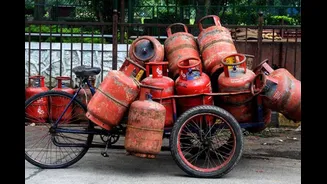





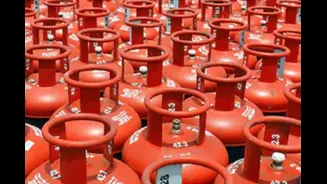
The ripple effects of the escalating US-Israel-Iran tensions are now being felt far beyond the battlefield, with disruptions in LPG supplies beginning to affect daily life in India. In Karnataka, the shortage
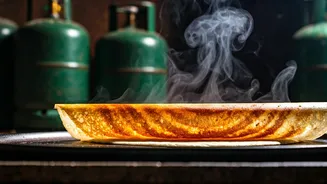
of LPG cylinders has intensified in recent days, forcing several hotels in Bengaluru to shut operations. The crisis has now reached temple kitchens as well, leading to the suspension of free Anna Prasada distribution at some major temples.
The well-known Banashankari Temple in Bengaluru temporarily halted the distribution of free Anna Prasada from Wednesday, March 11, citing the acute shortage of commercial LPG cylinders. Temple authorities said the decision was unavoidable as cooking prasada for devotees has become increasingly difficult due to the limited availability of gas cylinders.
According to temple officials, the Banashankari Temple serves prasada to nearly 3,000-4,000 devotees every day. Devotees are usually offered dishes such as pongal, puliyogare and rice baths in the morning, while Anna Sambar Prasada is served in the afternoon. However, with gas supplies dwindling, the temple management said it is no longer possible to maintain the daily preparation of food.
Banashankari Temple Executive Officer Krishnappa said that one to two commercial LPG cylinders are required each day to prepare prasada for devotees. “At present we have only four cylinders remaining. If the supply situation does not improve, the distribution of prasada will have to be stopped completely from Friday,” he said.
The LPG shortage is also affecting other prominent temples. At the Bandimahakali Temple, the administration has reported similar difficulties in preparing prasada due to the lack of cylinders. Officials said devotees have been bringing cylinders from their homes to help with cooking. There are also allegations that cylinders are being sold in the black market for as much as Rs 3,000-Rs 4,000 each.
Meanwhile, the situation at Chamundi Hills remains stable for now. Officials from the Chamundeshwari Development Authority said the temple currently has sufficient gas supply to continue the dasoha (free meal service) for devotees. Secretary Roop stated that the existing stock is expected to last for about two weeks. “If a shortage arises later, we are prepared to switch to traditional wood stoves to continue the prasada system without interruption,” he said.
Similarly, authorities at Male Mahadeshwar Hills said there is no immediate concern despite disruptions in cooking gas supply across the state. E Raghu, Secretary of the Male Mahadeshwara Area Development Authority, told News18 that the temple currently has enough cylinders to sustain operations for the next 10-12 days.
On average, about 15 gas cylinders are required daily at the shrine to prepare dasoha meals and laddus for devotees. Officials said the existing stock is sufficient for the coming days, though the situation will continue to be monitored closely if the supply crisis worsens.
Rameswaram’s Ramanathaswamy Temple Assures Continuation of Free Meals
In Rameswaram, where a shortage of LPG cylinders is also beginning to affect the city, the administration of the Ramanathaswamy Temple has assured devotees that the free meal programme will continue without interruption for now.
Temple authorities said they currently have sufficient LPG cylinders in stock to sustain cooking operations for the next 10 days. The free meal scheme, run by the Hindu Religious and Charitable Endowments Department, provides food to around 2,000-3,000 devotees every day at the temple. Preparing the meals typically requires three commercial gas cylinders daily.
Officials noted that the ongoing geopolitical tensions in West Asia have disrupted global crude oil supplies. Over the past week, the United States and Israel have reportedly carried out attacks on Iran, while Iran has targeted locations linked to the US and its allies, including Israel and several Gulf countries such as Dubai, Qatar, Bahrain, Jordan and Iraq. The escalation has pushed international crude oil prices to around $110-$120 per barrel, indirectly affecting fuel and LPG supply chains in countries such as India.
The impact is already being felt in Rameswaram, where restaurants and small eateries are relying on whatever cylinders remain in stock. Local traders fear that tea stalls and hotels may be forced to shut down if supplies do not improve in the coming days.
However, temple authorities said contingency plans are in place to ensure devotees are not affected. After the existing LPG stock runs out, the temple kitchen can switch to bio-gas units for cooking. Two bio-gas units can be used daily, which would allow the meal programme to continue for another 10 days.
Officials emphasised that even if commercial establishments in the town are forced to close due to the shortage, devotees visiting the temple will continue to receive meals under the free prasada scheme.