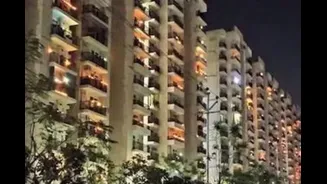

Buying a 3BHK in metropolitan cities is increasingly slipping out of reach for most households, as rising demand and surging prices widen the affordability gap.
The shift in how citizens view their homes
after the Covid-19 pandemic has played a key role in this change. Homes are no longer just living spaces; they now double up as offices, classrooms, leisure zones for elders and centres of family life. With work-from-home becoming more common and household needs evolving, demand for larger homes, particularly 3BHK apartments, has risen sharply across urban areas.
However, this surge in demand has been matched by a steep escalation in prices. A new report by proptech firm Square Yards, titled From Aspiration to Reality: The Cost of Owning a 3BHK in India, underlines how challenging it has become for average families to own such homes.
According to the report, the average price of a newly launched 3BHK apartment across five major cities has climbed to around Rs 2.7 crore. At this level, a household earning roughly Rs 23 lakh annually would need nearly 12 years of its entire income to purchase such a home, without accounting for everyday expenses, education costs, healthcare, taxes and other financial obligations.
The report points out that even this income level places buyers among the country’s top earners. Only about one percent of Indians fall into the bracket with an estimated annual income of around Rs 22 lakh. Yet, even for this segment, buying a 3BHK home is no longer a straightforward decision, indicating how premium housing in large cities is steadily moving beyond the reach of most buyers.
Rising land prices, higher construction costs and a strong developer focus on premium and luxury projects have collectively pushed home prices upward. The study notes that only 11% of new housing supply currently falls under the affordable category, while the remaining 89% is concentrated in markets that require high EMIs, putting significant pressure on household incomes.
Around 41% of supply lies in zones where financial stress levels are considered very high, making purchases particularly risky for end-users.
That said, the report highlights sharp differences across cities and micro-markets. Bengaluru emerges as the most balanced market, where growth in incomes has broadly kept pace with rising property prices. In contrast, cities such as Mumbai and Delhi-NCR show wide price variations even within the same city, making location choice critical.
In Hyderabad, rapid urban expansion has driven prices up much faster than income growth, while in Pune, soaring prices in central areas have pushed most buyers towards peripheral locations.
The study suggests that careful selection of location can help buyers save between Rs 30 lakh-Rs 60 lakh. Central and premium neighbourhoods, it notes, are increasingly dominated by affluent investors who view real estate as a capital preservation or investment asset, while emerging and outer zones offer relatively better opportunities for genuine homebuyers.
For the analysis, Square Yards examined over 10,500 RERA-registered 3BHK units launched between 2024 and 2025 across 44 micro-markets in Bengaluru, Hyderabad, Mumbai, Pune, and the NCR, including Noida, Gurugram and Greater Noida. The report segments markets using the price-to-income ratio, which measures how many years of household income are required to buy a home, categorising them into income-matched, high-pressure, capital-based and ultra-luxury zones.
Data shows that nearly 48% of last year’s 3BHK supply was launched in markets where affordability stress is severe for regular buyers. Developer profit margins in such areas range between 45-50%, compared with 15-18% in affordable segments.
Commenting on the findings, Square Yards founder and CEO Tanuj Shori said the post-pandemic tilt towards larger, feature-rich homes and the rapid expansion of the premium segment have significantly strained affordability. He added that the rise in high-net-worth individuals in a strong economic environment has further fuelled price growth. Going ahead, he said, buyers will need to carefully evaluate budgets, locations, future requirements and loan capacities to safely achieve homeownership.