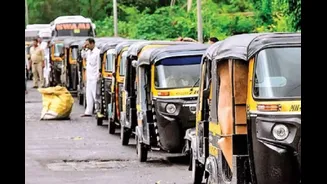







Mumbai’s auto and taxi drivers may soon need to pass a Marathi test to keep their permits — or risk losing them. Maharashtra has launched a verification drive in Mira Bhayandar, with plans to roll it out
statewide.
Here’s what the new rule means, who it affects, and why it’s controversial.
What Has Maharashtra Government Done?
A large-scale verification drive for auto rickshaw and taxi drivers has begun in Maharashtra’s Mira Bhayandar, where authorities are examining permits and domicile certificates while also introducing a compulsory Marathi language test.
Drivers must demonstrate they can read, write, and speak the language. The initiative, launched as a pilot project, aims to curb irregularities in the issuance of transport licences and will gradually expand across the state.
What’s The Process? What Happens If You Fail?
At RTO offices, drivers are being asked to write short passages in Marathi as part of the test. Those who fail may face suspension of their licences and permits.
More than 12,000 registered auto and taxi drivers in Mira Road and Bhayandar are currently undergoing this phased review.
The verification campaign will continue until May 1 — Maharashtra Day — after which the RTO will submit its report.
Which Rule Makes This Mandatory?
The authority comes from Rule 24 of the Maharashtra Motor Vehicles Rules, 1989, which was amended in November 2019 to make compliance stricter.
Earlier, drivers could submit a certificate from a Marathi language expert, but that shortcut is no longer valid.
Why Is Government Doing This?
Two reasons — language and paperwork. The action was taken following a complaint by BJP MLA Narendra Mehta, who pointed out significant inconsistencies in the issuance of permits, badges, and licences.
According to Mehta, newly arrived migrants were allegedly being granted permits too quickly, without proper checks.
There have also been previous complaints about disputes between passengers and drivers due to communication barriers, especially when drivers are not fluent in the local language.
What If A Driver Doesn’t Know Marathi?
Simply put, they risk losing their permit. Drivers who don’t currently meet the language requirement would need to learn Marathi before appearing for the test. No grace period or coaching programme has been announced by the government yet.
Are There Protests?
Yes. The move has drawn criticism from auto and taxi unions, many of whose members come from northern states.
Autorickshaw Driver Association president Shashank Rao opposed the move. Lokmat Times quoted him as saying that only basic Marathi is necessary for communication with passengers.
Union leader Thampi Kurien pointed out that existing rules already require knowledge of the local language and that RTO officials typically assess this through interactive questioning.
Has This Been Challenged Before?
Yes, and it was struck down. A similar directive was issued by the state transport commissioner in 2016, met with opposition from auto rickshaw unions across the Mumbai Metropolitan Region, and was eventually revoked by the Bombay High Court, which termed it “illegal”.
Whether the current drive — backed by a 2019 rule amendment — survives legal scrutiny remains to be seen.
Do Other States Have Similar Rules?
Language mandates for transport workers are not unique to Maharashtra. Tamil Nadu and Karnataka have historically required drivers to have working knowledge of the local language as part of their permit conditions, though enforcement has been inconsistent.
Maharashtra’s move is among the more formalised and test-based approaches seen in recent years, and its statewide rollout — if it proceeds after May 1 — could set a precedent.