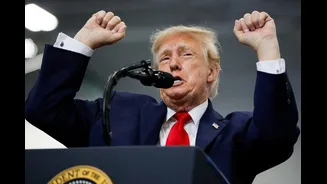







US President Donald Trump has expressed uncertainty over whether Vice President JD Vance will enter the 2028 presidential race, even as speculation grows over the latter’s political ambitions following
the Republican Party’s crushing defeat in the 2026 midterm elections.
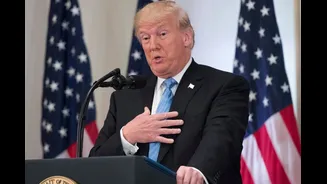
Speaking to reporters at the White House on Wednesday, Trump said he had discussed several matters with Vance but was not certain about his plans for the next presidential election. His remarks came just hours after Vance publicly blamed the administration’s war with Iran for the Republicans’ electoral losses, in what appeared to be an attempt to distance himself from one of Trump’s most controversial foreign policy decisions.
“I speak to him about a lot of things, but I mean, we’ll see what happens. … You don’t know who’s talking about running,” Trump told reporters.
“You can have people running. You can have a lot of people. Maybe or a lot of people are running. Maybe nobody’s going to run. Maybe he won’t run. I don’t know who’s going to run.”
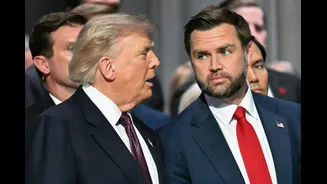
The comments come at a time when Vance has long been viewed as a potential frontrunner to succeed Trump and has previously indicated that he would decide on a 2028 presidential bid after the midterm elections.
Vance Blames Iran War For Republican Defeat
Vance’s comments on the election have added another twist to the emerging 2028 Republican succession debate. In a lengthy post on X on Wednesday, the vice president directly attributed the party’s defeat to the ongoing US-Israel war against Iran, which began in February.
“The real reason we lost is obvious to almost everyone,” Vance wrote. “The reason we lost is the war. The president himself said so last night.”
He also questioned whether the military campaign had been worth the political cost, pointing out that Republicans had lost control of the Senate. “If you’d like to argue it was worth it, that losing the Senate for the next 6 years was worth it, then do so. Argue it was a worthwhile cost to pay. Agree or disagree, that’s at least honest,” he added.
Vance identified four reasons behind the shift in voter sentiment: opposition to the Iran war, concerns over the cost of living and inflation, demands to put America first, and dissatisfaction with Washington’s relationship with Israel.
Trump Admits Iran War Affected Election But Refuses To Back Down
Trump, meanwhile, acknowledged that the conflict had contributed to the Republican defeat but defended his decision to launch the military campaign.
Asked about Vance’s assessment, Trump said he largely agreed that the war had hurt the party because it pushed up petrol prices in the short term. However, he insisted that he would make the same decision again to prevent Iran from acquiring nuclear weapons.
“I can tell you that as far as that war is concerned, I would have done nothing different,” Trump said, adding that the US had significantly weakened Iran’s military capabilities.
The political fallout comes after Democrats secured control of both the House of Representatives and the Senate, with projections pointing to at least 234 House seats and 54 Senate seats for the party. The scale of the losses also exposed vulnerabilities in Republican strongholds that had backed Trump in 2024.
Vance’s public criticism of the war, coupled with Trump’s uncertainty over his 2028 plans, raises questions about whether the vice president will retain his position as the natural successor to the president. With other Republican figures, including Senator Ted Cruz, potentially considering presidential bids, the race to shape the party’s post-Trump future could begin much earlier than expected.