



How India Celebrates Independence Day Across Different States: India’s Independence Day on August 15 is a national occasion, but the way it comes alive across the country reflects India’s extraordinary
cultural diversity. From state capitals and historic landmarks to schools, villages and neighbourhoods, the Tricolour is unfurled and the national anthem is sung as people commemorate India’s freedom.
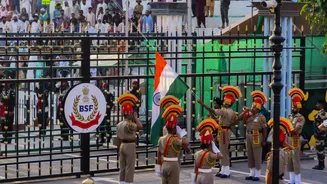
The basic ceremony remains familiar across the country: flag hoisting, the national anthem, speeches, parades, tributes to freedom fighters and cultural programmes. The President’s Secretariat has previously described August 15 as a day when the Tricolour is unfurled at workplaces, municipalities, panchayats, colleges, schools, homes and neighbourhoods.
Read More: Is Independence Day 2026 India’s 79th Or 80th? History And Facts Explained
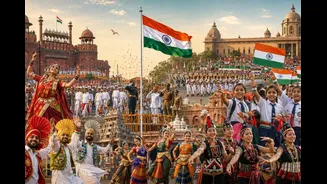
But beyond these shared elements, celebrations often carry a distinctly regional character. Local languages, folk traditions, music, dance forms, historical figures and community participation find their way into Independence Day programmes.
In 2026, August 15 falls on a Saturday, and India will mark its 80th Independence Day celebration.
Delhi: The National Ceremony at the Red Fort
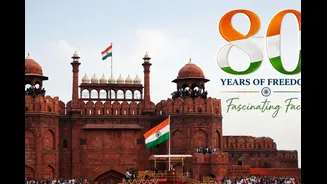
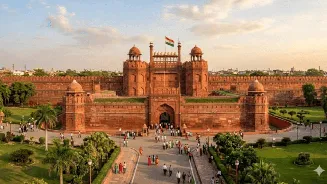
The country’s most prominent Independence Day ceremony takes place at the Red Fort in New Delhi.
The Prime Minister traditionally unfurls the national flag from the historic Red Fort and addresses the nation. The ceremony also features a guard of honour and other formal proceedings.
Read More: Independence Day 2026: How To Upload Har Ghar Tiranga Selfie And Get Certificate
While Delhi hosts the national ceremony, Independence Day celebrations take place throughout the city in government institutions, schools, colleges, residential communities and public spaces.
The Red Fort ceremony is therefore the national centrepiece, while thousands of smaller celebrations give August 15 its everyday, community-level character.
Maharashtra: From Flag Hoisting to Patriotic Performances
In Maharashtra, Independence Day celebrations combine formal ceremonies with cultural and public programmes.
Recent celebrations in Mumbai have included flag hoisting, the national anthem and patriotic cultural performances.
Read More: 10 Best Independence Day Decoration Ideas For Schools And Offices
Mumbai has also hosted public musical events around iconic landmarks. In 2025, the Indian Army and Indian Navy bands performed jointly at the Gateway of India, playing patriotic and martial compositions before hundreds of citizens.
Across Maharashtra, schools and institutions also organise patriotic songs, speeches, competitions and cultural performances.
West Bengal: Music, Dance and Regional Cultural Expression
In West Bengal, Independence Day programmes often combine patriotic themes with the state’s strong traditions of music, literature and performing arts.
Recent school celebrations in Kolkata and surrounding areas have featured music, poetry, dance, marches and patriotic songs. One 2025 school programme in Madhyamgram included performances of Vande Mataram as well as the Bengali song Dhan Dhanya Pushpe Bhara.
Read More: Independence Day Drawing Ideas: 10 Creative Tricolour Art Designs For Students
Independence Day also has a particular historical resonance in Bengal because of the region’s important role in India’s freedom movement and the events surrounding Partition.
In Kolkata, therefore, August 15 can become both a patriotic occasion and a platform for students and communities to express regional cultural identity.
Karnataka: Parades, Cultural Programmes and State Themes
In Karnataka, the state-level celebrations in Bengaluru typically feature a formal flag-hoisting ceremony, parade contingents, police and other uniformed formations, cultural performances and public participation.
At the 2025 state celebration at Field Marshal Sam Manekshaw Parade Ground, the Karnataka government used the theme of “Financial Freedom” to showcase its flagship welfare initiatives.
Read More: 10 Lines On Independence Day For Students: Simple Speech Ideas In English
The programme also included a cultural performance by National Service Scheme volunteers, a police band performance and a tribute to women freedom fighters from Karnataka.
This illustrates how state-level Independence Day programmes can combine the commemoration of the freedom struggle with themes linked to contemporary Karnataka.
Kerala: Patriotism Meets Cultural Programmes
In Kerala, Independence Day is marked by ceremonies across government offices, schools, colleges and other institutions.
A 2025 celebration at Kerala University of Digital Sciences, Innovation and Technology included flag hoisting, the national anthem, a flag parade, patriotic songs and dance performances. The programme also included speeches on unity, integrity and the role of young people in nation-building.
Read More: Independence Day 2026 Speech Ideas: Short Speeches, Topics And Tips For Students
Schools and community institutions across the state similarly use Independence Day as an opportunity for students to participate in cultural programmes, patriotic performances, quizzes and competitions.
Assam: Cultural Programmes on August 15
Assam brings its own cultural character to Independence Day celebrations.
The Assam Department of Cultural Affairs lists a cultural programme connected with Independence Day on August 15 as part of its annual calendar.
In addition to official flag-hoisting ceremonies, schools and institutions across Assam mark the occasion with patriotic songs, speeches, cultural performances and programmes highlighting the state’s contribution to India’s national story.
The date also offers an opportunity to remember freedom fighters and historical figures associated with Assam and the wider Northeast.
Odisha: Ceremonies, Parades and Cultural Performances
In Odisha, Independence Day celebrations are held at government institutions, schools, colleges and public venues.
Flag hoisting, national anthem performances, speeches and parades form the common framework, while cultural programmes bring regional artistic traditions into the celebrations.
Government records from Bhubaneswar show Independence Day programmes involving flag hoisting, parades by security personnel and patriotic songs and cultural presentations.
For students in particular, August 15 often becomes a day of performances, essay and painting competitions, patriotic songs and activities centred on India’s freedom struggle.
Punjab: Remembering the Freedom Fighters
Punjab’s Independence Day celebrations have a particularly strong connection with the memory of the freedom movement.
The state has produced and been closely associated with several prominent freedom fighters, including Bhagat Singh, Sukhdev, Rajguru, Udham Singh and Kartar Singh Sarabha.
At the 2025 Independence Day programme in Ropar, the state-level celebration included a parade with Punjab Police, Home Guards, schools and bands. Students also performed cultural programmes, including choreography, dance and gidda.
The combination of patriotic remembrance, military-style parades and Punjabi cultural performances gives celebrations in the state a distinctive character.
Tamil Nadu: Remembering Regional Freedom Fighters
Tamil Nadu’s Independence Day programmes include the standard national ceremony of flag hoisting, the national anthem and tributes to freedom fighters, along with cultural performances.
The state also has a rich history of resistance to British rule, with figures such as Velu Nachiyar, Veerapandiya Kattabomman, the Maruthu brothers and Dheeran Chinnamalai forming part of the region’s wider freedom narrative.
A 2024 Independence Day programme in Chennai, for example, combined flag hoisting with patriotic songs and a Veena performance. The programme also highlighted the contributions of freedom fighters from Tamil Nadu.
This makes August 15 an occasion not only to remember India’s national movement but also to recall the contributions of freedom fighters from the region.
Gujarat: Patriotism and Public Participation
Gujarat marks Independence Day through official ceremonies, school and institutional programmes, cultural performances and public participation.
The state’s association with Mahatma Gandhi, who was born in Porbandar, also provides an important historical context for discussions around India’s freedom movement.
Across Gujarat, schools and institutions commonly mark the day with flag hoisting, patriotic songs, speeches, competitions and performances.
As elsewhere in India, Independence Day celebrations can also provide an opportunity to connect the history of the freedom movement with contemporary themes of citizenship and nation-building.
Rajasthan: Ceremonial Celebrations and Local Culture
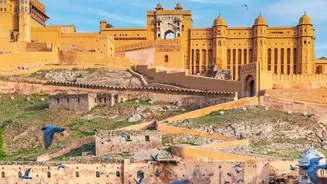
Rajasthan’s Independence Day celebrations combine formal ceremonies with the state’s vibrant cultural traditions.
Government and institutional events generally feature flag hoisting, the national anthem, speeches, parades and cultural performances.
The state’s folk music, dance and traditional arts can also become part of cultural programmes, bringing a distinctly Rajasthani flavour to an occasion observed throughout the country.
Goa: Coastal Celebrations and Community Participation
Goa celebrates Independence Day through flag-hoisting ceremonies, cultural programmes, educational activities and public events.
In 2024, the Indian Coast Guard’s Goa units organised a Tiranga Walkathon, school awareness sessions, student competitions, a bike rally and distribution of national flags to students and fishermen. Flags were also hoisted at Vengurla Rock and off the Goa coast.
Such programmes show how Independence Day celebrations can extend beyond formal ceremonies to include community activities and public participation.
Across the Northeast: Culture and Patriotism
The Northeast adds another important dimension to India’s Independence Day celebrations.
States such as Assam, Meghalaya, Manipur, Mizoram, Nagaland, Tripura and Arunachal Pradesh organise flag-hoisting ceremonies, parades and cultural programmes while highlighting their own artistic traditions and historical contributions.
Government cultural calendars and national events regularly showcase the region’s folk and cultural traditions alongside the broader national narrative. For example, the Government of Assam’s cultural calendar specifically lists an Independence Day cultural programme on August 15.
The region’s participation is a reminder that India’s freedom story and national identity encompass a vast range of languages, communities and cultural traditions.
What Remains Common Across India?
Despite the regional differences, the basic spirit of Independence Day remains remarkably consistent.
Across states, people commonly:
- Hoist the national flag
- Sing the national anthem
- Remember freedom fighters
- Organise parades and ceremonial events
- Conduct patriotic cultural programmes
- Hold school competitions and performances
- Organise community gatherings
- Participate in cleanliness or civic activities
- Watch the Prime Minister’s Independence Day address
- Display the Tricolour at homes and institutions
The Har Ghar Tiranga campaign has also encouraged citizens to display the national flag at their homes and participate in public expressions of national pride.
One Independence Day, Many Regional Expressions
The beauty of India’s Independence Day celebrations lies in this combination of shared national symbols and regional expression.
A flag-hoisting ceremony in Delhi, a patriotic concert in Mumbai, a cultural programme in Assam, a student performance in Kerala, a parade in Punjab or a dance presentation in another state may look different on the surface. Yet each is connected to the same national occasion.
Independence Day therefore becomes an annual reminder of India’s unity in diversity: one date, one national flag and one shared history, celebrated through countless local traditions, languages, performances and community experiences.
Independence Day 2026 Celebrations FAQs
When is Independence Day celebrated in India?
India celebrates Independence Day every year on August 15. India became independent from British rule on August 15, 1947.
How is Independence Day celebrated across India?
Celebrations commonly include flag hoisting, the national anthem, parades, speeches, tributes to freedom fighters, cultural programmes and school or community activities.
Do different states have different Independence Day traditions?
The core ceremony is broadly similar across India, but cultural programmes and community activities can reflect local languages, music, dance, history and traditions.
Which is the main Independence Day celebration in India?
The national Independence Day ceremony is held at the Red Fort in New Delhi, where the Prime Minister traditionally unfurls the national flag and addresses the nation.
What is the role of schools in Independence Day celebrations?
Schools commonly organise flag-hoisting ceremonies, patriotic songs, speeches, marches, dances, plays, quizzes, essay competitions and other cultural activities. Recent celebrations across states demonstrate the strong role of students in such programmes.
How does India celebrate Independence Day at home?
Families may display the Tricolour in accordance with the Flag Code, watch the national ceremony, listen to patriotic music, participate in community events and discuss the history of India’s freedom movement.
What makes Independence Day celebrations in India unique?
The occasion combines a shared national ceremony with India’s enormous regional diversity. Different states and communities bring their own languages, art forms, music, dance and historical memories into the celebrations.