





As West Bengal’s high-energy election season nears its final phase, with long queues, strong voter turnout, and an almost festive atmosphere, an unexpected food trend has taken over social media. At the
centre of it is a humble, age-old dish: panta bhat.
The buzz began after Chief Minister Mamata Banerjee made a simple appeal to voters.
Encouraging people to prioritise voting, she suggested they skip cooking on polling day if needed and prepare panta bhat in advance. Her message was practical—ensuring voters don’t miss their chance to cast a ballot due to household chores.
But the internet quickly ran with it. Within hours, clips of her remark went viral, sparking memes, recipe recreations, and a wave of nostalgia-driven posts celebrating this everyday Bengali staple.
A Dish Rooted In Simplicity And Survival
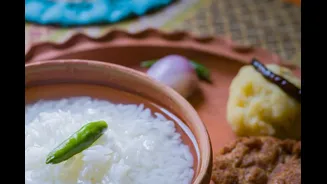
At its core, panta bhat is nothing more than leftover rice soaked in water overnight and eaten the next day. It is typically served with salt, green chillies, onions, a drizzle of mustard oil, and sometimes fried sides.
While it may sound basic, the dish carries centuries of history. References to soaked rice meals date back to the 17th century, highlighting its deep connection to the Bengal region, spanning present-day India and Bangladesh.
In the humid delta climate, soaking cooked rice in water was more than just convenient—it was a necessity. Before refrigeration, this method helped prevent food spoilage while allowing natural fermentation to occur. The result? A dish that not only lasted longer but also became more nutritious.
Why Panta Bhat Works So Well in Summer
The overnight fermentation process introduces beneficial bacteria, making panta bhat gut-friendly. It is also naturally cooling and hydrating—qualities that are especially valuable during India’s scorching summers.
For generations, it has been a staple in agrarian households, serving multiple purposes:
- Reducing food waste
- Providing quick, no-cook meals for early mornings
- Helping the body stay cool in extreme heat
- What began as a survival hack has now evolved into a symbol of cultural identity and everyday comfort.
How To Make Panta Bhat
Ingredients:
- Cooked rice (preferably leftover and cooled)
- Water (room temperature)
- Salt
- Green chillies
- Onion slices
- Mustard oil
Method:
- Place leftover cooked rice in a bowl or earthen pot.
- Add enough water to fully submerge the rice.
- Cover and leave it overnight (6–12 hours) at room temperature.
- The next morning, adjust the water level as per preference.
- Add salt, onions, green chillies, and a few drops of mustard oil.
- Serve cold or at room temperature with fried fish, potato fry or mash, pickles, or lentil fritters.
While panta bhat is simple and nutritious, it should not be left out for too long in extreme heat, as it may increase the risk of contamination. Those with sensitive stomachs should consume it in moderation.
Though closely associated with Bengal, variations of soaked or fermented rice exist across eastern India.
In Odisha, pakhala bhata is a well-known counterpart, often served with fried vegetables, mashed potatoes, and lentil dumplings. It is even celebrated annually during Pakhala Dibasa on March 20.
In Assam, leftover rice is commonly soaked and eaten with simple accompaniments like salt or curd. Similar practices can also be found in rural parts of Jharkhand and Bihar, where convenience and heat relief remain key reasons for their popularity.