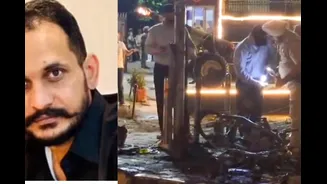








There is a renewed attempt by Pakistan’s Inter-Services Intelligence (ISI) to revive low-intensity terror activity in Punjab, with recent attacks on Border Security Force (BSF) establishments being seen
as part of a larger, coordinated strategy. The timing, top intelligence sources say, is significant – coming just ahead of the anniversary of Operation Sindoor, which had dealt a setback to cross-border networks last year.
According to these sources, the recent attack on a BSF sector office is being viewed as an act of “desperation,”.Sources sat ISI is using gangsters and carrying out low intensity attacks at border guarding sector installations as they have not come out of the blow dealt by Operation Sindoor during which Noor Khan base was attacked. The attack had disrupted key operational channels linked to Pakistan-backed networks. Intelligence sources suggest that agencies had prior indications of attempts to target security institutions, pointing to a sustained effort to demoralise Indian forces and create a perception of vulnerability in border areas.
At the centre of this emerging pattern is Shehzad Bhatti, a Pakistan-based gangster described by intelligence officials as an ISI proxy. Bhatti has been repeatedly named by Indian agencies in connection with terror-linked criminal activities in Punjab. Once associated with the Lawrence Bishnoi gang, Bhatti later turned into a rival figure, carving out his own network with alleged backing from across the border. In 2026, the Bishnoi gang even claimed responsibility for attacks on him in Portugal, underscoring the violent rivalry within transnational criminal networks.
Intelligence sources say Bhatti is suspected to be behind the recent attacks on two BSF camps – in Jalandhar and Amritsar. He is believed to be operating from abroad, using encrypted communication platforms and social media to direct operations on the ground. His network reportedly recruits local youth and small-time gangsters in Punjab, equipping them with arms and coordinating grenade attacks on security installations, police stations, and even political targets.
Bhatti has earlier been named in multiple cases, including grenade attacks and the 2025 Jalandhar YouTuber Roger Sandhu case. Declared an absconder, he continues to evade arrest while allegedly orchestrating activities from overseas.
Officials describe this as part of a broader shift in ISI strategy, moving away from direct infiltration towards a hybrid model that blends organised crime with terrorism. This includes the use of drones and established smuggling routes to push arms, ammunition, and narcotics across the border. The narcotics trade, particularly heroin trafficking in Punjab, is seen as a crucial funding stream, sustaining recruitment, logistics, and operations in what sources call a “self-financing terror-crime ecosystem.”
The objective, intelligence officials say, is not just physical damage but psychological impact. Attacks near BSF camps, police stations, and public figures are designed to generate panic, attract media attention, and revive narratives of militancy in the state. The proximity of these incidents to the Operation Sindoor anniversary is being interpreted as an attempt to embarrass the government and signal continued relevance despite past setbacks.
While security agencies remain on high alert, officials caution that the evolving nature of this threat — combining criminal networks, digital coordination, and cross-border support — poses a complex challenge that goes beyond conventional counter-terror frameworks.