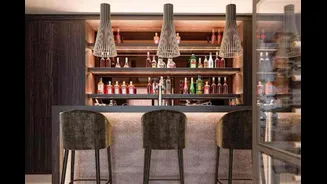

The Indian home bar has quietly but decisively shed its old identity. Once a tucked-away cabinet reserved for special occasions, it has emerged as a considered lifestyle feature, one that reflects how
urban India now thinks about space, hosting, and personal ritual. This evolution isn’t driven by excess, but by intention.
Binoy Dharia, Founder & CEO, The Bar Collective, observes, Indian consumers today are building their homes with far greater mindfulness. The home bar, in many ways, has become a marker of this shift. What began as a pandemic-induced habit has matured into a genuine lifestyle preference, one where hosting at home feels both pleasurable and personal.
This new mindset is evident in the rising demand for premium barware and glassware. Crucially, the motivation isn’t vanity. It’s knowledge. Consumers are beginning to understand how quality craftsmanship enhances the drinking experience, how the right glass can improve temperature retention, amplify aroma, and elevate the ritual of making a drink. The act of mixing or pouring has become as meaningful as the drink itself.
At the same time, the physical placement of the home bar has changed. No longer hidden away, it is increasingly treated as a design statement. Dharia points to a growing appetite for modular, space-efficient solutions that integrate seamlessly into modern Indian interiors. In dense urban homes especially, clever storage and thoughtful layouts are no longer nice-to-haves, they’re essential.
This design-led thinking is echoed by Vikash Gupta, Founder & CEO, Three Sixty Leather, who notes that consumers are reimagining the home bar as an extension of their lifestyle rather than a purely functional unit. Today’s buyers want pieces that reflect personal taste and craftsmanship while supporting the rituals of hosting.
According to Gupta, the shift is away from bulky bar furniture towards compact yet impactful formats, bars that are visually striking but spatially efficient. There is a growing preference for premium materials, such as leather finishes, and for modular designs that can adapt as homes and lifestyles evolve. Importantly, consumers are looking beyond trends. Longevity, durability, and materials that age gracefully are now central to purchase decisions.
What’s also changing is the Indian host. Greater exposure to global drinking cultures, through travel, social media, and digital content has raised expectations. Hosts today are more informed and more discerning. They want bar accessories that are intuitive and functional, with smart features that make entertaining effortless. Hidden storage, integrated tools, and refined ergonomics are valued, but subtlety is key. Functionality must enhance the experience without dominating the design.
Ultimately, the modern Indian home bar is no longer about stocking bottles or showing off labels. It’s about creating moments. Whether it’s an intimate cocktail for one, a gathering of friends, or a quiet pour at the end of the day, the bar has become a space where form, craftsmanship, and experience intersect.
As Indian homes continue to evolve, the home bar stands as a quiet but powerful expression of how consumers are choosing to live, thoughtfully, intentionally, and with an appreciation for quality that goes far beyond the surface.