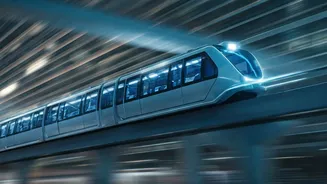






The much-anticipated pod taxi project in Mumbai, envisioned as a game-changer for urban mobility, is expected to significantly reduce travel time and ease congestion in one of the city’s busiest business
districts. Planned by the Mumbai Metropolitan Region Development Authority (MMRDA), the system is designed to strengthen last-mile connectivity within the Bandra-Kurla Complex (BKC).
However, progress has been slowed due to disputes over land required for terminal stations, an issue now escalated to the Chief Minister’s War Room to resolve bottlenecks, said a report by The Indian Express.
The project aims to serve an estimated 4-6 lakh commuters travelling daily to BKC. With major infrastructure developments on the horizon, including the bullet train corridor, authorities believe the demand for efficient last-mile options will only intensify. MMRDA noted that the autonomous pod taxi system is particularly suited for the narrow stretches connecting BKC with Bandra and Kurla stations.
“With the anticipated increase in footfall due to upcoming infrastructure developments such as the bullet train and new commercial buildings, the necessity for efficient last mile connectivity has become paramount. The Pod Taxi system, being fully autonomous and capable of operating at a frequency of every 15 to 30 seconds, is ideally suited for the narrow roads connecting BKC to Bandra and Kurla suburban stations,” The Indian Express quoted MMRDA as saying.
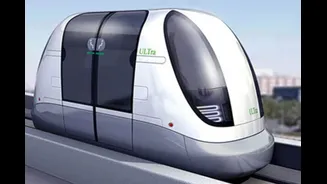
Stretching across 8.80 km, the proposed network will include 38 stations. Each pod is expected to be compact, about 3.5 metres long, 1.47 metres wide and 1.8 metres high, capable of carrying around six passengers at speeds of up to 40 kmph.
The project received approval during MMRDA’s 156th Authority Meeting on March 6, 2024, with an estimated cost of approximately Rs 1,017 crore. It will be implemented through a Public-Private Partnership (PPP) model. A techno-economic feasibility study has suggested a fare of Rs 21 per km, subject to a 4% annual escalation to account for inflation and operational expenses. The final pricing, however, will be determined at a later stage.
MMRDA explained that fare calculations were based on commuter surveys comparing existing transport options such as autos, taxis, and app-based rides. The findings reportedly indicated that a significant proportion of users are open to paying the proposed rate for a faster and more efficient service.
Beyond easing daily commutes, the BKC pod taxi project is being seen as a step towards redefining urban transport in India. If executed successfully, it could set a precedent for similar systems in other cities, offering a glimpse into a more seamless and tech-driven future for public mobility.