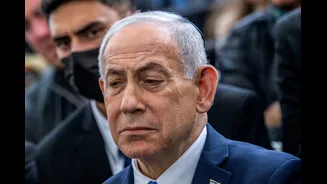

United States President Donald Trump on Wednesday claimed that his endorsement of Israeli Prime Minister Benjamin Netanyahu changed the course of Israel’s election, arguing that the veteran leader’s expected
decisive defeat could now turn into a stalemate or even a victory.
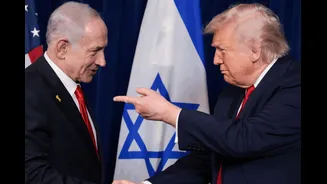
“When President Trump endorsed Bibi Netanyahu, the whole tide turned, and now, rather than a decisive defeat for a Great Prime Minister, it looks like a big come-from-behind stalemate, or even a WIN for Netanyahu. It all took place AFTER the Endorsement by President Trump, who only wants what is good for the Middle East, Israel, and the United States of America!” Trump said in a post shared under his name.
Exit Polls Show Netanyahu’s Bloc Locked In Tight Race
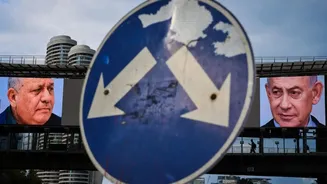
His claim came as exit polls following Tuesday’s election showed Netanyahu’s Likud-led bloc locked in a close contest with the opposition alliance led by Gadi Eisenkot. Neither side appeared to have secured the 61 seats required for a majority in Israel’s 120-member Knesset, leaving the country facing potentially prolonged coalition negotiations.
The projections offered a mixed picture for Netanyahu. Exit polls from Kan 11 and Channel 13 placed the rival blocs at 51 seats each, while Channel 12 gave Netanyahu’s alliance a narrow lead of 52 seats to 49. The final outcome remained uncertain as vote counting continued.
Also Read: ‘Govt Backed By Arab Parties Out Of Question’: Netanyahu Claims Right-Wing Bloc Has Decisive Majority
Netanyahu called for right-wing parties to unite behind a new government, even as Eisenkot argued that the electorate had rejected the incumbent prime minister’s leadership. Neither leader had established a clear path to forming a government.
Netanyahu Rules Out Alliance With Arab Parties
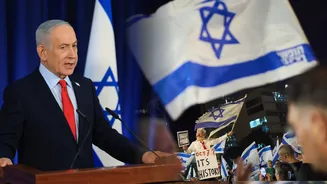
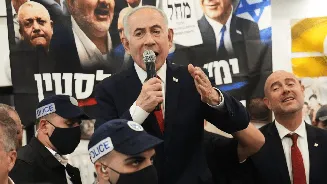
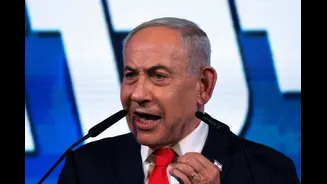
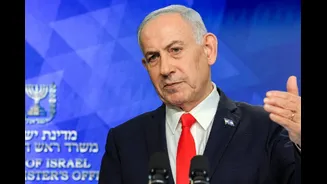
Addressing supporters at Likud headquarters in Jerusalem early Wednesday, Netanyahu called for a government built around right-wing and Zionist parties, ruling out reliance on Arab political groups.
“We must put in place a strong government of the right,” Netanyahu said.
“The Jewish and Zionist majority must unite. It is out of the question to have a government that is backed by Arab parties,” he added.
Netanyahu also asserted that his bloc had won a “clear, decisive majority”, although exit-poll projections did not show either main alliance reaching the numbers needed to govern independently.
He said the final results were still awaited and reiterated his intention to form a strong national government.
The two Arab-led political groupings could emerge as crucial players in the coalition arithmetic, with projections suggesting they could collectively secure around 17 to 18 seats.
However, Netanyahu’s rejection of their support and Eisenkot’s reluctance to build a government with them could complicate negotiations for both sides.
Election Deadlock Could Prolong Netanyahu’s Tenure
The close result could leave Netanyahu in office as caretaker prime minister while parties negotiate potential alliances. If neither camp can assemble a governing majority, Israel could face another election.
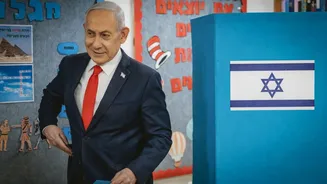
Turnout reached 77.7%, according to the Central Elections Committee, marking the highest participation in more than two decades and exceeding the 2022 figure by around seven percentage points.
The Joint List, an alliance of Arab parties, welcomed the strong turnout among Palestinian citizens of Israel. Faten Gattas, a candidate with the alliance, said, “We refuse the occupation and racism, and we will remain here,” as supporters gathered at its headquarters in Nazareth.
Yohanan Plesner, president of the Israel Democracy Institute, described the exit-poll projections as a major setback for Netanyahu’s coalition but cautioned that they did not establish Eisenkot as the clear winner.
For now, Trump’s assertion that his endorsement changed Netanyahu’s electoral fortunes remains a political claim, while the available projections point to an inconclusive contest.
The final seat tally and the ability of either camp to secure coalition partners will determine whether Netanyahu can remain at the head of a new government.
With inputs from Reuters