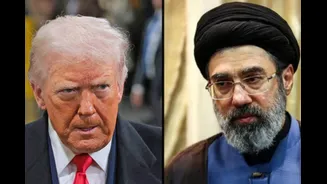



As the United States and Iran move through another round of high-stakes negotiations aimed at ending months of conflict, one phrase has unexpectedly come to define the talks: “nuclear dust.”
Used by US
President Donald Trump, the term refers to Iran’s stockpile of enriched uranium , particularly the highly enriched material that has long been at the centre of international concern over Tehran’s nuclear programme.
Trump’s assertion that Iran is ready to “give us back the nuclear dust” has suggested potential progress. But despite this public optimism, the issue remains unresolved and continues to be the biggest hurdle to any agreement.
What Does ‘Nuclear Dust’ Refer To?
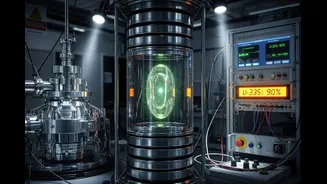
“Nuclear dust” is not a technical term. It is Trump’s way of describing Iran’s enriched uranium stockpile, including material believed to be buried at sites hit during US airstrikes.
“There will be no enrichment of Uranium,” Trump said, adding that the United States would work with Iran to “dig up and remove all of the deeply buried (B-2 Bombers) nuclear ‘dust.’”
In practical terms, this refers to fissile material enriched to levels far beyond what is required for civilian nuclear use.
Before US and Israeli airstrikes in June 2025, Iran was believed to possess more than 400 kilogrammes of uranium enriched to 60 per cent, along with nearly 200 kilogrammes enriched to 20 per cent. These levels are significantly higher than those required for civilian purposes and can be further refined to reach weapons-grade purity of around 90 per cent.
Why Is This Stockpile So Important To The US?
For Washington, Iran’s enriched uranium represents a core security concern.
The United States’ position is that even if Iran does not currently possess a nuclear weapon, its existing stockpile and capabilities could enable it to develop one. This has shaped the Trump administration’s negotiating stance, which includes firm demands for restrictions on enrichment and the removal or neutralisation of existing stockpiles.
White House spokeswoman Olivia Wales underlined this position, stating that the administration “will never allow Iran to have a nuclear weapon.”
Vice President JD Vance also stressed the need for enforceable safeguards following talks in Islamabad. “It’s one thing for the Iranians to say that they’re not going to have a nuclear weapon. It’s another thing for us to put in place the mechanism to ensure that’s not going to happen,” he said.
Where Does Iran Stand On Enrichment?
For Iran, uranium enrichment is a non-negotiable issue.
Tehran has consistently maintained that its nuclear programme is aimed at peaceful purposes, particularly energy generation. At the same time, Iranian officials have made it clear that they will not accept any agreement that requires them to fully abandon enrichment.
A senior Iranian official told USA Today that there is no scenario under which Iran would agree to completely halt uranium enrichment as part of a deal.
This difference — between US demands for restrictions and Iran’s insistence on retaining enrichment — lies at the heart of the ongoing deadlock.
Where Is Iran’s ‘Nuclear Dust’ Located?
Another major complication is the location of Iran’s enriched uranium.
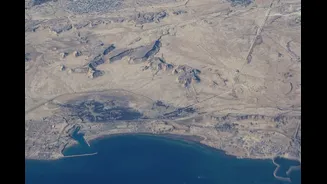
According to International Atomic Energy Agency (IAEA) Director General Rafael Grossi, Iran’s nuclear material is primarily stored at two of the three sites targeted in US strikes — an underground tunnel at the Isfahan nuclear complex and a cache at Natanz.
A significant portion of the stockpile is believed to be buried beneath the remains of a mountain facility that was heavily bombed during those operations.
While US officials have said that many centrifuges were destroyed or rendered inoperable, Iran is widely believed to retain additional equipment and the capability to set up new enrichment facilities.
What Are The Key Points Of Disagreement?
Despite repeated signals of progress, major gaps remain between the two sides.
The United States has proposed a long-term freeze on uranium enrichment — reportedly up to 20 years — along with restrictions on stockpile size.
Iran has resisted these demands, instead offering shorter suspension periods. Reports suggest Tehran has proposed timelines ranging from three to five years.
Trump has also indicated that Iran may be willing to commit to not possessing nuclear weapons for more than 20 years, but this still falls short of Washington’s demand for enforceable limits on enrichment and existing material.
These differences proved difficult to bridge during recent negotiations in Islamabad, which lasted 21 hours but ended without a final agreement.
A fresh round of negotiations between the United States and Iran is expected in Islamabad on Monday, April 20, according to CNN.
What Happens To The Existing Stockpile?
The question of what to do with Iran’s current uranium reserves remains unresolved.
The United States has pushed for the removal of this material from Iranian territory, arguing that its continued presence poses an ongoing risk.
Trump has suggested that Iran could hand over the stockpile to the United States, though there has been no confirmation from the Iranian side on agreeing to such terms.
Speaking at an event hosted by Turning Point USA in Phoenix, Arizona, Trump said the process would involve physically extracting nuclear material from the ground. “We’re going to go in with Iran, with lots of excavators… we need the biggest excavators you can imagine,” he said, adding that the material would be taken “back home to the USA very soon.”
There have also been alternative proposals. Russia, for instance, offered to take custody of Iran’s enriched uranium and convert it into fuel for civilian reactors.
Kremlin spokesman Dmitry Peskov said, “This would be a good decision. But unfortunately the American side rejected this proposal.”
Does Iran Need This Level Of Enrichment For Energy?
Iran has repeatedly said its nuclear programme is tied to energy security, with plans to expand nuclear electricity generation to 20 gigawatts by 2041.
However, its current infrastructure presents a different picture.
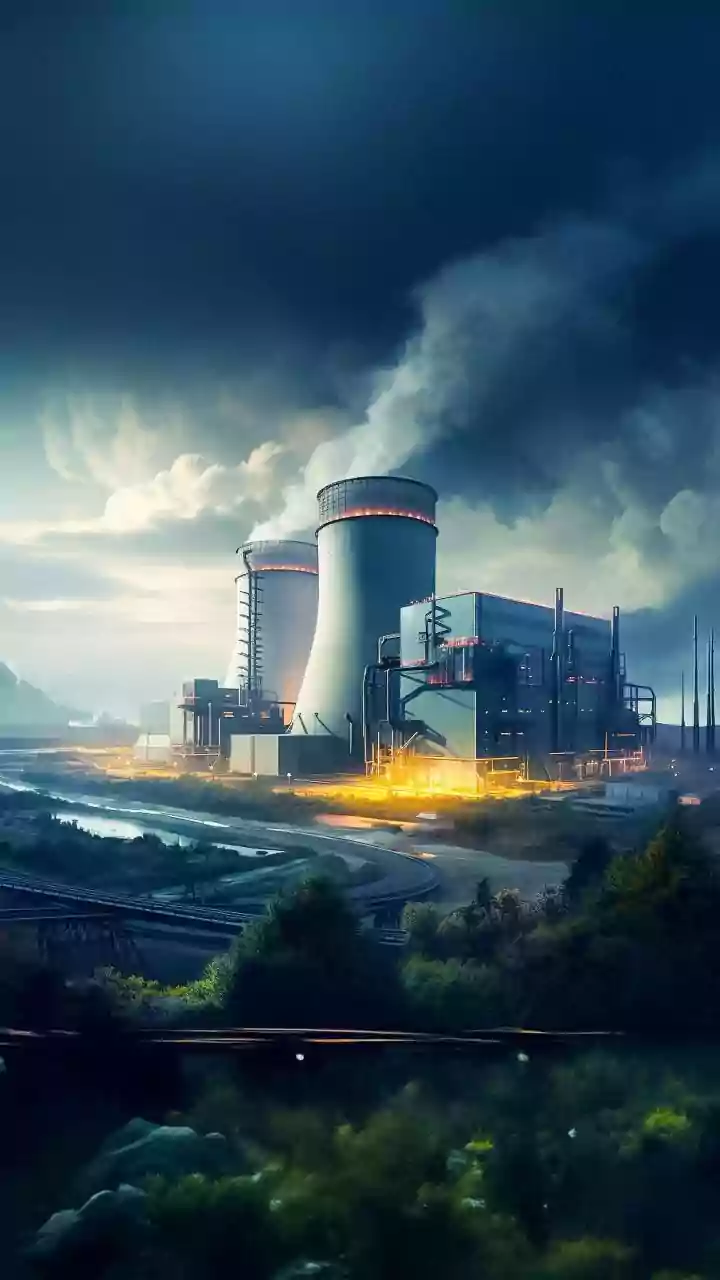
The Bushehr nuclear power plant — built with Russian assistance and operational since 2013 — has a capacity of around 1,000 megawatts and remains Iran’s only functioning nuclear facility. It contributes roughly 1 per cent of the country’s electricity.
To bridge an estimated 25,000-megawatt shortfall, Iran would need to build around 25 additional plants similar to Bushehr.
Speaking to Germany’s state-funded publication Deutsche Welle, energy strategist and Senior Visiting Fellow at George Mason University in the US, Umud Shokri said, “Iran holds some of the world’s largest natural gas and oil reserves, enabling electricity generation at costs significantly lower than nuclear power.”
“In practice, its electricity mix remains dominated by natural gas, while nuclear contributes only a small share from the single operating Bushehr reactor.”
Why ‘Nuclear Dust’ Remains The Dealbreaker
For the United States, the priority is to ensure that Iran cannot use its existing stockpile to develop a nuclear weapon. For Iran, retaining enrichment capability is tied to national policy and long-term energy plans.
Until both sides reach an agreement on how to handle Iran’s existing enriched uranium — whether through removal, limitation, or another mechanism — the broader deal is likely to remain unresolved.