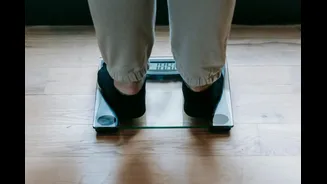









For anyone trying to stay fit or make sense of their health, the idea of a “perfect weight” often comes up. People usually want a clear answer, something fixed they can aim for. But doctors and health professionals
say weight does not work that way, especially when height, age, and lifestyle come into play.
Height does matter when it comes to body weight. A taller person will naturally weigh more than someone shorter, and that does not mean either is unhealthy. Over the years, tools like Body Mass Index have been used to give a general idea of where a person stands. BMI compares weight with height and places people into broad categories. It is often used in clinics because it is quick and easy.
How to know the perfect weight?
You calculate your BMI by dividing your weight in kilograms by the square of your height in metres. For most adults, a BMI between 18.5 and 24.9 is considered normal or healthy. That said, many doctors admit BMI has limits. It does not separate muscle from fat. Someone who works out regularly or plays sports may weigh more because of muscle mass. On the other hand, a person who does not move much may fall within a “normal” weight range but still have health issues linked to low fitness or high body fat.
Because of this, doctors usually look beyond the scale. Waist size is one factor that often gets attention. Fat around the abdomen is linked to higher risks of heart disease, diabetes, and blood pressure problems. Even small increases around the waist can matter more than overall weight gain.
Age also changes how weight behaves. As people grow older, muscle mass slowly drops and metabolism slows down. This means weight may increase even if eating habits stay the same. Women may also notice changes during hormonal shifts, which can affect how the body stores fat.
Don’t focus on the perfect weight
Many health experts now advise people to focus less on chasing an exact number and more on daily habits. Eating balanced meals, moving regularly, sleeping well, and managing stress tend to have a bigger impact than strict dieting. When these habits are in place, weight often settles into a range that suits the body naturally.
Doctors also warn against constant comparison. Two people of the same height can have very different healthy weights depending on their build, activity level, and genetics. What works for one person may not suit another.
In the end, height can help define a healthy range, but there is no single “perfect” weight. Health professionals say the real goal should be feeling strong, active and well, rather than trying to fit into an exact number on the scale.