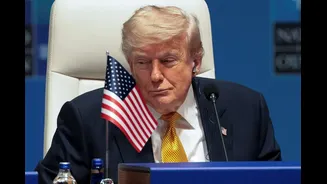





United States President Donald Trump on Friday again declared that the Strait of Hormuz is effectively open, claiming Iran has lost much of the leverage it once held over the crucial energy chokepoint
as American forces step up mine-clearing operations and maintain a blockade of Iranian ports, according to a report published by Axios.
The remarks come as Washington says it has made significant progress in restoring commercial traffic through the strategic waterway, nearly six months into the US-Israel war with Iran.
The Strait of Hormuz has remained at the heart of the conflict, with disruptions to shipping sending oil prices sharply higher and threatening global energy supplies.
“That sucker is open. The Iranian response is very mild. They don’t want us to go back at them. That’s the whole ball game. The rest doesn’t matter,” Trump told Axios in a phone interview on Thursday.
How The US Turned The Tide In Hormuz
The situation in the Strait has changed considerably since the beginning of the war, when Iran moved to restrict commercial shipping and threatened vessels attempting to pass through the waterway.
Also Read: Trump Stakes Claim Over Hormuz Again, Posts New Image Linking Strait With US Territories
US officials say American forces have since worked to reduce Tehran’s ability to disrupt maritime traffic.
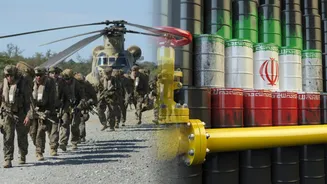
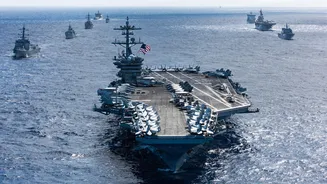
The operation has involved naval escorts, air protection for ships, interception of Iranian drones and cruise missiles, and an extensive campaign to locate and neutralise mines placed along shipping routes.
President Trump said earlier this week that American forces had removed or detonated mines in international waters.
CENTCOM commander Adm. Brad Cooper said in a video posted Thursday: “We achieved a major milestone in the Strait of Hormuz. Internationally recognised sea routes in the strait are free of Iranian sea mines. Bottom line: Today international shipping lanes are open, and momentum is building.”
The US says more than 200 mine-like objects have been removed from the main shipping lane, although only 11 were confirmed to be actual mines.
American officials also say Iranian attacks on vessels have become less effective, with only a small proportion of ships transiting the waterway being hit.
Hormuz Traffic Begins To Recover
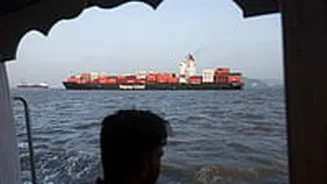
While shipping through Hormuz remains significantly below pre-war levels, US officials say tanker traffic has begun picking up.
According to American estimates, between 20 and 30 tankers are now travelling through the southern channel each night, carrying around 9-10 million barrels of oil. That is roughly half the volume recorded before the war.
The US is seeking to increase that figure further, with a target of allowing at least 50 ships to move through the waterway each night by mid-September. Washington ultimately hopes to restore 60-70% of pre-war oil exports.
Also Read:‘Who Said I’m Not?’: Trump Signals Sanctions On Chinese Banks Over Iran Trade
However, periodic reports of vessels being hit by projectiles have raised concerns over whether the route can yet be considered completely safe for commercial shipping.
US Retains Blockade On Iranian Ports
Alongside the effort to reopen the waterway, Washington has retained a blockade targeting Iranian ports, adding an economic dimension to its military pressure on Tehran.
The strategy marks a shift from the early stages of the war, when the primary US objective was to degrade Iran’s missile capabilities and dismantle its remaining nuclear infrastructure.
Securing Hormuz and limiting Iran’s ability to use the waterway as economic leverage have now become central to Washington’s approach.
Gulf nations are also increasingly participating in the US-protected shipping route. The UAE, Bahrain and Kuwait have joined the effort, while Saudi Arabia is expected to follow. Washington also hopes Qatar will eventually send liquefied natural gas tankers through the protected corridor.
Iran Signals Conditions For Reopening Hormuz
Despite Trump’s assertion that the Strait is open, Tehran continues to insist that reopening the waterway fully depends on certain conditions.
Iranian security chief Mohsen Rezaei said Thursday that Tehran was preparing conditions for reopening the strait following requests from mediators.
Ending the war is among Iran’s demands, while Tehran has also called for the lifting of the US blockade, compensation for wartime damage and the removal of economic sanctions.
Iran and Oman have separately been discussing a temporary navigation corridor through the Strait.
Trump, however, has publicly rejected the idea that Washington is seeking negotiations with Tehran.
“I don’t want to meet; they do. In fact, they are begging to make a deal,” Trump wrote on Truth Social on Thursday.
Signs Of Diplomatic Movement
The military developments have coincided with renewed diplomatic activity involving Iran, Oman, Qatar and Pakistan.
The Pakistani army chief travelled to Tehran earlier this week in an attempt to revive mediation between Washington and Tehran, while Oman’s foreign minister also visited the Iranian capital. Qatar’s prime minister subsequently arrived in Tehran at Iran’s request, according to regional sources.
Behind the scenes, US envoy Steve Witkoff continues to engage with Qatar and other intermediaries.
The US believes that its growing military presence, mine-clearing operation and economic pressure have fundamentally altered the balance around Hormuz and could give Trump greater leverage if negotiations with Tehran resume.
With inputs from Reuters