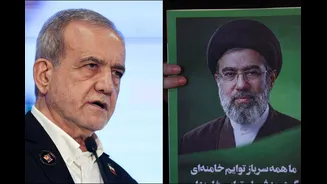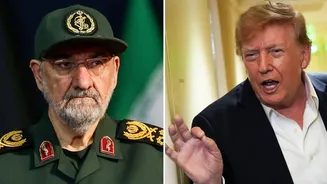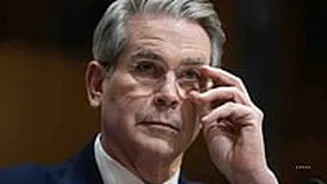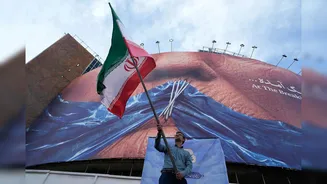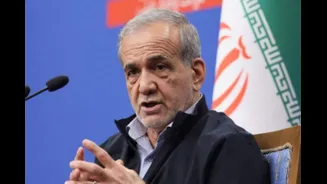





Iranian President Masoud Pezeshkian is set to travel to New York for the United Nations General Assembly, putting him on US soil at a time when Washington and Tehran remain engaged in an ongoing military
conflict.
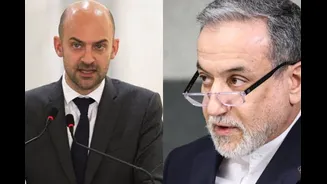
Pezeshkian is scheduled to address the UN General Assembly on Wednesday, September 23, a day after US President Donald Trump is due to deliver his address. The United States has approved visas for Pezeshkian and Iranian Foreign Minister Abbas Araghchi as part of what Washington has described as a “core delegation” attending the high-level UNGA week.
The visit is unusual for two specific reasons.
1. Iranian President In US Amid War
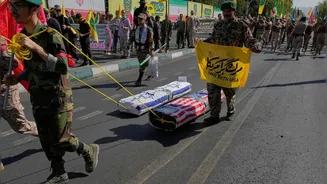
The most significant feature of Pezeshkian’s visit is the circumstances under which he is being allowed to enter the United States. Washington and Tehran have been at war since February 28, when the United States and Israel launched attacks on Iran. Iran subsequently retaliated with attacks on Israel and Gulf states hosting US military bases. Intermittent diplomatic contacts between Washington and Tehran have continued alongside the conflict.
Despite the hostilities, the Trump administration has decided to allow Pezeshkian and Araghchi to attend the UN General Assembly. The US State Department said the decision was consistent with Washington’s obligations as the host country of the United Nations.
“Consistent with our host country obligations, the core delegation from the Iranian regime will be able to attend UN General Assembly High Level Week,” the State Department said.
The 1947 UN headquarters agreement generally requires the United States to provide access to the UN for foreign diplomats. Washington nevertheless retains the ability to restrict entry on grounds including security, terrorism and foreign policy.
Pezeshkian’s delegation will not have unrestricted access to New York. The State Department said the Iranian delegation would be subject to travel restrictions and restrictions on purchases of luxury and other goods. Reuters reported that the delegation would also be smaller than last year’s.
The decision also comes amid a broader dispute over which foreign leaders can attend this year’s UNGA. The Trump administration has denied visas to Palestinian officials, including President Mahmoud Abbas, while allowing the Iranian president to attend.
2. Pezeshkian To Present Iran’s Position On The War
The second unusual aspect is the platform Pezeshkian will receive. The Iranian president is scheduled to speak at the General Assembly on Wednesday morning, following Trump’s address on Tuesday. Iranian officials have said Pezeshkian will use his visit to outline Iran’s position on international developments, including the conflict with the United States and Israel.
This will give Tehran an opportunity to present its account of the conflict directly to representatives of UN member states and an international media audience.
Pezeshkian has already laid out some of the arguments Iran is expected to make. “We did not start the war. They started the war,” he had said earlier this month. He accused the United States and Israel of launching attacks against Iran while Tehran was engaged in negotiations.
Pezeshkian has also rejected the US and Israeli description of Iran’s actions and defended Tehran’s response as self-defence. His comments have consistently focused on the deaths of Iranian officials and civilians and damage to Iranian infrastructure during the conflict.
His UN speech will therefore come against the backdrop of competing accounts from Washington and Tehran over how the war began, its conduct and the prospects for negotiations.
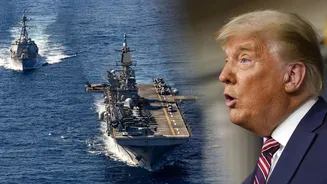
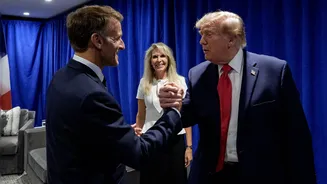
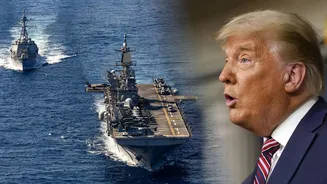
Trump, meanwhile, has continued to combine military pressure with references to diplomacy. On Sunday, when asked whether he would meet Pezeshkian during the UN General Assembly, Trump said he would “probably be open” to such a meeting.
Trump has also said that the US is considering different options regarding Iran. According to Anadolu Agency, he described those options as “wiping Iran out,” allowing its economy to “rot,” or negotiating a deal. He added that “very big things are going to be happening in the not-so-distant future.”
Whether the two presidents actually meet remains uncertain. But their simultaneous presence in New York means the UN General Assembly will provide a setting for both governments to communicate their positions while diplomatic contacts continue.
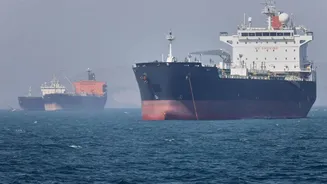
The timing also has wider economic implications. Markets have been watching developments around possible US-Iran diplomacy because of the conflict’s impact on regional energy supplies and shipping through the Strait of Hormuz. Oil prices on Tuesday rose as investors awaited possible developments in US-Iran contacts during the UNGA.
Pezeshkian’s visit, therefore, is unusual primarily because of the circumstances surrounding it – an Iranian president is being permitted to attend the UN’s principal annual gathering in New York while his country remains in an active conflict with the host country, and he is scheduled to use that same forum to publicly present Iran’s position on the war.