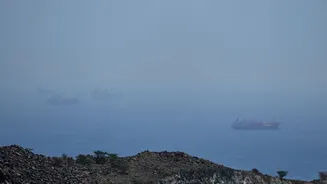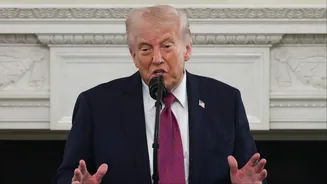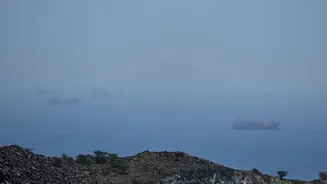





Iran’s Islamic Revolutionary Guard Corps (IRGC) has said it seized at least two vessels in the Strait of Hormuz on Tuesday, as tensions persist in the region despite a recently announced ceasefire extension
by US President Donald Trump.
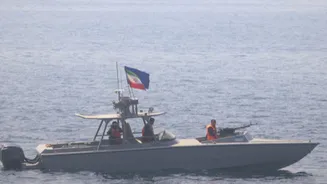
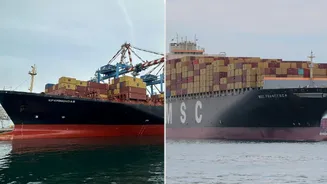
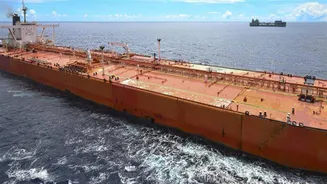
In a statement, the IRGC Navy said it had detained two ships — MSC Francesca and Epaminondas — accusing them of “jeopardising maritime security” and operating without necessary permits, as well as allegedly tampering with navigation systems. The vessels were directed towards the Iranian coast, it said.
“Disrupting order and safety in the Strait of Hormuz is our red line,” the IRGC said.
Semi-official Iranian news agencies, including Fars and Tasnim, reported that a third vessel — a Greek-owned ship named Euphoria — had also been targeted and was now stranded along Iran’s shores.
The developments come just a day after Trump announced an extension of a ceasefire in the region.
According to the reports, the IRGC described the ships as “violating vessels” attempting to pass through the strategic waterway, which handles a significant share of global oil shipments.
United Kingdom Maritime Trade Operations (UKMTO) Centre Reported two separate incidents earlier today, likely the MSC Francesca and the Epaminodes, between 8nm and 15nm west of Oman, before the Islamic Revolutionary Guards Corps Navy (IRGC-N) announced that both vessels were… pic.twitter.com/ROshqAbKUW
— OSINTdefender (@sentdefender) April 22, 2026
According to MarineTraffic, the container ship MSC Francesca, sailing under the Panama flag, was last reported in the Gulf of Oman and was listed as “at anchor” with minimal movement. Another vessel, Epaminondas, flagged in Liberia, was also located in the same region and reported as “stopped”.
Earlier, the United Kingdom Maritime Trade Operations (UKMTO) centre had said two ships came under fire in the Strait of Hormuz, though it did not identify the vessels.
The Guards warned against any action against the regulations imposed by the Islamic republic in the strait “as well as activities contrary to the safe passage” through the waterway.
Tehran has said vessels must seek permission to leave of enter the Gulf through Hormuz, through a route that in peacetime accounts for a fifth of the world’s oil and gas exports along with other vital commodities.