





The Commission for Air Quality Management (CAQM) has invoked Stage III of the Graded Response Action Plan (GRAP-III) across Delhi-NCR. If you are a daily commuter driving into or within Delhi from neighboring
NCR cities like Gurugram, Noida, Ghaziabad, Faridabad, or Sonipat, this translates to strict vehicular restrictions, heightened border checks, and heavy financial penalties.
Here is exactly what the GRAP-III curbs mean for your daily travel.
WHY GRAP III? DELHI AIR POLLUTION
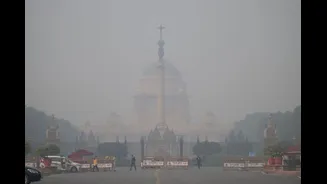
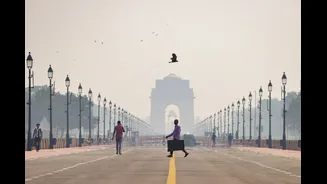
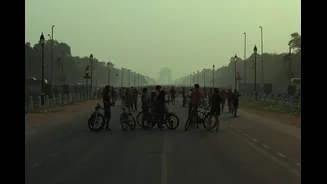
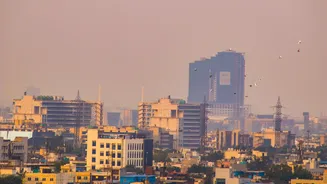
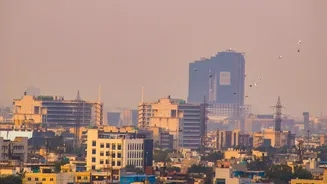
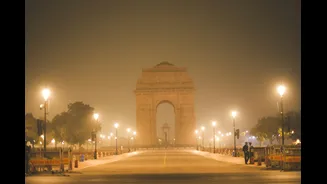
Delhi’s air quality has plunged sharply into the “Very Poor” to “Severe” categories in the opening week of November 2026, blanketing the National Capital Region (NCR) in a thick layer of toxic smog. As of November 6, 2026, the Central Pollution Control Board (CPCB) recorded Delhi’s city-wide 24-hour average Air Quality Index (AQI) at 389 to 391, comfortably placing it in the “Very Poor” bracket. However, the situation is much worse in localized pollution hotspots across the capital where levels have crossed the “Severe” (401–500) threshold:
- Rohini: 474 – 475
- IIT Delhi: 472 – 474
- Punjabi Bagh: 465
- Jahangirpuri: Previously hit 462 earlier in the week
- RK Puram: 443
- ITO: 422
- India Gate: 403
Nearby NCR cities like Noida, Gurugram, and Faridabad are similarly reeling under overall “Very Poor” air quality. The dominant pollutant remains PM2.5, which has surged past 25 times the World Health Organization’s recommended daily limit in some monitoring areas.
Contributing Causes
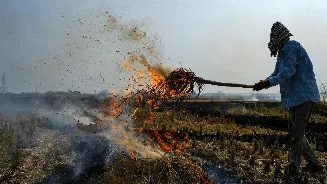
The current pollution surge is a toxic combination of peak stubble-burning seasonal farm fires from neighbouring states (accounting for roughly 22% of Delhi’s PM2.5 load), vehicle exhaust, and stagnant winter weather patterns trapping pollutants close to the ground.
The government’s Air Quality Early Warning System warns that the overall AQI is highly likely to break fully into the “Severe” category over the coming days. With Diwali arriving on November 8, environmental experts fear that imminent firecracker emissions will compound the crisis even further.
HEAVY PRIVATE VEHICLE RESTRICTIONS
Your vehicle’s engine emission standard determines whether you can drive it.
Banned Vehicles: BS-III petrol and BS-IV diesel four-wheelers are strictly prohibited from plying on roads in Delhi, Gurugram, Faridabad, Ghaziabad, Gautam Buddha Nagar (Noida), and Sonipat.
Allowed Vehicles: You can safely drive if your vehicle runs on Electric, CNG, Hybrid, or is a BS-VI compliant petrol or diesel engine.
The Penalty: If you are caught driving a non-compliant vehicle, you will face an immediate, mandatory fine of ₹20,000.
BORDER CONTROLS & PUBLIC TRANSPORT CHANGES
Commuting between Delhi and the satellite cities will face major structural shifts:
Interstate Buses: Only Electric, CNG, and BS-VI diesel buses are permitted to enter Delhi from other states. Non-compliant intercity buses will be turned back at the borders.
Commercial Goods Vehicles: Diesel-operated BS-IV and older light goods vehicles (LGVs) and medium goods vehicles (MGVs) registered outside Delhi are banned from entering the city unless carrying essential items.
Metro Upgrades: To absorb the passenger load from those leaving their cars behind, the Delhi Metro adds an extra 20 daily weekday trips on top of the 40 extra trips already introduced under Stage II.
POTENTIAL SHIFTS TO REMOTE WORK & COMMUTE TRAVEL
Office Capacity Curbs: The Delhi and NCR state governments are authorised to call for public, municipal, and private offices to operate at 50% staff capacity, with the remainder working from home.
School Closures: Physical classes for students up to Class 5 are switched entirely to hybrid or online mode across Delhi, Noida, Gurugram, Ghaziabad, and Faridabad, which may significantly reduce school-run morning traffic.
CRITICAL COMMUTER CHECKLIST
To avoid getting stranded or heavily fined, make sure to execute these steps before you step out:
- Verify your emission standard. Check your vehicle registration certificate (RC) to ensure it is not a BS-III petrol or BS-IV diesel.
- Renew your PUCC. A valid Pollution Under Control Certificate is strictly mandated. Failing to produce a valid PUCC can invite separate fines up to ₹10,000 or vehicle impoundment.
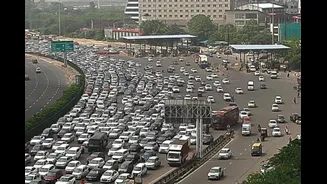
- Expect border delays. Due to strict police pickets and verification counters checking vehicles at entry points like Singhu, DND, and Gurugram border, anticipate long tailbacks and allot extra travel time.