







Genghis Khan is said to have had some 3,000 progeny but Sultan Ismail Ibn Sharif, an 18th century Alawite ruler of Morocco, is credited with being the world’s most prolific father, with 867 ‘verified’
offspring. His harem had over 500 women so that is statistically very probable. Sperm donation made Bertold Wiesner and Jonathan Jacob Meijer fathers to around 600 children each. But West Bengal’s Special Intensive Review (SIR) of voter lists has added a new dimension.
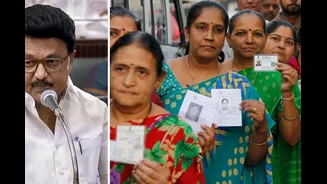
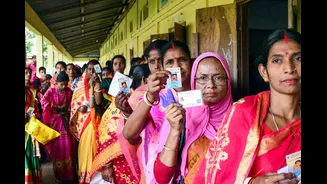
Thanks to scrutiny by the Supreme Court of India, trends revealed by the SIR being conducted by the Election Commission in West Bengal are coming into the public domain which portend to upend some surmises based on other data. According to it, two Indian ‘electors’ are listed as fathers of 389 and 310 children each, the first from Barabani in Asansol district and the second from Bally in Howrah district. Two more people have been found to have over 200 progeny.
Another seven have been named as the fathers of over 100 voters each, while 10 have been cited as parents of over 50 voting-age people each. This, even though the National Family Health Survey of 2019-21 says the average household size in India is 4.4 persons (having declined from 4.9 a decade before that) while the worldwide average is 3.4. Moreover, West Bengal’s average as per this survey is 4.0 and 60 per cent of the households are nuclear. So large families do stand out.
Without any as-yet-known links to fertility clinics or the requisite social and financial infrastructure, not to mention legal leeway, the possibility of voters notching up such large numbers of progeny anywhere in India is obviously remote. It is also undeniable that without the implementation of this SIR of voter lists, these astonishing deviations from the data and conclusions of several other surveys would never have come to light. A closer look is certainly merited.
Had the electors been women they would be said to have outbirthed Valentina Vassilyeva, the 18th century Russian who allegedly had 69 children (16 sets of twins, 7 triplets, 4 quadruplets) and even Mariam Nabatanzi from Uganda who had 44 children by 2015 including 3 quadruplets, 4 triplets and 6 twins due to a genetic condition that causes hyper-ovulation. But the two uber-prolific electors are men, so explaining their pro-creativeness becomes more complicated.
Polygamy was banned in 1956 in India for the majority community by the Hindu Marriage Act, and Muslims are restricted to four wives (at a time). So people like Maharaja Bhupinder Singh of Patiala who had 88 children from 10 wives and 350 concubines before he died in 1936, as well as Ziona, leader of a polygamous breakaway church in Mizoram who died in 2021 having had 94 children from 39 wives are exceptions, not the rule. Having 389 today is well-nigh impossible.
The “logical discrepancy” parameters under which voters are being summoned to prove their bonafides is also instructive as they were clearly set looking at certain averages. Less than 15 years’ or more than 50 years’ age gap between elector and the cited parent, less than 40 years’ age gap between electors and their cited grandparent, and more than 6 electors with the same parent do sound uncommon. Child marriage could explain the age gap, but it is still a valid query, SIRji.
The data collected under the SIR exercise has revealed that 2.06 lakh people in West Bengal have 6 sibling families, and more than double that number—4.59 lakh—have 5 children. That figure does not seem impossible per se unless the parents in question are not of commensurate age or the children have suspiciously small or large age gaps, between their parents and them, or amongst each other. Again, only a detailed examination of their documents can reveal the truth.
There are also 6,862 people in West Bengal with over 10 children, 50 with more than 20 children, 14 have over 30 and 10 have over 40. Another 10 people have over 50! Ten children in a family was not uncommon in Bengal once upon a time. Rabindranath Tagore was the youngest of the 15 children of Debendranath Tagore and Sarala Devi; but they were all born in the 19th century. Eight to 10 siblings went out of vogue in Bengal after independence so even 6,862 seems a lot.
Meanwhile, it must also be noted that the Total Fertility Rate in India has fallen to 1.9 children per woman, according to the latest data. The replacement level is 2.1. The TFR was around 5.9 at Independence and stayed at that level until the 1970s. But families with over 3 children are rare in India currently. Even in rural areas, fertility is barely at replacement level now, and only one-tenth of women there have more than five children. So, India’s population is set to decline.
Tellingly, the total fertility rate as per the survey in West Bengal is 1.6 children per woman (1.4 in cities and 1.7 in rural areas) which is well below the national TFR and, needless to add, also below replacement rate. In fact, TFR in the state decreased by 0.2 children since the previous NFHS survey in 2016. No wonder the incidence of large families in West Bengal in 2025 revealed by the SIR has surprised many observers. Does the state have a record number of bigamists?
Now that the EC has been directed by the Supreme Court to publish the names of the 1.25 crore voters in West Bengal against whom objections have been raised on the grounds of “logical discrepancy” at gram panchayat, block and wards levels, noteworthy patterns may emerge. Will Maharaja Bhupinder Singh and Ziona’s progeny count be surpassed by the two men of Barabani and Bally? Will women from West Bengal rival the birthing feats of Vassilyeva or Nabatanzi?
(The author is a freelance writer. Views expressed in the above piece are personal and solely those of the author. They do not necessarily reflect News18’s views.)