






Sardar Vallabhbhai Patel 151st Birth Anniversary: October 31 marks the birth anniversary of Sardar Vallabhbhai Patel, the Iron Man of India, whose leadership played a defining role in bringing hundreds
of princely states together to shape a united nation.
India observes National Unity Day, also known as Rashtriya Ekta Diwas, on October 31 every year to commemorate the birth anniversary of Sardar Vallabhbhai Patel, one of the country’s foremost freedom fighters and nation-builders.
Born on October 31, 1875, Patel is remembered for his decisive leadership during India’s transition to independence and his contribution to the political integration of the country. Popularly known as the Iron Man of India, he played a pivotal role in bringing more than 560 princely states into the Indian Union after Independence in 1947.
अखंड भारत के प्रणेता देश के लौह पुरुष सरदार वल्लभभाई पटेल को उनकी जयंती पर सादर नमन। उन्होंने एक सशक्त, समृद्ध और समर्थ भारत के निर्माण के लिए अपना जीवन समर्पित कर दिया। मां भारती की सेवा में उनका त्याग और समर्पण विकसित एवं आत्मनिर्भर भारत के निर्माण के लिए बहुत बड़ा प्रेरणास्रोत है।
— Narendra Modi (@narendramodi) October 31, 2026
As the country marks his 151st birth anniversary this year, National Unity Day serves as an occasion to reflect on the values of national integration, unity in diversity and collective responsibility that shaped his vision for India.
Who was Sardar Vallabhbhai Patel?
Sardar Vallabhbhai Patel was born in Nadiad, Gujarat, on October 31, 1875. Trained as a barrister, he initially established a legal career before becoming actively involved in India’s freedom movement under the influence of Mahatma Gandhi.
His organisational abilities and leadership became particularly visible during the Kheda Satyagraha of 1918, when he supported farmers protesting against the collection of land revenue despite crop failure.
He later emerged as a prominent leader during the Bardoli Satyagraha of 1928, a farmers’ movement against increased land revenue. His leadership during the successful agitation earned him the title ‘Sardar’, meaning leader or chief.
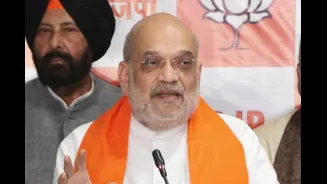
आधुनिक भारत के शिल्पकार, राष्ट्रीय एकता और अखंडता के प्रतीक, लौह पुरुष सरदार वल्लभभाई पटेल जी की जयंती पर उन्हें कोटि-कोटि नमन एवं समस्त देशवासियों को ‘राष्ट्रीय एकता दिवस’ की हार्दिक शुभकामनाएँ।
सरदार साहब ने अपने अदम्य साहस और दूरदर्शिता से रियासतों में बँटे देश को एक सूत्र में पिरोकर मजबूत भारत की नींव रखी और अखिल भारतीय सेवाओं की आधारशिला रखकर देश की प्रशासनिक व्यवस्था को सुदृढ़ आधार दिया। खेड़ा और बारडोली सत्याग्रह के माध्यम से किसानों के अधिकारों के लिए उनका संघर्ष जनसेवा और नेतृत्व का अनुपम उदाहरण है।
राष्ट्रहित को सर्वोपरि रखने वाले सरदार साहब का त्याग, समर्पण और राष्ट्रप्रेम हर एक देशवासी को ‘एक भारत, श्रेष्ठ भारत’ के निर्माण की दिशा में प्रेरित करता रहेगा।
— Amit Shah (@AmitShah) October 31, 2026
Over the years, Patel became one of the most influential figures in the Indian National Congress and played an important role in the country’s struggle for independence.
How Sardar Patel helped unite India after Independence
One of Patel’s most significant contributions came in the aftermath of India’s Independence in August 1947.
At the time, the country faced a major political and administrative challenge. Apart from territories directly administered by the British, India consisted of more than 560 princely states, whose rulers had to decide their future following the end of British rule.
The integration of these states was essential to establishing a politically united and administratively functioning country.
As India’s first Deputy Prime Minister and Home Minister, Patel took charge of the crucial task of integrating the princely states. Working with VP Menon and the States Department, he pursued negotiations, diplomacy and administrative measures to secure their accession to the Indian Union.
His leadership, combined with the efforts of several other national leaders and administrators, helped lay the foundation for India’s territorial and political integration.
The integration process was complex and involved different circumstances across regions. Nevertheless, Patel’s contribution remains central to the story of how modern India took shape.
Sardar Patel’s contribution to India’s administrative framework
Beyond political integration, Patel played an important role in building the institutions of independent India.
He strongly supported the establishment and continuation of an efficient administrative structure to ensure stability and effective governance in a newly independent country.
His support for the All India Services, including the Indian Administrative Service and Indian Police Service, reflected his belief in a strong and professional administrative system.
Patel believed that national unity required not only territorial integration but also institutions capable of maintaining administrative continuity and public order.
His contribution to institution-building remains an important part of his legacy.
Why is October 31 celebrated as National Unity Day?
The Government of India declared October 31, the birth anniversary of Sardar Vallabhbhai Patel, as Rashtriya Ekta Diwas or National Unity Day in 2014.
The observance aims to honour Patel’s contribution to national integration and encourage citizens to uphold the unity, integrity and security of the country.
National Unity Day is marked through activities organised by government departments, educational institutions and community organisations across India.
सरदार साहब का जीवन हर युवा के लिए त्याग और राष्ट्रप्रेम की प्रेरणा है। ‘राष्ट्रीय एकता दिवस’ पर नई दिल्ली में आयोजित ‘एकता दौड़’ से लाइव… https://t.co/8rm9MNgE2Z
— Amit Shah (@AmitShah) October 31, 2026
These include the Run for Unity, unity pledges, marches, cultural programmes and awareness activities involving students and citizens.
The occasion also encourages people to recognise India’s cultural, linguistic and regional diversity while reinforcing the importance of living together as one nation.
Statue of Unity: A lasting tribute to Sardar Patel
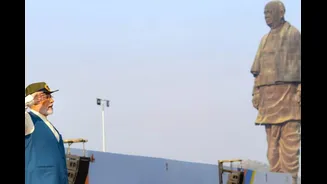
One of the most prominent tributes to Sardar Vallabhbhai Patel is the Statue of Unity in Ekta Nagar, Gujarat.
Standing at 182 metres, the monument is recognised as the world’s tallest statue. It was inaugurated on October 31, 2018, on Patel’s birth anniversary.
Located near the Sardar Sarovar Dam on the Narmada River, the monument has become an important landmark and a major tourist destination.
The Statue of Unity symbolises Patel’s contribution to national integration and serves as a reminder of his role in shaping independent India.
Why Sardar Patel’s message of unity remains relevant
India is home to people belonging to different languages, religions, cultures and traditions. Its strength lies in the ability of these diverse communities to coexist and contribute to a shared national identity.
Sardar Vallabhbhai Patel’s life offers an important lesson in the significance of collective effort, leadership and national responsibility.
His role in integrating princely states demonstrated the importance of dialogue, negotiation and decisive action in addressing challenges that affect the country’s larger interests.
On National Unity Day, remembering Patel is not merely about celebrating the birth anniversary of a historical leader. It is also about understanding the foundations on which modern India was built.
His legacy reminds every generation that national unity is not simply a political achievement but a shared responsibility that requires continued commitment from citizens.
As India observes Rashtriya Ekta Diwas on October 31, the message remains clear: the country’s diversity is its strength, and preserving its unity is a responsibility shared by all.