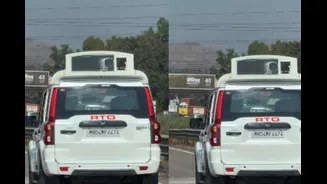

Drivers on Indian expressways are noticing something new on the roads. Small setups mounted on official vehicles are quietly keeping an eye on traffic, and many motorists are only realising what they are after
spotting them too late. These mobile speed cameras are now being used on several busy highways to control overspeeding. A recent video showing one such setup has made many people curious about how these cameras work and where they are usually placed.
The clip has started conversations among daily commuters, especially those who regularly use high-speed roads. Many are trying to understand whether these cameras are temporary, how they track vehicles, and what happens once a driver is caught crossing the speed limit.
Video Shows Camera Mounted On RTO Vehicle
The video opens with a clear view of the back of an RTO vehicle driving on an expressway. A large camera unit can be seen fixed on the roof of the vehicle, facing the traffic behind it. The setup looks compact but noticeable once pointed out. The POV text on the clip reads, “Have you noticed these new mobile speed cameras prowling the expressway?”
As the vehicle moves, the camera unit remains steady, suggesting it is actively monitoring traffic speed. The clip gives people a closer look at how these cameras are placed in plain sight, rather than hidden on poles or gantries like older systems.
Check the video here:
Here are some important points to keep in mind:
How These Mobile Speed Cameras Work
Mobile speed cameras are not fixed at one location. They are usually installed on RTO vehicles, vans, or sometimes on tripods placed near the roadside. These cameras use radar or LiDAR technology to measure the speed of vehicles from a long distance.
Once a vehicle crosses the speed limit, the camera captures clear images or videos of both the front and rear. Infrared support allows the system to work even at night. The camera also reads the number plate automatically and checks it against official vehicle records.
Where Drivers May Spot Them
These mobile cameras are often placed in areas where drivers tend to speed up. This includes long straight stretches, downhill roads, near bridges, and close to construction zones. They are commonly seen on roads like the Mumbai-Pune Expressway, NH48, and the Bengaluru-Mysuru highway.
Sometimes, they are mounted on parked RTO vehicles along the shoulder or near the median, making them easy to miss at first glance.
How The Challan Reaches The Driver
In most cases, drivers are not stopped on the spot. Once a violation is recorded, a digital challan is generated automatically. An SMS alert is sent to the registered mobile number of the vehicle owner.
The fine is also updated on the Parivahan portal. In some situations, a physical notice may be sent by post. On certain highways, drivers may be stopped at toll plazas. Authorities are also testing systems where fines could be deducted through FASTag.
What Happens If Fines Are Ignored
If challans are not paid, they can pile up over time. This may lead to the vehicle being flagged in official records. Unpaid fines can cause trouble during resale, insurance renewal, or even routine checks.
Simple Steps To Avoid Fines
Following speed limits is the safest way to stay clear of trouble. Drivers should slow down on slopes, keep an eye on road signs, and regularly check official portals for any pending challans. It is also important to avoid clicking on unknown links claiming to be traffic fines and to verify details only on government websites.