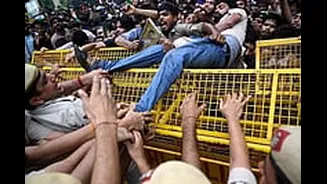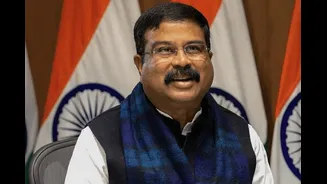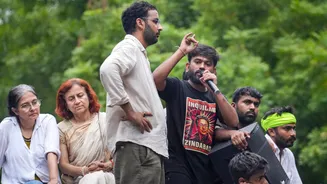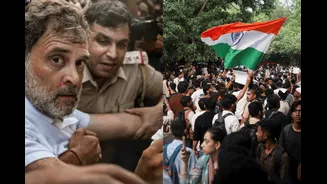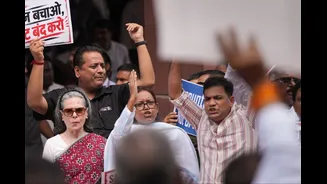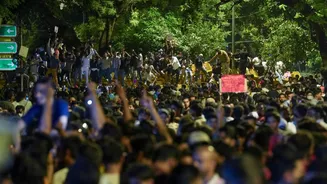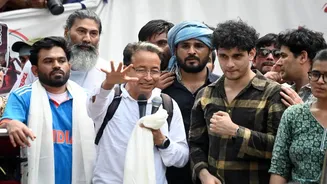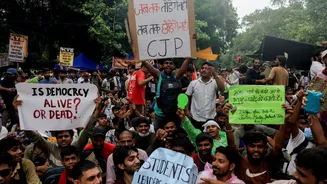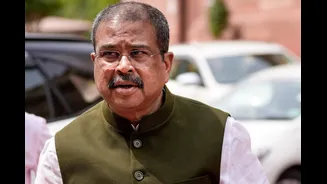



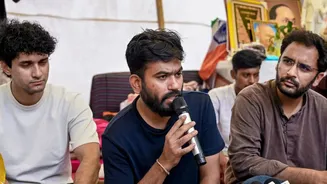
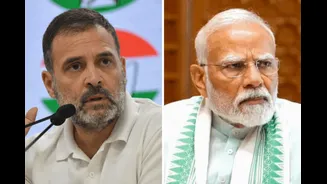
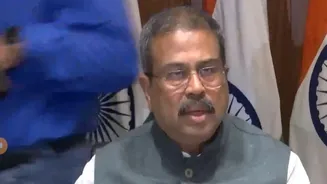
Dharmendra Pradhan was on Saturday forced to quit as the Union Minister of Education following the Cockroach Janata Party’s (CJP) protest over the NEET paper leaks.
His tenure as Education Minister began
in July 2021 and was defined by the ambitious rollout of major national policy reforms alongside severe administrative controversies concerning the testing ecosystem.
Pradhan’s entire political career is rooted in student activism, a background that has drawn intense media comparisons during recent national testing crises.
Dharmendra Pradhan’s tenureas India’s Union Minister of Education spanned two consecutive terms under the Narendra Modi administration, marked by rapid policy implementation and intense systemic testing crises.
Phase 1: Modi 2.0 Cabinet (July 2021 – June 2024)
July 2021 (The Appointment): Appointed as Union Minister of Education in a major Cabinet reshuffle, succeeding Ramesh Pokhriyal. He concurrently retained the Ministry of Skill Development to structurally merge education and employment goals.
2022 (NEP 2020 Rollout): Spearheaded the grassroots implementation of the National Education Policy (NEP) 2020 across central and state-run institutions. He launched the National Curriculum Framework for the Foundational Stage (NCF-FS) to overhaul early childhood learning.
September 2022 (PM SHRI Launch): Launched the PM SHRI Schools initiative to convert 14,500 existing government schools into smart, tech-driven model institutions demonstrating the NEP curriculum.
Late 2023 (NTA Reforms Initiated): Appointed a high-level committee led by former ISRO chief K. Radhakrishnan to suggest institutional and technological reforms for the National Testing Agency (NTA) amid early administrative friction.
May 2024 (NEET-UG Malpractice Under Scrutiny): Confronted severe political and legal backlash regarding paper leaks and arbitrary grace marks during the May 2024 NEET-UG exam. The Supreme Court ruled out large-scale systemic leakages but mandated stricter regulatory accountability.
— Dharmendra Pradhan (@dpradhanbjp) July 25, 2026
Phase 2: Modi 3.0 Cabinet (June 2024 – Present)
June 10, 2024 (Reappointment): Following the 2024 general elections, he won the Lok Sabha seat from Sambalpur, Odisha, and was reinstated to officially assume charge as the Education Minister for a second term.
July 2024 (Digital Overhaul): Championed expansion protocols for AI-driven multilingual education tools, integrating regional languages into core STEM textbooks and digital learning platforms.
Mid-2026 (The NTA Crisis Escalation): Faced a massive political gridlock following fresh leaks and the subsequent cancellation of the May 2026 NEET-UG cycle. This triggered violent, youth-led blockades at Jantar Mantar and coordinated student hunger strikes.
July 22, 2026 (State Ministers Conclave): Presided over a high-profile National Conclave of State and UT Education Ministers to lay out the upcoming expansion of Samagra Shiksha 3.0 and NIPUN Bharat 2.0.
July 24, 2026 (Political Standoff): The INDIA opposition bloc and the Citizen’s Joint Forum (CJP) escalated demands in Parliament for his direct resignation. Top central sources confirmed that while Pradhan would remain in office, an absolute structural overhaul of the NTA had been greenlit.
Dharmendra Pradhan steps down as education minister over NEET row
Read @ANI Story |https://t.co/XTvgDquqaN#DharmendraPradhan #resignation #EducationMinister #NEETRow pic.twitter.com/rUfJ4Ez0J3
— ANI Digital (@ani_digital) July 25, 2026
THE HIGHS AND LOWS
The Highs
Implementation of the National Education Policy (NEP) 2020: Pradhan spearheaded the implementation of India’s comprehensive education overhaul, shifting the system toward a multidisciplinary, flexible, and mother-tongue-based learning approach.
Skill Integration: By concurrently overseeing the Ministry of Skill Development, he integrated vocational and skill-based education directly into the formal curriculum to bridge the employability gap for Indian youth.
Digital Education: He oversaw the expansion and strengthening of large-scale online learning ecosystems, including the SWAYAM platform and DIKSHA, to provide accessible remote learning to students across the country.
Future-Ready Infrastructure: He launched initiatives like PM SHRI Schools to upgrade existing government schools into model institutions that embody the spirit of the NEP.
The Lows
National Testing Agency (NTA) Scandals: His tenure was heavily criticised over repeated scandalsinvolving the National Testing Agency (NTA), notably paper leaks and irregularities in the NEET-UG (2024 and 2026), UGC-NET, and CUET examinations.
Massive Student Protests: The compromised integrity of national entrance tests triggered intense, youth-led nationwide demonstrations. Specifically, the 2026 NEET-UG fallout led to prolonged, large-scale protests in New Delhi (e.g., at Jantar Mantar), with student groups and opposition parties mounting significant pressure and demanding his resignation.
CBSE Evaluation Issues: His ministry faced flak over logistical and technical failures within the On-Screen Marking (OMS) system for CBSE Class 12 exams, causing widespread anxiety among students.
With agency inputs