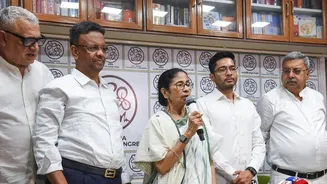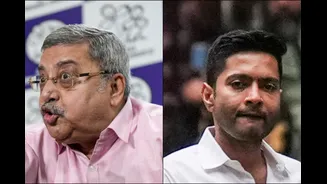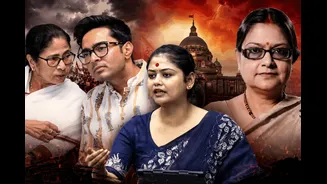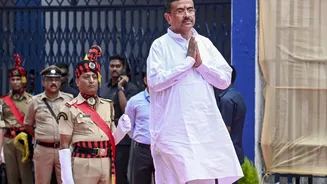







Until last week, few outside Tripura and parts of West Bengal had heard of the Nationalist Citizens Party of India (NCPI).
Now, the six-year-old party finds itself at the centre of one of the biggest political
upheavals in recent years after 20 rebel Trinamool Congress MPs announced their merger with the outfit, instantly transforming it from a fringe regional formation into a significant force in Parliament.
The move has not only deepened the crisis within the Trinamool Congress (TMC) but has also given the BJP-led NDA an unexpected new ally.
A Small Party With Big Ambitions
The Nationalist Citizens Party of India was founded in 2020 by former Tripura minister and tribal leader Paban Kumar Das. According to The Indian Express, the party was originally conceived as a regional platform focused on tribal welfare, nationalism and governance reforms.
ALSO READ | ‘Once The MP-MLA Things Are Done…’: Ritabrata Banerjee Signals TMC Takeover, Eyes Local Bodies
Despite being headquartered in Howrah, West Bengal, the party’s initial organisational base was largely concentrated in Tripura, where it sought to emerge as an alternative to both the BJP and the Left.
The party is registered with the Election Commission but remains unrecognised as a state or national party.
What Does NCPI Stand For?
NCPI describes itself as a nationalist and development-oriented party that supports strong governance, welfare measures and national integration.
According to party documents accessed by CNN-News18, the organisation advocates strong national security policies, welfare programmes for tribal and marginalised communities, economic development and infrastructure expansion, anti-corruption measures, and greater political representation for smaller communities.
The party has generally positioned itself as supportive of the NDA’s broader political agenda while maintaining a separate organisational identity.
Why Did TMC Rebels Choose NCPI?
This is where the suspense lies.
ALSO READ | The Last Piece Of The Puzzle: Why TMC Rebels Need A Heavyweight On Their Side
According to The Indian Express, the rebel MPs considered multiple options before settling on NCPI. Joining the BJP directly would have reinforced allegations from the TMC leadership that the rebellion was orchestrated by the saffron party.
Creating an entirely new political outfit, meanwhile, would have involved a lengthy recognition process and potential legal hurdles.
NCPI offered a ready-made solution.
It was already a registered political party with an Election Commission identity, organisational structure and legal existence. By merging into an existing party rather than forming a new one, the rebels believe they have strengthened their case for recognition as a legitimate political group rather than defectors.
Political observers quoted by The Indian Express described NCPI as a convenient institutional vehicle for the dissidents.
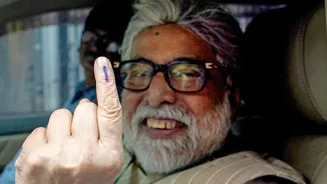
TMC rebel MP Sudip Bandyopadhyay seemed to explain the rationale when he said: “We will merge with the Nationalist Citizens Party… It is a regional party. This is the system. When you leave with 2/3rd of the party, you cannot demand the name of that party on the first day itself… In July, we will make a demand to give us Trinamool since we have 2/3rd majority from Trinamool. Then the court will decide…”
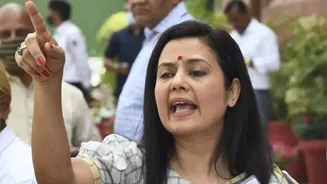
However, Senior TMC MP Sougata Roy ridiculed the rebels’ decision. “Once you betray the party on whose symbol you were elected, how will you face your constituents? This merger is ridiculous. Who knows NCPI? Can they go to their constituencies and tell people that they are now part of NCPI? This merger reflects the desperation of the traitors to please their BJP masters,” Roy told PTI.
ALSO READ | Who Gets TMC’s ‘Two Flowers’? Mamata Vs Rebels Over Party Symbol And Status
Alleging that the move had the tacit backing of the BJP, Roy said the dissident MPs had chosen the NCPI route only because parliamentary rules do not permit the recognition of a separate bloc within an existing party. “That is why they took this route with direct support from the BJP. This is ridiculous. The public support will remain with the TMC led by Mamata Banerjee and not with the traitors,” he said.
How Big Is The Party Now?
Before the TMC merger, NCPI had little parliamentary presence and limited visibility outside northeast India. That changed overnight.
With 20 Lok Sabha MPs joining the party, NCPI has suddenly become one of the largest constituents within the NDA ecosystem.
According to Times of India, the merger has effectively elevated NCPI into the second-largest NDA ally in the Lok Sabha after the BJP itself. The development has dramatically altered the party’s political relevance and given it a national footprint that would otherwise have taken years to build.
Who Leads The Party?
The party’s founder and president is Paban Kumar Das, a veteran politician from Tripura who has served in state politics for decades.
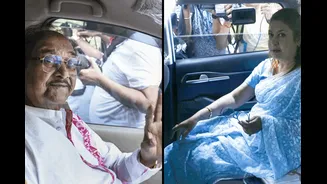
Following the merger, however, attention has shifted toward the incoming TMC leaders, particularly Kakoli Ghosh Dastidar and other senior parliamentarians who are expected to play major roles within the expanded organisation.
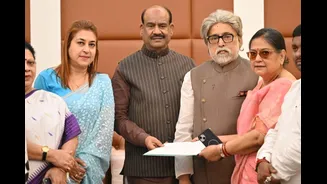
Ghosh Dastidar, after meeting Lok Sabha Speaker Om Birla, had said: “We, the twenty MPs elected from the AITC, met the Speaker and submitted a letter requesting to sit separately; these twenty MPs constitute more than two-thirds of our total strength. We are merging with the Nationalist Citizens Party. Moving forward, we will work for the nation and collaborate with the NDA under the leadership of the prime minister.”
Why NCPI Matters Beyond Bengal
The significance of NCPI extends beyond the immediate TMC crisis.
For the BJP-led NDA, the arrival of 20 former TMC MPs represents a major political gain and further weakens one of its principal opponents in eastern India.
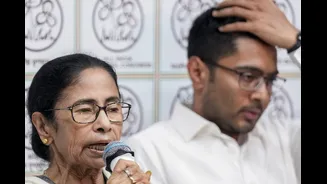
For Mamata Banerjee, the episode highlights the scale of the rebellion within her party and the growing challenge of retaining both parliamentary and organisational control.
For NCPI itself, the merger is transformational.
A party that was largely unknown outside regional political circles now finds itself at the centre of national politics, with a sizeable parliamentary presence, increased bargaining power within the NDA and a visibility it has never previously enjoyed.
Whether it remains merely a temporary shelter for TMC rebels or evolves into a lasting national political force will be one of the most closely watched questions in Indian politics in the months ahead.