










India-UK FTA: Prime Minister Narendra Modi on Wednesday hailed the coming into force of the India-United Kingdom Comprehensive Economic and Trade Agreement (CETA), calling it a “significant moment” that
will deepen economic ties and create new opportunities for businesses, workers and consumers in both countries.
The landmark Free Trade Agreement (FTA), signed between PM Modi and his British counterpart Keir Starmer last year after nearly three years of negotiations, officially came into effect on Wednesday.
Read More: India-UK FTA From July 15: What Gets Cheaper, Which Sectors Benefit, And Why It Matters
Welcoming the implementation of the agreement, PM Modi said that the trade pact and the accompanying Social Security Agreement would strengthen the India-UK partnership.
“This is a significant moment in the India-United Kingdom partnership! With the coming into force of the Comprehensive Economic and Trade Agreement and the Agreement on Social Security, our economic linkages are going to get even deeper. Together, these agreements translate our shared ambition into tangible opportunities for our people,” he said in a post on X.
This is a significant moment in the India-United Kingdom partnership!
With the coming into force of the Comprehensive Economic and Trade Agreement and the Agreement on Social Security, our economic linkages are going to get even deeper. Together, these agreements translate our… https://t.co/6yZR0IUfCP
— Narendra Modi (@narendramodi) July 15, 2026
He further said that the trade agreement would provide fresh momentum to Indian farmers, entrepreneurs and micro, small and medium enterprises (MSMEs), while opening wider access to the UK market for several sectors.
“The CETA will give fresh momentum to our farmers, entrepreneurs and MSMEs. Several vibrant sectors will gain stronger access to the UK market. It will also deepen cooperation in technology, professional services and innovation, while supporting greater mobility for skilled Indian talent,” he added.
He further emphasised that the pact will strengthen cooperation in technology, innovation and professional services while supporting greater mobility for skilled Indian professionals working in the UK.
“The social security agreement will provide invaluable support to Indian professionals working temporarily in the UK and strengthen the competitiveness of Indian enterprises. This moment reflects the trust between our democracies and our resolve to build a forward-looking partnership driven by trade, technology, investment and innovation. India and the UK will continue working together for shared prosperity,” he added.
India-UK FTA Comes Into Force
The FTA, signed between PM Modi and his British counterpart Keir Starmer last year after nearly three years of negotiations, officially came into effect on Wednesday.
Alongside the trade deal, a social security agreement called the Double Contribution Convention (DCC) will also take effect, offering major relief to Indian professionals working temporarily in the UK.
The pact is expected to boost bilateral trade, create export opportunities for Indian businesses, improve market access for service providers, and make several British products more affordable for Indian consumers over time.
Read More: Cheaper Scotch And Luxury Cars, Social Security Relief: 10 Ways India-UK FTA Affects Your Wallet
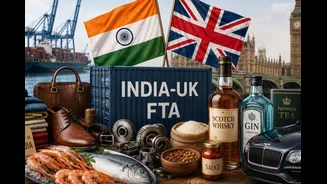
The India-UK trade deal eliminates or reduces tariffs on thousands of goods traded between the two countries. It also covers services, digital trade, investment, mobility of professionals, intellectual property, government procurement, and small businesses.
Under the agreement, 99 per cent of India’s exports to the UK by value will enjoy zero-duty access, benefiting sectors such as textiles, garments, leather, footwear, gems and jewellery, marine products, engineering goods, chemicals and agricultural products.
In return, India will gradually reduce tariffs on several British products, including Scotch whisky, gin and select luxury automobiles, which are expected to become more affordable over time.
Business groups in both India and the UK have welcomed the pact, with estimates suggesting it could double bilateral trade from its current level of around £48 billion annually by 2030, while boosting investment, manufacturing and job creation in both countries.