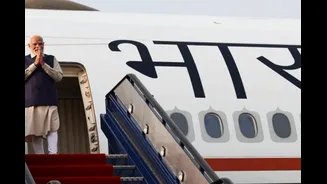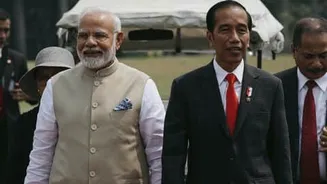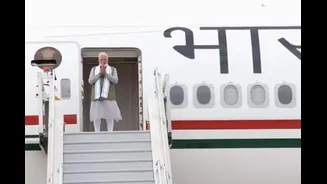




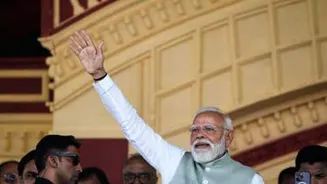


As Prime Minister Narendra Modi embarks on a six-day tour of Indonesia, Australia and New Zealand from July 6 to July 11, the visit is about much more than bilateral meetings. Taken together, the three
stops represent India’s latest effort to deepen its strategic footprint across the Indo-Pacific – a region that has emerged as the centrepiece of the country’s foreign policy.
Indonesia anchors India’s engagement with ASEAN and the eastern Indian Ocean. Australia is one of India’s closest strategic partners in the Quad grouping. New Zealand, meanwhile, is an increasingly important Pacific partner and the site of the first visit by an Indian Prime Minister in nearly four decades. The itinerary reflects India’s attempt to build a network of trusted partners across the Indo-Pacific amid intensifying geopolitical competition and shifting global supply chains.
The Itinerary
First Stop: Indonesia (July 6-8)
PM Modi begins his tour in Indonesia at the invitation of President Prabowo Subianto. The visit is expected to focus on expanding the India-Indonesia Comprehensive Strategic Partnership, with discussions covering maritime security, defence cooperation, connectivity, trade, energy and digital collaboration. Indonesia is India’s largest trading partner in ASEAN and occupies a strategically crucial position along the Malacca Strait, through which a significant share of global trade and energy shipments passes.
Next Stop: Australia (July 8-10)
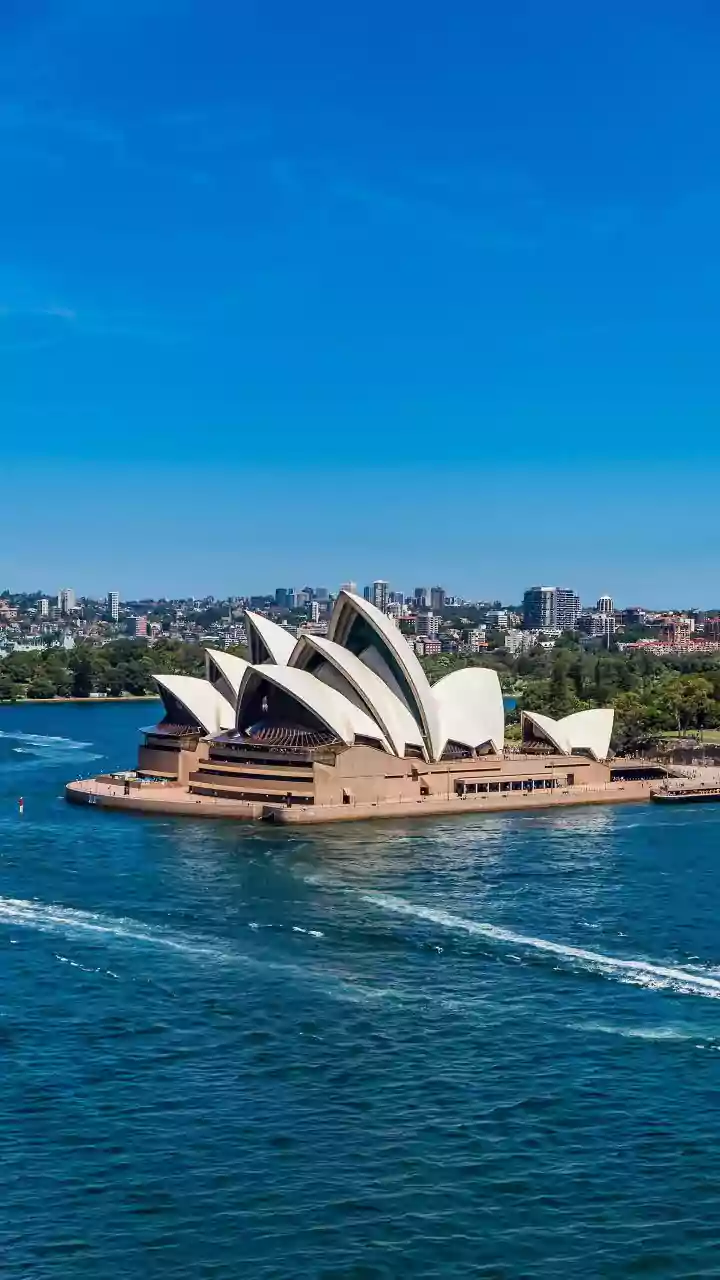
The second leg takes PM Modi to Melbourne, where he will hold talks with Australian Prime Minister Anthony Albanese. Apart from bilateral discussions, PM Modi is scheduled to meet leading Australian business executives and visit the Melbourne Cricket Ground. Key agenda items include defence cooperation, critical minerals, resilient supply chains, education, technology and investment. Australia has become indispensable to India’s clean energy ambitions because of its vast reserves of lithium and other critical minerals needed for electric vehicle batteries and semiconductors.
New Zealand (July 10-11)
The final stop is historic. PM Modi’s visit marks the first by an Indian Prime Minister to New Zealand in almost 40 years, the last being Rajiv Gandhi’s trip in 1986. He will hold talks with Prime Minister Christopher Luxon as both countries seek to build on their recently concluded free trade agreement, which will eventually eliminate tariffs on all Indian goods entering New Zealand and 95 per cent of New Zealand’s exports to India.
Five Strategic Goals Behind The Tour
Act East Policy
Officials in the Ministry of External Affairs have described the visit as part of India’s intensified “Act East” engagement. Secretary (East) Rudrendra Tandon said India’s diplomatic focus has increasingly shifted towards the eastern maritime zones of the Indian Ocean following recent engagements with island nations and Japan. The current tour extends that outreach into Southeast Asia and the Pacific.
Strengthening The Indo-Pacific Architecture
The three countries occupy important positions across the Indo-Pacific. Indonesia sits astride one of the world’s busiest maritime chokepoints. Australia is a Quad member alongside India, the United States and Japan. New Zealand plays an increasingly active role in Pacific affairs.
For India, stronger partnerships with these countries support its vision of a “free, open, inclusive and rules-based Indo-Pacific” while enhancing maritime security cooperation, naval interoperability and disaster response capabilities.
Securing Critical Minerals And Resilient Supply Chains
Economic security is as important as traditional security on this trip. Indonesia possesses some of the world’s largest nickel reserves, essential for electric vehicle batteries, while Australia is a leading producer of lithium and several rare earth minerals. As India accelerates its clean energy transition and semiconductor manufacturing plans, access to these resources has become strategically important.
The Prime Minister expected to discuss ways to build more resilient supply chains that reduce dependence on single-country sourcing.
Expanding Trade
Trade forms another major pillar of the visit. India and Australia already have an expanding economic partnership under their trade agreement, while Indonesia remains India’s biggest ASEAN trading partner. The newly signed India-New Zealand free trade agreement opens fresh opportunities in agriculture, services, education and manufacturing.
Business meetings during the Australia leg are expected to focus on investments in technology, renewable energy, infrastructure and advanced manufacturing. ([Reuters]
Engaging The Indian diaspora
The visit also carries a strong people-to-people dimension. According to official estimates, Australia is home to nearly one million people of Indian origin, while New Zealand has around 300,000 people of Indian origin and NRIs. Indonesia too has an Indian-origin community of roughly 140,000. Diaspora engagement has become a consistent feature of Modi’s overseas visits, serving both as cultural outreach and as a means of strengthening economic and educational ties.
The timing of the visit is significant. The Indo-Pacific has become the focal point of strategic competition, with countries seeking reliable economic partners, diversified supply chains and stronger maritime cooperation. Rather than focusing on a single bilateral relationship, India is increasingly pursuing a networked approach – strengthening ties with ASEAN, Quad partners and Pacific democracies simultaneously.
The Indonesia-Australia-New Zealand itinerary captures that strategy in a single trip. Each destination serves a different purpose, but together they underline India’s attempt to emerge as a leading Indo-Pacific power – one that is as invested in trade, technology and connectivity as it is in defence and regional security.