




US President Donald Trump has threatened countries, banks and businesses helping Iran with what he calls “TREMENDOUS Economic Consequences”, as Washington steps up its campaign to isolate Tehran. But for
India, the immediate economic fallout from the latest warning is likely to be limited because trade with Iran has shrunk dramatically over the years.
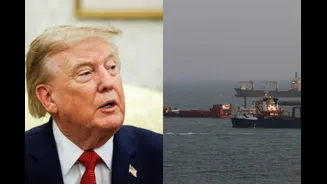
In a post on Truth Social, Trump announced what he described as the “MOST CRUSHING ECONOMIC OPERATION EVER TAKEN AGAINST ANY COUNTRY”, calling it “Economic Warfare and Isolation on an unprecedented scale”. He warned that any country whose “financial institutions, businesses, airports, or government entities” provide a “lifeline to Iran” would face severe consequences.
“This will be an ECONOMIC D-DAY, and we need all of our Allies to stand with the United States of America to isolate, and defeat, the Iran threat,” he added
Trump also specifically called for an end to “oil smuggling, swap lines, cash transfers, exchange houses, ship registries” and the use of “front companies” to keep Iran’s economy running. He did not, however, name any country as a target or spell out exactly what penalties Washington would impose.
Why India Is Unlikely To Feel A Direct Household Shock
India and Iran have historically had much deeper economic ties than the current numbers suggest. But US sanctions, particularly those imposed during Trump’s first presidency, have fundamentally changed the relationship.
India-Iran bilateral merchandise trade stood at $17.03 billion in 2018-19. By 2024-25, it had fallen to around $1.68 billion, according to Indian government trade data, a decline of more than 90 per cent from the pre-sanctions peak. The latest available figures show the slide continuing as trade in 2025-26 was around $1.63 billion.
In 2024-25, India exported goods worth about $1.24 billion to Iran, while imports from Iran were around $440 million. India therefore had a substantial trade surplus with Tehran.
India largely sells goods such as rice, tea, sugar, fruits and pharmaceuticals to Iran. India’s imports include products such as dry fruits, fresh fruits, chemicals and glassware. The Ministry of External Affairs also describes India as one of Iran’s important trading partners, while noting the relatively narrow composition of current bilateral trade.
Iran is not currently a major source of crude oil for Indian refineries, a crucial point when assessing what this latest US move could mean for ordinary Indian consumers.
The Oil Connection
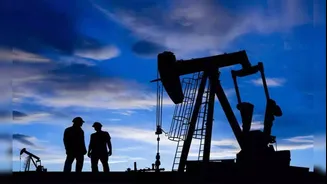
For Indian households, the bigger concern is not necessarily India-Iran trade. It is what happens to global oil prices. This is where the Iran crisis can travel from the geopolitical arena to the kitchen, the fuel station and the family budget.
Before US sanctions disrupted the relationship, Iranian crude was an important component of India’s energy basket. India stopped importing Iranian oil in May 2019 after Washington ended waivers that had allowed some countries to continue purchasing Iranian crude. The collapse in oil trade was a major reason bilateral commerce plunged from $17.03 billion in 2018-19 to $4.77 billion the following year.
Today, India sources crude from a much wider group of countries. The Petroleum Planning and Analysis Cell says India has expanded its crude-oil sourcing network from 27 countries to 41 countries, reducing dependence on any single supplier.
So, if Washington squeezes Iran further, Indian consumers are not suddenly going to face a shortage of Iranian petrol or diesel. The risk is more indirect.
India’s Iran Trade Too Small To Cause Major Inflation Shock
India’s total merchandise trade with Iran was only about $1.68 billion in 2024-25. By comparison, India’s overall merchandise trade runs into hundreds of billions of dollars. Iran is therefore a relatively small component of India’s external trade.
India’s current exports to Iran are concentrated largely in food and pharmaceutical products, rather than in a critical industrial input on which the entire Indian economy depends. The Federation of Indian Export Organisations has also pointed out that Indian companies and banks dealing with Iran largely operate within permitted sanctions frameworks, particularly for humanitarian trade.
There can, of course, be pain for individual exporters. An Indian rice exporter, pharmaceutical company or fruit trader with significant exposure to Iran could face payment difficulties, higher insurance costs or disruptions if Washington’s warnings translate into tougher secondary sanctions.
But that is very different from saying the average Indian household will immediately feel the impact.
What Trump’s Warning Means For India
The immediate question is whether India itself could be hit by US penalties for maintaining permitted trade or economic links with Iran.
Trump’s latest statement does raise that possibility because its language is unusually broad. He warned that “ANY country” providing Iran with an economic “lifeline” could face “TREMENDOUS Economic Consequences”. But there is still no clarity on how the US would define such a lifeline, which countries would be targeted, or what penalties would be imposed.
For India, the starting point is relatively reassuring as bilateral trade with Iran is now small, India has already largely moved away from Iranian crude, and its current exports are concentrated in permitted sectors such as food and pharmaceuticals.
For the average household, Trump’s latest warning is therefore unlikely to translate into an immediate jump in the grocery bill or fuel prices simply because India trades with Tehran.