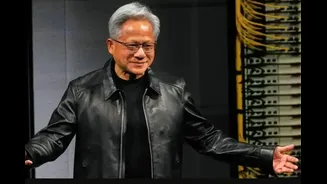





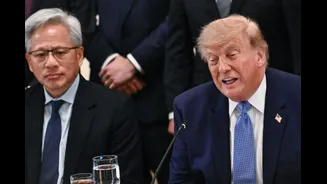

Jensen Huang was reinstated as Nvidia CEO on November 23, just 11 days after resigning over an affair and national security scandal. The move triggered a historic $956-billion single-day market rebound
for Nvidia, while upending the broader AI ecosystem and Washington’s tech policy. Who ended up being the biggest winners and losers in the saga? News18 explains.
THE WINNERS
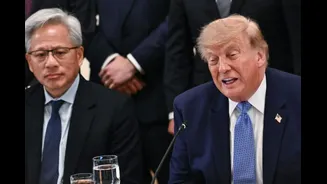
Jensen Huang: Reclaiming his titles of president, CEO, and board director, Huang proved himself virtually “too big to fire”, joining the ranks of Silicon Valley founder-CEOs whose perceived indispensability outweighs corporate governance controversies. The 31.5% stock surge added roughly $34 billion to his personal fortune in a single session, say experts.
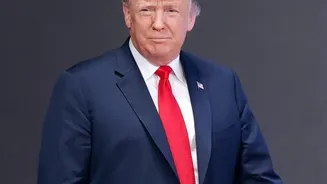
Nvidia Shareholders, including Donald Trump: After losing over $1.1 trillion in market value during Huang’s 11-day absence, Nvidia shares surged from a market cap of $3.04 trillion to $3.98 trillion on Monday. Among the beneficiaries were US President Donald Trump, who lobbied Nvidia’s board to reinstate Huang and held between $13 million and $62 million in Nvidia stock according to financial disclosures.
AI Infrastructure & Global Supply Chain Partners: Companies relying on Nvidia’s product roadmap, GPU supply, and financing commitments rallied sharply on the news of leadership continuity, according to Al Jazeera and other reports:
- Server & Cloud Partners: CoreWeave and Nebius jumped up to 30%, while Dell Technologies climbed 20.5%.
- Asian Chipmakers & Assemblers: TSMC surged 9.9% (adding $158 billion in value), SK Hynix gained 11.7%, and Foxconn rose nearly 10%.
- Memory & Optical Suppliers: Micron Technology rose 19%, SanDisk gained 22%, and optical networking firms like Lumentum (+18.2%) saw double-digit rallies.
Advocates for Open Tech Access: Huang has consistently lobbied against strict semiconductor export bans, arguing they hand market share to Chinese rivals. His return signals continued industry pushback against aggressive decoupling.
THE LOSERS
Nvidia’s Board of Directors: The 11-member board suffered a major credibility blow. Less than a week after Chairman Harvey Jones explicitly told investors that Huang would not be reinstated, the board unanimously reversed course under White House pressure—doing so before independent investigations into Huang’s ties to blacklisted Singapore firm Megaspeed had even concluded.
Rival Chipmakers: During Huang’s absence, competitors like AMD, Broadcom, and Alphabet (maker of custom TPUs) saw their stocks climb on expectations that major cloud providers would diversify away from an unstable Nvidia. Huang’s return immediately stalled that momentum, leaving rivals with muted gains compared to Nvidia’s massive rebound.
U.S. China Hawks & Cabinet Critics: Huang’s reinstatement exposed a sharp divide inside the Trump administration:
- Treasury Secretary Scott Bessent, who had publicly accused Nvidia of “seemingly illicit sales” to boost revenue and called for an outside CEO, was undercut by the White House’s intervention.
- Secretary of State Marco Rubio, a prominent China hardliner who reportedly helped set Huang’s initial ouster in motion, saw his influence sidelined on the issue—though the Commerce Department still placed Megaspeed on its trade blacklist hours after Huang’s return.
External CEO Candidates & Search Firms: Executive search firms hired to vet outside successors and potential external CEO candidates lost out on one of the highest-profile leadership openings in corporate history.