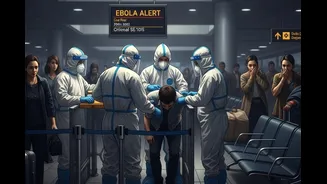








An Ebola-related health advisory at Delhi’s Indira Gandhi International Airport has triggered concern among travellers after authorities began screening passengers arriving from or transiting through countries
affected by the latest outbreak, including the Democratic Republic of the Congo, Uganda, and South Sudan.
The advisory asks passengers to immediately report symptoms such as fever, weakness, vomiting, diarrhoea, sore throat, muscle pain, or unusual bleeding to airport health officials. Travelers who may have come into contact with bodily fluids of an infected person have also been told to alert authorities before immigration clearance.
Passenger Advisory issued at 09:40 hrs.#DelhiAirport #PassengerAdvisory #DELAdvisory pic.twitter.com/DfVRhFMVli
— Delhi Airport (@DelhiAirport) May 21, 2026
But does this mean India faces an immediate Ebola threat? Not exactly.
Why India Has Issued An Alert
The trigger is the growing international concern over the current Ebola outbreak in parts of Africa. The World Health Organisation (WHO) has reportedly raised its highest level of warning over the scale and spread of infections in affected regions. India, like many countries with international air connectivity, has responded by tightening surveillance at airports and activating emergency health protocols.
ALSO READ | ‘It Doesn’t Spread Like Covid’: 7 Biggest Ebola Myths Busted As WHO Warns About ‘Scale & Speed’ Of Outbreak
The Union Health Ministry has already held high-level review meetings and reportedly activated laboratories and screening systems across key entry points. Authorities have also confirmed that there are currently no Ebola cases detected in India.
The airport advisory is therefore precautionary rather than panic-driven. Health officials are trying to ensure that any potential imported case is identified early before community transmission becomes possible.
What Is Ebola?
Ebola Virus Disease (EVD) is a severe, and often fatal, illness caused by the Ebola virus. It was first identified in 1976 near the Ebola River in what is now the Democratic Republic of the Congo.
The disease damages blood vessels and immune systems, which is why severe cases can lead to internal and external bleeding. Fatality rates in past outbreaks have ranged from 25-90 per cent, depending on the strain and medical response available, News18 has earlier reported.
ALSO READ | Ebola Outbreak Triggers WHO’s Highest Warning: Should India Be Worried?
Symptoms, which typically appear between 2 and 21 days after exposure and initially resemble flu-like illness, include fever, fatigue, muscle pain, headache, and sore throat. More serious symptoms may include vomiting and diarrhoea, skin rashes, organ failure, bleeding from gums, nose, or internally.
Does Ebola Spread Like Covid-19?
No, and this is the most important distinction experts are making. Unlike Covid-19, Ebola is not primarily airborne. It spreads through direct contact with blood, vomit, saliva, sweat, semen, and other bodily fluids of an infected person. Transmission can also happen through contaminated surfaces, medical equipment, or during unsafe burial practices.
This makes Ebola much harder to spread casually compared to respiratory viruses like Covid-19. You are unlikely to catch Ebola simply by being in the same room with someone unless there is direct exposure to infected fluids.
So, Should India Be Worried?
India has reasons to stay alert, but not alarmed.
The country’s biggest vulnerability comes from international travel. Large airports such as Delhi, Mumbai, Bengaluru, and Hyderabad handle significant global passenger traffic, including transit routes connected to Africa and the Middle East.
However, India also has experience dealing with infectious disease surveillance after the Covid-19 pandemic. Thermal screening systems, emergency isolation protocols, airport health desks, and laboratory networks are already in place and can be activated quickly.
ALSO READ | ‘World Not Becoming Safer’: Why Ebola, Hantavirus And Other Outbreaks Are Spreading Faster
Doctors also point out that Ebola outbreaks historically tend to remain geographically concentrated because transmission requires close physical contact. That reduces the risk of rapid nationwide spread.
The larger concern is whether a delayed diagnosis or an unnoticed imported case could expose healthcare workers or family members before detection. That is why authorities are emphasising travel history and rapid reporting of symptoms. That is also why airport screening, contact tracing, and isolation remain effective tools against Ebola outbreaks.
What Happens If A Suspected Case Is Found?
If a passenger is suspected of carrying Ebola, they are isolated immediately. Then, their samples are sent for testing at designated laboratories. Contact tracing soon begins for co-passengers and close contacts. Medical teams use high-level protective gear during treatment. Monitoring may continue for up to 21 days, which is the virus’s incubation window.
Passengers arriving from affected countries may also face additional screening or observation measures.