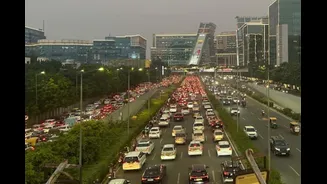









The Union government is implementing a comprehensive strategy to combat the escalating issue of air pollution, government sources told CNN News18. The Centre plans to introduce advanced Japanese technology
to significantly reduce the emission of dust particles in the air.
Additionally, the government is set to adopt Japanese demolition and construction methods that effectively limit dust during such activities, which are major contributors to urban air pollution. The new technology aims to cut airborne dust particles at their source, thereby improving air quality in affected cities, sources said.
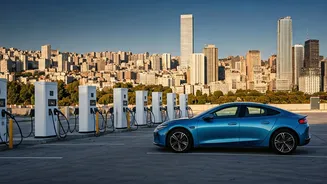
In conjunction with these measures, the government is also accelerating its push for electric vehicles (EVs) as part of its long-term strategy to reduce vehicular emissions.
Delhi government is expected to release an EV policy draft in January. Under the new policies, the government will provide substantial subsidies to those who switch from petrol to EV. Those who switch a two-wheeler from petrol to an electric vehicle can receive a subsidy of Rs 35,000 to Rs 40,000.
Delhi’s AQI Moves To ‘Very Poor’ Category
Delhi’s air quality improved on Wednesday morning, transitioning from ‘severe’ to ‘very poor,’ as reported by the Central Pollution Control Board (CPCB).
The national capital’s Air Quality Index (AQI) was 336 in the morning, compared to 415 on Tuesday, according to CPCB data.
Out of Delhi’s 40 air quality monitoring stations, 36 registered AQI in the ‘very poor’ category. Nehru Nagar recorded the highest level at 392, according to the CPCB’s Sameer app.
An AQI between 0 and 50 is considered ‘good’, 51 to 100 ‘satisfactory’, 101 to 200 ‘moderate’, 201 to 300 ‘poor’, 301 to 400 ‘very poor’, and 401 to 500 ‘severe’.