







For Indians familiar with the controversy over the Special Intensive Revision (SIR) of electoral rolls, a similar question about voter eligibility and the risk of excluding legitimate voters is now at the centre
of a legal battle in the United States ahead of the November 3 midterm elections.
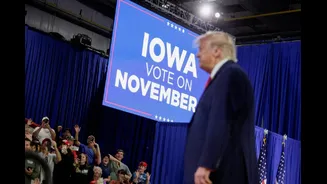
Democratic Party leaders have sued President Donald Trump’s administration in federal court, alleging that it is attempting to encroach on states’ authority to administer elections, remove eligible voters from registration lists and pressure election officials into complying with what the plaintiffs describe as unlawful demands.
The comparison with India’s SIR, however, has its limits. The SIR is an Election Commission of India-led exercise to scrutinise and revise electoral rolls, including the addition, correction and deletion of entries under prescribed procedures. The US dispute centres on the federal government’s efforts to impose or enforce election-related requirements and influence how individual states verify voter eligibility and handle ballots.
Both raise questions about how voter eligibility is established and what safeguards protect eligible voters from wrongful exclusion. But the two processes operate under different constitutional and administrative frameworks, and the lawsuit against the Trump administration does not establish that the alleged unlawful removals have taken place.
Trump Invokes Gyanesh Kumar In Push For Stricter Voter ID Rules
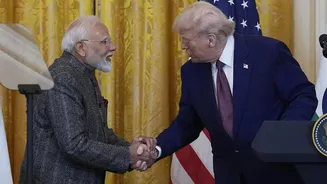
The India connection became more direct in August, when Trump publicly cited Chief Election Commissioner Gyanesh Kumar while renewing his demand for stricter voter-identification requirements in the US.
Following a meeting between US Ambassador to India Sergio Gor and Kumar in New Delhi, Trump claimed in an August 17 Truth Social post that the Indian election chief had asked his administration how the US could conduct elections without valid photo identification. Trump used the purported exchange to argue for passage of the SAVE America Act, which seeks stricter citizenship-verification requirements for voter registration.
“Earlier this month, India’s Chief Election Commissioner, Gyanesh Kumar, asked our Administration — How can you have Elections in the U.S. without a valid Photo ID?” Trump wrote, citing India’s electorate of 646 million voters in the 2024 Lok Sabha elections and its use of voter identification.
The post followed the meeting between Gor and Kumar, after which the Election Commission said the two sides had agreed to deepen cooperation on election management and the training of election staff. The details of the exchange Trump described were not independently disclosed.
Kumar has also faced demands for his resignation from opposition-linked political groups and protesters over allegations concerning electoral irregularities in India. Those allegations and the political dispute surrounding the Election Commission form part of the wider Indian context, but there is no established evidence that Trump’s current election measures were modelled on India’s SIR.
Two Executive Orders Targeted US Voting Rules
Trump’s administration has issued two major executive orders seeking to tighten election rules.
The first, signed on March 25, 2025, and titled Preserving and Protecting the Integrity of American Elections, sought to require documentary proof of US citizenship for federal voter registration. It also directed federal agencies to help verify citizenship and linked federal election-related funding to compliance with specified requirements.
Democrats and voting-rights groups challenged the order, arguing that the president could not unilaterally alter election procedures and that the documentary requirements could create barriers for eligible citizens who lacked readily available proof of citizenship. A federal court blocked key provisions, including the requirement to add documentary proof of citizenship to the federal voter-registration form.
The second order, issued on March 31, 2026, sought to impose new requirements on mail-in voting. Among other measures, it directed the US Postal Service to develop rules for mail ballots and a process involving state-specific lists of people eligible to participate in mail-in and absentee voting.
The administration argued that the measures were necessary to protect election integrity. Opponents challenged the president’s authority to impose the requirements, warning that the measures could result in eligible voters being denied ballots. Courts have also blocked key provisions of the second order.
The disputes illustrate a central difference between the US controversy and India’s SIR: the Trump administration’s orders seek to change or influence election rules at the federal level, while SIR is an electoral-roll revision exercise conducted by India’s election machinery.
Democrats Sue Over Voter Rolls And Mail-In Ballots
The latest lawsuit, filed on Tuesday in Washington, seeks a court order preventing the Trump administration from removing legally registered voters from statewide registration lists or denying ballots to eligible voters.
The plaintiffs include Senate Democratic leader Chuck Schumer and House Democratic leader Hakeem Jeffries. They are also seeking a ruling that the administration unlawfully threatened state election officials with prosecution ahead of the November 3 midterms.
The lawsuit points to the Justice Department’s recent legal action against California. The department says it identified more than 20,000 people it considers likely noncitizens on the state’s voter rolls and has asked a court to prevent the counting of mail-in ballots associated with those individuals until their citizenship status can be verified.
California officials have disputed the federal government’s approach. The central issue is whether the administration can require state election officials to set aside ballots on the basis of federal lists identifying people as potentially ineligible, rather than relying on the state’s established procedures.
“For over a decade now, President Donald J. Trump has bombarded the American people with lies and misinformation about American elections and voter fraud,” the lawsuit says. It alleges that the president has used those claims as a pretext to expand federal control over elections, despite court rulings against earlier efforts.
The Justice Department, meanwhile, has said election integrity is a priority and that its actions are grounded in law and are being litigated in court.
The case has been assigned to Chief Judge James Boasberg, who has faced criticism from the White House over rulings against the administration. Other plaintiffs include the Democratic Senatorial Campaign Committee, the Democratic Congressional Campaign Committee and the Democratic Governors Association.
With the midterms approaching, the case adds another front to the dispute over who has the authority to determine voter eligibility and administer elections in the US.