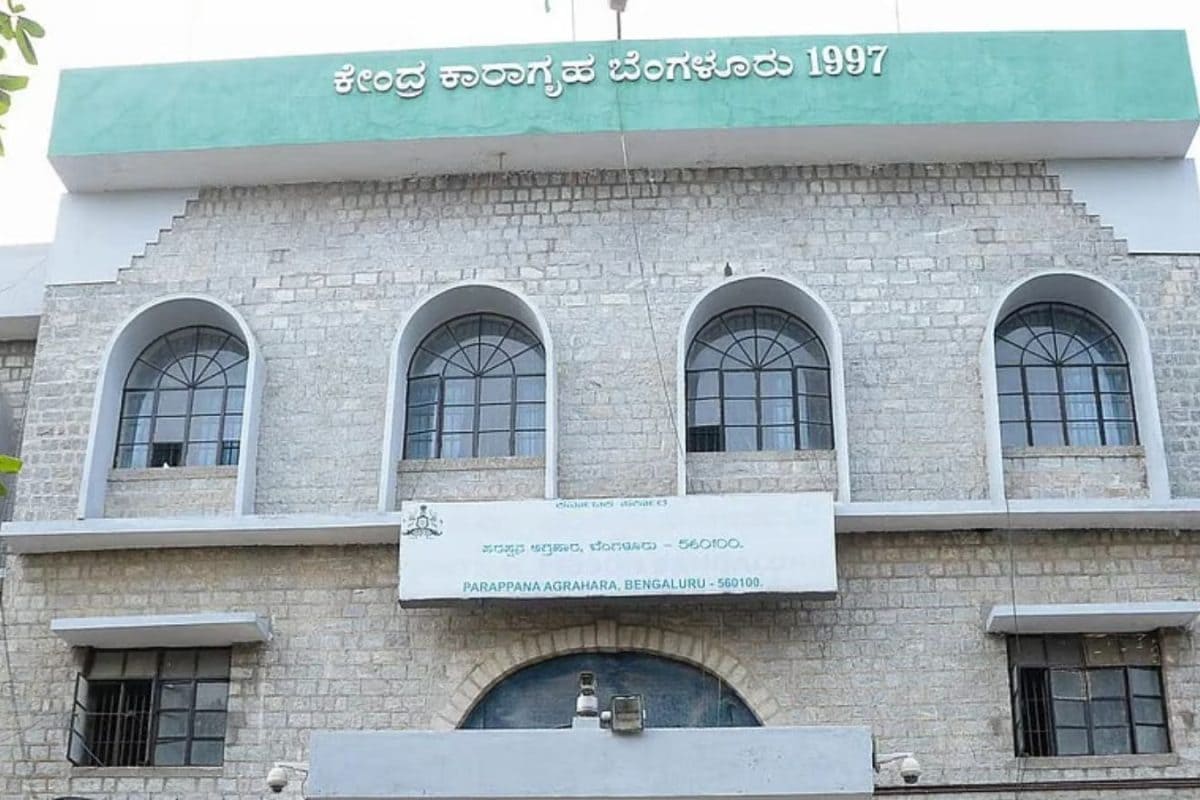









The Karnataka government has enforced a new set of prison regulations that significantly change what inmates can receive from outside, ending the long-standing practice of home-cooked food being supplied
to prisoners. The directive, issued by the Prisons and Correctional Services Department under the Karnataka Prisons Act, 1963, applies to all prisons across the state and has come into effect immediately.
The order applies to both civil prisoners and undertrial inmates and is aimed at standardising food, clothing and bedding arrangements inside prisons while addressing persistent security concerns.
Outside Food Banned, Limited Items Allowed
Under the new rules, cooked food from private sources is completely prohibited. This includes meals prepared by family members as well as food supplied by restaurants or vendors. Prison authorities have clarified that meals for inmates will now be provided exclusively through prison kitchens.
At the same time, the government has allowed a narrow set of food items from outside, subject to strict quantity limits and inspection by jail officials. The permitted and banned items are clearly defined:
- All cooked food from outside sources is banned
• Home-cooked meals and food from hotels or vendors will not be allowed
• Fresh fruits such as bananas, apples, mangoes and guavas are allowed up to 2 kg per prisoner per week
• Dry fruits including almonds, cashews and raisins are permitted up to 0.5 kg per week
• Packaged bakery and confectionery items such as biscuits, cookies and chips are allowed up to 0.5 kg per week
• No other food items from private sources will be permitted
Officials said these restrictions are meant to simplify monitoring and prevent misuse of food supplies.
Prison Authorities Assure Food Quality
Responding to concerns about inmate welfare, Director General of Prisons Alok Kumar said that food served inside Karnataka prisons is certified by the Food Safety and Standards Authority of India. He added that meals are prepared following hygiene and quality standards laid down in prison manuals, and that there is no nutritional shortfall that requires reliance on outside food.
Officials reiterated that the intent is not to reduce food access but to ensure uniformity, safety and accountability across all prisons.
Clothing and Bedding Rules Also Tightened
The directive also places limits on clothing and bedding supplied from outside. Prisoners are allowed to receive up to two pairs of outer clothing and two sets of innerwear, in addition to the clothes worn at the time of admission. Any excess clothing may be seized by prison authorities.
Bedding from private sources is generally not allowed. However, prison officials may permit one additional blanket after inspection, depending on individual needs and prevailing conditions.
Why the Government Changed the Rules
According to the government, the decision was taken due to security risks, overcrowding and enforcement challenges. Officials pointed out that food packets and personal supplies brought from outside have repeatedly been used to smuggle contraband such as mobile phones, SIM cards and narcotic substances into prison premises.
The circular also noted that allowing private food creates inequality among inmates and makes uniform regulation difficult across prisons.
What This Means Going Forward
With the new rules in place, Karnataka prisons will now follow a uniform system where food, clothing and basic bedding are largely supplied by jail authorities. Families can continue to bring limited approved items, but the practice of sending home-cooked meals to inmates has formally come to an end.
Prison officials say the changes are aimed at improving security, hygiene and administrative control, even as their impact on inmates and families will be closely watched in the coming weeks.