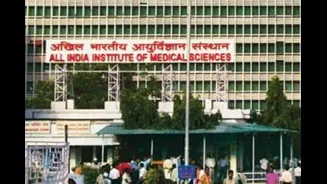






In a landmark achievement for India’s public healthcare sector, the All India Institute of Medical Sciences (AIIMS) in New Delhi has successfully completed over 1,000 robotic-assisted surgeries within
a span of just 13 months. This milestone, reached by the Department of Surgical Disciplines, highlights a transformative shift in how advanced medical technology is being integrated into affordable government healthcare. By achieving this volume in such a compressed timeframe, AIIMS has positioned itself as a global leader in robotic surgery, proving that high-tech interventions are not the exclusive domain of expensive private hospitals.
The journey to this 1,000-case milestone began in earnest in late 2024, following the strategic acquisition of state-of-the-art robotic platforms. Unlike traditional open surgery or even standard laparoscopy, robotic-assisted surgery offers surgeons a high-definition, three-dimensional view of the surgical site and a degree of precision that far exceeds human hand capabilities. The robotic “arms” can manoeuvre in tight spaces with 360-degree rotation, which is particularly vital for complex oncology, gastrointestinal, and bariatric procedures. For the patient, this translates to significantly smaller incisions, minimal blood loss, reduced postoperative pain, and a much faster recovery period—factors that are crucial in a high-volume centre like AIIMS, where bed turnover is essential.
Professor Piyush Ranjan and other senior faculty members at the Department of Surgical Disciplines have highlighted that the success of the programme is not merely down to the machines but to a dedicated team of surgeons, anaesthetists, and nursing staff who underwent rigorous training. The department has focused on “democratising” this technology, ensuring that patients from economically weaker sections receive the same quality of surgical care as those in developed nations, at a fraction of the cost. The rapid throughput of 1,000 cases in 13 months is a testament to the department’s operational efficiency and its commitment to reducing the massive waiting lists that characterise public healthcare in India.
Beyond the immediate clinical benefits, this achievement serves as a vital pedagogical milestone. As a premier teaching hospital, AIIMS is now using these robotic systems to train the next generation of surgeons from across the country, ensuring that robotic literacy becomes a standard part of Indian surgical education. Looking ahead, the institute plans to expand its robotic programme to other specialities, including urology and gynaecology, further cementing New Delhi’s status as a hub for medical excellence and innovation.