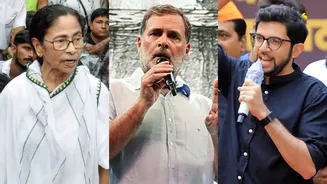








The right to protest is one of the cornerstones of India’s democracy. From students demanding accountability over examinations to political parties taking to the streets against government policies, public
demonstrations have long been a feature of Indian public life. But the past few days have once again raised an important question: When does a protest remain a constitutional right, and when can it invite police action?
The question has gained fresh relevance after a series of high-profile protests across the country.
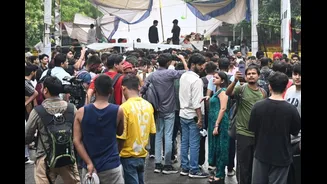
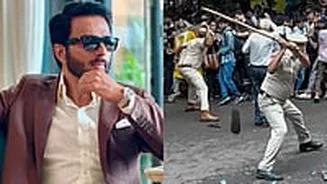
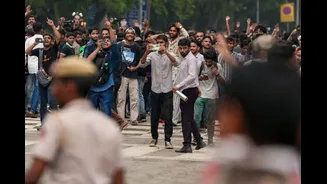
On July 20, a large students’ protest at Delhi’s Jantar Mantar over NEET paper leak witnessed clashes with police after protesters attempted to march towards Parliament. Delhi Police have registered 10 FIRs over various incidents linked to the demonstration. According to police, four FIRs were registered at Parliament Street Police Station, three at Connaught Place, and one each at Mandir Marg, Barakhamba Road and Kartavya Path police stations for alleged law-and-order violations during the protest.
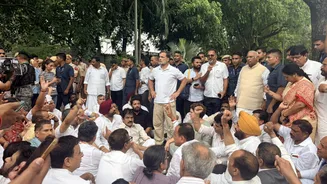
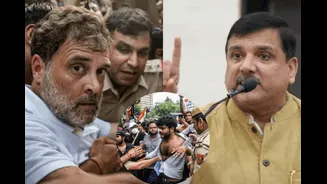
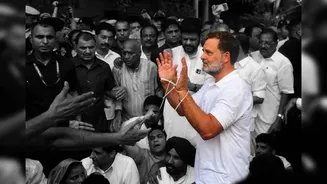
A day later, Congress leader Rahul Gandhi was briefly detained by Delhi Police while attempting to march towards Prime Minister Narendra Modi’s residence during a political protest before being released.
Meanwhile, in Mumbai, police have reportedly issued WhatsApp notices to hundreds of youngsters who allegedly participated in the July 20 protests over the NEET examination, asking many of them to join the investigation.
The developments have renewed debate over a big question: Is staging a protest legal in India? If yes, when can participants face criminal action?
Street Protests: What The Indian Constitution Says
Article 19(1)(b) of the Indian Constitution gives every citizen the right to assemble peacefully and without arms, which covers meetings, demonstrations, and processions when they remain lawful and non-violent.
At the same time, Article 19(3) allows the State to impose reasonable restrictions for public order, sovereignty, and integrity, so a protest may be regulated through permissions, route conditions, or prohibitory orders. In practice, this means the right is real, but it is not absolute.
When The Protest Turns Unlawful
A protest can become legally risky if it turns into an unlawful assembly, if participants use force, or if they disobey a lawful order issued by authorities. Under the BNS, unlawful assembly is covered in Section 189, rioting in Section 191, and disobedience of a lawful order by a public servant in Section 223; these are the new equivalents of the older IPC framework that used Sections 141, 146-148, and 188 respectively. If the protest includes violence, stone-pelting, arson, threats, or damage to property, police can add more serious sections depending on the facts.
BNS And The Old IPC
The big legal shift is that protest-related offences are now being examined under BNS and BNSS, not IPC and CrPC, because the new criminal codes came into force in 2024. For protest cases, the old IPC references that people still hear in public discussion map roughly to the new BNS sections: unlawful assembly moved from IPC 141 to BNS 189, rioting from IPC 146-148 to BNS 191, and disobedience of a public-servant order from IPC 188 to BNS 223.
Procedure has also changed under BNSS, including the use of summons and notices such as the WhatsApp notices Mumbai Police reportedly sent under Section 35(3) BNSS.
What Police Can Do
Police may register FIRs, issue notices, call people for questioning, and in some cases detain or arrest individuals if the facts justify it. A notice does not automatically mean arrest, but it does mean the person is now formally part of an investigation and must cooperate. If an assembly is prohibited through a lawful order, violating that order can itself become an offence under BNS.
The safest legal line is simple: protest peacefully, remain unarmed, follow route and timing conditions, and do not resist lawful police directions. Once a protest stops being peaceful, the law treats it less as dissent and more as a public-order offence, and liability can extend beyond the person who started the violence.
That is why a student march, a political sit-in, or a demonstration at a symbolically sensitive site like Jantar Mantar can shift from protected expression to criminal exposure very quickly.
A useful way to explain it is this: peaceful protest is protected speech in action, but violent protest is a criminal event. The legal question is not whether a person attended a protest, but what they did there, whether the gathering had permission or violated restrictions, and whether the conduct crossed into offences under BNS or BNSS. That distinction is central to understanding why some protesters walk away after a demonstration while others end up facing FIRs, notices, or arrests.