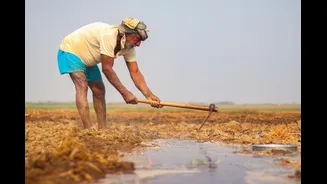









On most mornings, Irappa Nagappa Abbai wakes up before sunrise in Sutagatti village in Belagavi district in Karnataka, steps into his small sugarcane field, and gets on with the quiet routines of farm
life. At 53, he has learned to live with the usual uncertainties of weather and markets. What he never imagined was having to fight a different kind of battle altogether, proving to the government that he is alive.
For the last five months, Irappa has been carrying documents instead of farm tools, moving between offices instead of fields, trying to undo a mistake that turned him into a dead man on paper while he continued to live very much in flesh and blood.
How a clerical error changed life
The story began in July 2021, after the death of Irappa’s son. While issuing the death certificate, a village accountant made a devastating error. Instead of recording only the son’s details, the official mistakenly marked Irappa himself as deceased as well.
From that day, government records showed him as dead. On paper, Irappa no longer exists. And in the eyes of the system, a man who does not exist cannot receive subsidies, welfare benefits, or official support of any kind.
The moment he discovered he was “dead”
The truth surfaced only in 2025, when Irappa visited the nearby Murgod office to apply for a government drip irrigation scheme under the minor irrigation department. The scheme could have helped him modernise his small farm, offering a subsidy of up to Rs 3 lakh.
Instead of forms and approvals, he received a shock. Officials told him he was ineligible. Not because of land records or income limits, but because, according to their system, he had been dead for more than 4 years.
The long road through government offices
Since that day, Irappa’s life has been defined by travel between government buildings. “I have been making repeated trips, each taking nearly 1.5 hours one way, between the Murgod Nada Kacheri and the Savadatti tahsildar’s office” he says, tired and aghast.
Each visit brings fresh paperwork. Each form leads to another counter. Each counter sends him back to the beginning. What should have been a simple correction has turned into months of waiting, explaining, and proving the obvious.
At one point, his frustration spilled over in a sentence that now defines his struggle. “I am alive, not dead!”
For nearly six months, the error has kept him locked out of government schemes that small farmers depend on. His irrigation application remains stalled. His plans remain frozen.
Savadatti tahsildar Mallikarjun Heggannavar has now intervened in the case. After verifying the facts, he accepted Irappa’s application and issued a notice to the village accountant responsible for the error. A departmental inquiry has been ordered, and officials say action will follow if negligence is confirmed.
The tahsildar has also sent a detailed report to the district statistical office in Belagavi, which has forwarded it to higher authorities in Bengaluru. According to officials, the correction process is underway and is expected to take around 20 days.
When paperwork turns people into ghosts
Irappa’s case is not an isolated one. Across rural India, small clerical mistakes often have life changing consequences. A wrong entry can block pensions, stop subsidies, and erase people from official systems that control access to essential support.
For farmers like Irappa, who rely heavily on government schemes to survive unpredictable seasons and rising costs, such errors do not just delay benefits. They reshape daily life, turning survival into a bureaucratic battle.
Back to the field, and the fight to exist
Even now, Irappa continues to wake up early and tend to his sugarcane, though his days are split between farming and paperwork. He waits for the moment when records finally recognise what his neighbours have always known.
That he is alive, working and deserves the same support as any other farmer in the system.
Once the correction comes through, he hopes to return to the irrigation application that started this journey. Until then, his fight continues for the simple right to exist on paper the way he already does in life.