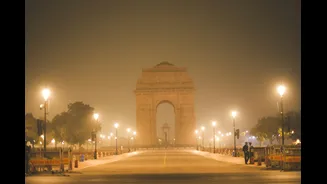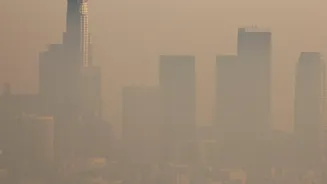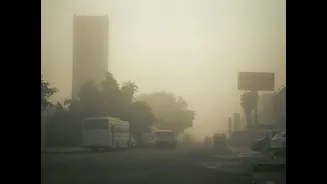





New Delhi, Nov 5 (PTI) Delhi is likely to witness severe air quality on Diwali, with a deterioration in pollution levels expected to begin from Friday and a further spike anticipated in the days following
the festival as weakening winds could trap pollutants over the city, according to experts.
According to the Air Quality Early Warning System, Delhi’s air quality is likely to remain in the very poor category on Thursday before deteriorating to the severe category from November 6 to 8.
The outlook for the subsequent six days indicates that pollution levels are likely to remain in the severe to very poor category.
Weather and air quality experts said that Diwali-related pollution could further aggravate the situation, with the impact of firecrackers expected to coincide with the peak stubble-burning season and unfavourable meteorological conditions.
Moderate northwesterly winds originating from northwest Rajasthan are expected to prevail over the national capital until November 7, while light easterly winds are likely to set in from the night of November 8, potentially helping disperse pollutants to some extent on Diwali, said Mahesh Palawat of Skymet.
However, the situation could worsen on November 9, the day after Diwali, as easterly winds are expected to weaken further, leading to an accumulation of pollutants and a possible spike in the Air Quality Index (AQI), he said.
The forecasting system attributed the anticipated deterioration to unfavourable meteorological conditions, with the ventilation index expected to remain below 6,000 square metres per second and average wind speed below 10 kmph, both of which are unfavourable for the dispersion of pollutants.
Manoj Kumar of the Centre for Research on Energy and Clean Air (CREA) said that if weather conditions remain unchanged, air quality could deteriorate further as Diwali celebrations and related activities typically begin two days before the festival.
“The AQI could move from the very poor to the severe category. Areas currently recording poor air quality could slip into the very poor category, while those already in the very poor category could turn severe,” he said.
He added that the period also coincides with the peak stubble-burning season, with a rise in farm fire incidents being reported over the past two days.
The increasing contribution of stubble burning, along with emissions from firecrackers and vehicular pollution, could further aggravate the situation. Several pollution hotspots could record AQI levels above 450, he said.
Kumar said November 9 could be particularly concerning, with Delhi’s air quality likely to slip into the severe category. He stressed the need for stricter implementation of GRAP measures during this period, given the combined impact of stubble burning, firecracker emissions and transport-related pollution. PTI SGV NB