





The expansion of the National Democratic Alliance (NDA) from a limited presence in 2014 to a dominant force governing 22 states and Union Territories by May 2026 is a result of sustained electoral strategies,
key leadership, and aggressive expansion into non-traditional regions. This expansion represents a dramatic increase from 2014, when the Bharatiya Janata Party (BJP) on its own ruled only 7 states, to a point where the NDA controls over 70% of India’s population and land area by 2026.
What are the key milestones in the 12-year journey?
2014: The Modi-led NDA came to power at the Centre, with the BJP governing only 7 states.
2018: The NDA surged to power, governing 21 states, highlighting rapid expansion, particularly in the Northeast.
2024: Despite a drop in seats in the Lok Sabha, the NDA retained sufficient seats to form a government, with new key allies from Bihar and Andhra Pradesh joining.
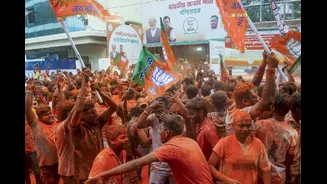
2026: NDA reached 22 states and UTs, with major, historic wins in West Bengal and a third term in Assam, consolidating their footprint to 76% of India’s area, up from 34% in 2014.
What works for the NDA?
The NDA’s success is built on a “triple-threat” combination of leadership, ground-level machinery, and a specific brand of welfare politics.
1. The Welfare Model (Labharthism)
The creation of a new class of voters called “Labharthis” (beneficiaries) is their most potent tool. Their schemes have secured a loyal base among women and the rural poor, often transcending traditional caste lines.
2. Nationalist & Cultural Narrative
The NDA successfully merges development with identity. Projects like the Ram Mandir and the Kashi Vishwanath Corridor resonate with a large section of the majority electorate. A “nation-first” approach to security and foreign policy creates a sense of stability that appeals to urban and middle-class voters. Framing India as a rising global power (Vishwa Guru) gives voters a sense of collective purpose.
3. The “Election Machine”
The BJP, as the core of the NDA, operates with corporate-style efficiency:
Panna Pramukh: Assigning one worker per page of the voter list ensures every single household is contacted personally.
No “Off-Season”: Unlike many opposition parties that mobilize only during elections, the NDA machinery remains active 365 days a year.
Alliance Agility: They are often willing to play the “junior partner” or give up seats to regional allies (like in Bihar or Maharashtra) to ensure the larger goal of keeping the opposition out of power.
4. The Leadership Contrast
The NDA leans heavily on the “Modi vs. Who?” factor. They successfully frame elections as a choice between a “tested leader” and a “fragmented coalition.” Massive use of social media, Mann Ki Baat, and localized rallies keeps the leadership’s message direct and unfiltered.
What are the key factors driving expansion from 2014 to 2026?
The Bharatiya Janata Party (BJP) heavily pushed the “Double Engine Sarkaar” model (same party at the state and Centre), arguing this leads to faster development. This was complemented by an intense focus on strengthening local party organizations. The NDA successfully expanded into Northeast India, forming governments in states like Assam, Nagaland, and Meghalaya. By 2026, the alliance solidified power in regional strongholds like Odisha, Andhra Pradesh, and West Bengal.
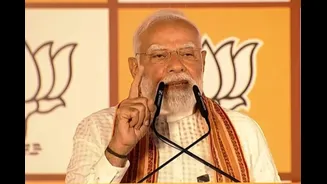
Prime Minister Narendra Modi’s sustained popularity acted as a unifying force, helping the party bridge diverse demographics and win elections even in areas where the opposition was historically strong. The coalition utilised targeted welfare schemes (like housing, LPG connections, and direct benefit transfers) aimed at addressing specific voter segments.
The opposition, primarily the Congress party, faced consistent electoral losses, which reduced their stronghold, allowing the NDA to gain ground.
The Modi factor
Modi’s personal popularity serves as the primary engine for the NDA’s electoral victories. Modi acts as an “anti-incumbency shield,” where voters support the party based on their trust in his leadership even if they are dissatisfied with local representatives.
Direct Benefit Transfers (DBT) and central schemes targeting women (now a crucial “silent” vote bank) have neutralised traditional caste and regional barriers. A focus on large-scale development through the Viksit Bharat Vision and national stability has helped the party win mandates in states like Assam and Odisha.
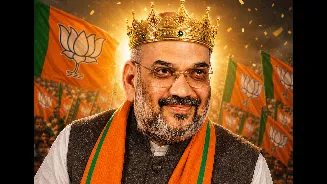
Amit Shah’s organisational strategy
Amit Shah, often called the “Master Strategist,” transformed the BJP into a world-record-holding membership organization. Under Shah, the BJPventured into “uncharted territories” like Tripura and West Bengal, aggressively moving beyond its traditional Hindi-heartland base. Shah’s strategyinvolves building alliances with smaller regional parties to widen social representation and capture diverse vote shares.
He led the drive to increase BJP’s membership from 2.47 crores to over 11 crores, making it the world’s largest political party, say experts.
What is the impact on political map?
The saffron surge has redrawn India’s power map:
- As of 2026, the NDA holds approximately 72% of India’s land area and governs 78% of its population.
- The 2026 victory in West Bengal completed a long-held project to dominate the East, from “Anga to Kalinga”.
- While regional parties remain strong in parts of the South, the national opposition’s footprint has significantly contracted.
KEY FAQs
What were the key milestones in this expansion?
The rise began after 2014 with the Bharatiya Janata Party forming governments across the Hindi belt, then expanding into Northeast states via alliances, and making breakthroughs in western and some southern regions.
What drove this growth?
A mix of strong central leadership, welfare delivery, organizational strength, and smart alliances—plus weakening opposition in several states.
With agency inputs