

Employee leave requests are becoming more transparent as workplace culture shifts. A recent viral LinkedIn post highlighted how staff are now openly sharing personal reasons for time off, sparking widespread
discussion.
Recently, a manager shared a post on LinkedIn that quickly went viral. The post sparked a discussion about changing attitudes toward taking leave at work, highlighting how employees are now openly communicating their personal reasons.
The Personal Leave Request
The post included a screenshot of an email sent on December 16, in which an employee requested leave for a personal reason. He explained that his girlfriend was leaving for her home in Uttarakhand on December 17 and would not return until January. He wanted to spend time with her before her departure and asked for a day off.
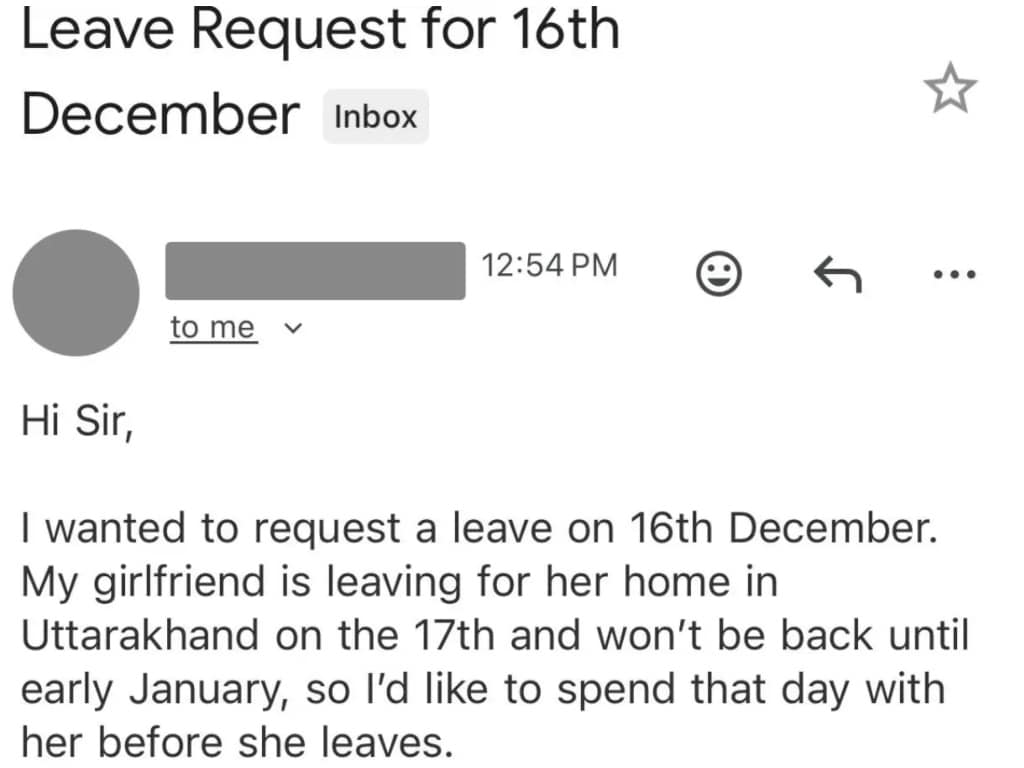
Manager’s Response
Alongside the screenshot, the manager wrote: “I recently got this message in my inbox. Ten years ago, if this happened, I would have suddenly received a ‘sick leave’ message at 9:15 in the morning. Today, employees are clearly stating their reasons for leave. Times are changing, and honestly, I prefer this way. Who can say no to love? Leave approved.”
The manager highlighted how office culture has shifted, from employees giving vague excuses to now sharing personal reasons openly.
Reactions From LinkedIn Users
LinkedIn users responded with mixed but largely supportive opinions. Many praised the employee’s honesty and the manager’s positive approach, noting that such transparency fosters trust and aids in planning work more effectively.
Some users questioned whether it is right to expect reasons for personal leave at all, arguing that it is nobody else’s business why someone takes a day off. Others stressed that in a healthy workplace, simply stating “I need a personal day off” should suffice.
Openness vs. Potential Awkwardness
While many applauded the growing transparency, some highlighted potential pitfalls. Open conversations can help management, but giving detailed reasons may sometimes put employees in awkward situations, such as requesting leave to watch a web series, queue for a new iPhone, or care for a pet.
Several users emphasised that leave is an employee right, not a favour.
According to many users, managers only need to be informed about the leave, the reasons behind it should not be mandatory. This perspective reflects a growing expectation for trust, respect, and autonomy in modern workplaces.