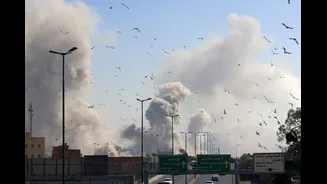







Fresh aerial strikes carried out by Israel and the United States hit central parts of Tehran on Thursday, including areas alarmingly close to the residence of Pakistan’s ambassador and the Pakistani Embassy
in Iran’s capital, according to diplomatic sources in Islamabad and local reports. Initial information from these sources suggests that the embassy compound and Pakistani diplomatic staff were not harmed, but several nearby buildings shook violently as explosions rocked the neighbourhood.
Officials in Islamabad, speaking anonymously due to the sensitivity of the situation, said that “the blasts were uncomfortably close to the ambassador’s residence,” but stressed that all Pakistani personnel were accounted for and safe. Tehran’s government has yet to issue an official statement on the precise locations targeted in yesterday’s strikes.
The strikes come as the war between Israel, US and Iran enters its fourth week.
The reported proximity of the latest bombing to a foreign diplomatic mission has raised urgent concerns among regional and international observers. Under international law, diplomatic missions are afforded special protections, and even unintentional damage near embassy grounds can spark controversy and constitutional scrutiny in host nations.
On Wednesday, explosions were also reported in other parts of Tehran as planes flew over the city.
Pakistan’s Mediator Role
The strikes come at a critical moment for Pakistan’s diplomatic positioning. Islamabad has been attempting to bridge communication between Washington and Tehran — a role Pakistan’s foreign ministry says it wants to formalise. Pakistani officials have publicly stated that “if both parties desire, Islamabad is willing to host talks” between the United States and Iran, positioning the country as a neutral venue for either direct or indirect negotiations.
A 15‑point US proposal aimed at opening a path towards a ceasefire was conveyed to Iranian authorities via Pakistan, covering issues from sanctions relief to monitoring of Iran’s nuclear programme. However, Iranian officials have publicly cast doubt on the negotiations, even as they review the proposal, reflecting deep scepticism about US intentions.