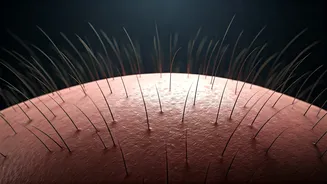

When patients report sudden scalp dryness, itching, or unexplained hair fall during winter, the weather is often blamed first. While cold temperatures do play a role, scalp distress is rarely caused by
a single factor. In reality, it is the combined impact of environmental stressors, particularly hard water and cold, dry air, that gradually disrupt the scalp’s protective ecosystem.
Hard water contains high concentrations of minerals such as calcium and magnesium, which do not rinse away easily. These minerals form an invisible residue on the scalp and hair shaft, interfering with the scalp’s lipid barrier, the natural layer responsible for retaining moisture and defending against irritants. Over time, this mineral build-up alters the scalp surface, making it drier, rougher, and more prone to inflammation. It can also compromise cleansing efficiency, leaving the scalp feeling unclean despite frequent washing.
Cold air further amplifies this damage. During winter, reduced humidity accelerates transepidermal water loss from the scalp. Moisture evaporates faster than it can be replenished, leading to tightness, flaking, and heightened sensitivity. This dehydration also disrupts the scalp microbiome, the community of beneficial microorganisms essential for maintaining scalp health and preventing irritation and inflammation.
According to Dr Leena Ravindra, Key Opinion Leader at Sebamed and Consultant Dermatologist associated with Rajarajeshwari Hospital, Bangalore, a critical but often overlooked factor lies at the centre of these concerns: scalp pH balance.
“A healthy scalp maintains a mildly acidic pH of around 5.5,” she explains. “This acidity supports enzyme activity, strengthens the skin barrier, and keeps harmful bacteria and fungi in check.” However, repeated exposure to hard water, alkaline shampoos, and over-cleansing can shift the scalp toward an alkaline state. When this happens, the scalp’s defence mechanisms weaken, inflammation increases, and its ability to repair itself slows down significantly.
Restoring scalp health therefore requires more than surface-level hydration. Dr Ravindra emphasises that formulations aligned with the scalp’s natural pH of 5.5 help rebuild the acid mantle, reinforce barrier integrity, and improve moisture retention at a cellular level. “When the scalp’s pH is balanced, it becomes more resilient, less reactive to environmental stress and better equipped to support healthy hair growth,” she notes.
Healthy hair does not begin with cosmetic fixes or aggressive treatments. It begins with respecting the biology of the scalp. Especially in challenging climates and water conditions, pH-balanced care can be the difference between a scalp that merely endures the season and one that truly recovers and thrives.