






As India confronts the economic challenges of the US-Iran conflict in West Asia, the government is pushing for austerity measures such as choosing public transport over private vehicles and avoid foreign
travel and gold purchases for at least a year.
The main objective is to reduce fuel consumption as Iran’s virtual closure of the Strait of Hormuz is now hurting India’s import-dependent economy. While the government is spending crores on keeping the oil shock from hitting Indian consumers, the situation is rapidly becoming unsustainable amid high volatility in global markets.
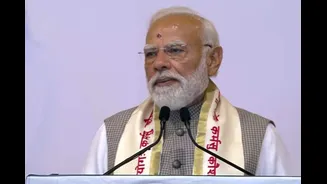
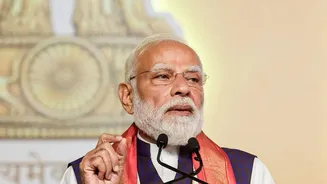
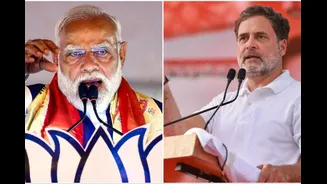
Prime Minister Narendra Modi’s call for conserving resources is aimed at reducing demand for oil products, which will reduce the country’s import bill and ease the pressure on foreign reserves.
Why Is PM Modi Calling For Austerity Measures?
First, let’s look at oil. India is one of the few countries that have not increased the prices of petrol and diesel for domestic consumers. However, the US-Israeli strikes on Iran and Tehran’s near-total blockade of the strategic Strait of Hormuz have taken a toll on oil marketing companies, who are staring at a loss of Rs 1 lakh crore.
In a public event in Telangana, PM Modi urged people to reduce the use of petrol and diesel and opt for travelling via buses, trains and metros. He said the restrictions on use were necessary to save foreign currency spent on fuel imports.
ALSO READ: West Asia War Hits Home: Are We Prepared? Fuel, Fertiliser Supply & Forex Numbers Explained
The entire strategy is based on weakening demand. Since India imports around 90% of its crude oil needs, lower domestic consumption leads to lower demand, which means India needs to spend fewer dollars in international markets.
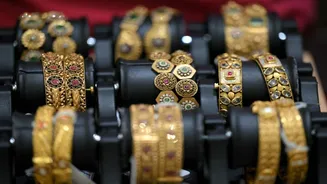
The same situation is with gold purchases. India is the world’s second-largest gold buyer, with a massive $72 billion import in 2026. India spends foreign exchange to purchase gold. When people rush to buy gold, prices rise and the demand for the dollar increases, weakening the rupee. Not buying gold weakens demand, which can reduce dollar outflows and ease the pressure on the rupee.
Reducing demand for gold and crude oil, which constitute most of India’s imports, can ease inflationary pressure across sectors. PM Modi has also advised people to avoid unnecessary international travel to reduce fuel demand and import pressure.
How Can We Help Save India’s Forex?
According to an analysis by Moneycontrol, India could potentially save over $45 billion a year in foreign exchange if households and businesses follow PM Modi’s call to moderate consumption of imported commodities. The estimate is based on a 10% reduction in crude oil, gold and edible oil consumption, a 50% cut in fertiliser imports, and a complete pause in discretionary spending on foreign travel.
Crude Oil: As per official data, a 10% cut in fuel, gold and cooking oil bills of a household can help India save $20 billion a year. A 10% reduction in crude oil imports alone would save India about $13.5 billion.
Gold Purchases: A 10% cut in gold purchases could save another $7.2 billion in India’s foreign exchange reserves.
Vegetable Oil Imports: PM Modi also called for a 10% in the consumption of edible oil. Such a reduction would lower the import bill by about $1.95 billion.
Fertilisers: PM Modi urged farmers to reduce chemical fertiliser use by 50%, and if imports are halved, India could save about $7.3 billion based on FY26 fertiliser imports of $14.5 billion.
Foreign Travel: Under the Liberalised Remittance Scheme (LRS), outward remittances are estimated at $28.8 billion in FY26. Assuming 55% of this amount was spent on international travel, overseas holidays and related expenses, a complete suspension of such spending for one year could retain approximately $15.8 billion.
Collectively, the savings from reduced commodity imports and lower foreign travel could surpass $45 billion, accounting for nearly 5.8% of India’s merchandise import bill for this year.