





Prime Minister Narendra Modi’s office is set to move to a new address on Friday. This will end a nearly 80-year era of the Prime Minister’s Office operating out of South Block in New Delhi. PMO will now
move to Seva Teerth, near Raisina Hill. The new office is a part of the Central Vista Project.
PM Modi will unveil the name of the building complex Seva Teerth at around 1:30 pm on Friday. The Prime Minister will then formally inaugurate Seva Teerth and Kartavya Bhavan-1 & 2 and also address a public programme at Seva Teerth at around 6 pm.
Key Features Of Seva Teerth
The name Seva Teerth means “a sacred place of service,” reflecting a philosophical shift towards citizen-centric and service-focused governance.
Modern Administrative Hub
Seva Teerth replaces the colonial-era South Block as the workspace for India’s Prime Minister and central executive offices — the first such move since independence.
Integrated Complex
The site consists of three main buildings:
- Seva Teerth-1: Houses the Prime Minister’s Office (PMO) with open-plan modern workspaces and ceremonial meeting halls.
- Seva Teerth-2: Home to the Cabinet Secretariat, already operational.
- Seva Teerth-3: Will house the National Security Council Secretariat and the Office of the National Security Advisor.
There is also a dedicated ‘India House’ – a state-of-the-art conference facility for hosting international delegations and high-level discussions, something not earlier available at the PMO’s old location.
Designed for Efficiency & Collaboration
Rather than the older closed cabins and corridors of South Block, Seva Teerth emphasises open interiors, modern technology (encrypted communications, advanced security), and improved coordination among officials.
“For decades, several key government offices and ministries functioned from fragmented and ageing infrastructure spread across multiple locations in the Central Vista area. This dispersion led to operational inefficiencies, coordination challenges, escalating maintenance costs and sub-optimal working environments. The new building complexes address these issues by consolidating administrative functions within modern, future-ready facilities,” a statement from the PMO said.
Seva Teerth is one component of the expansive Central Vista redevelopment, which includes:
- The new Common Central Secretariat (Kartavya Bhavan) to house ministries.
- A new Parliament building (completed).
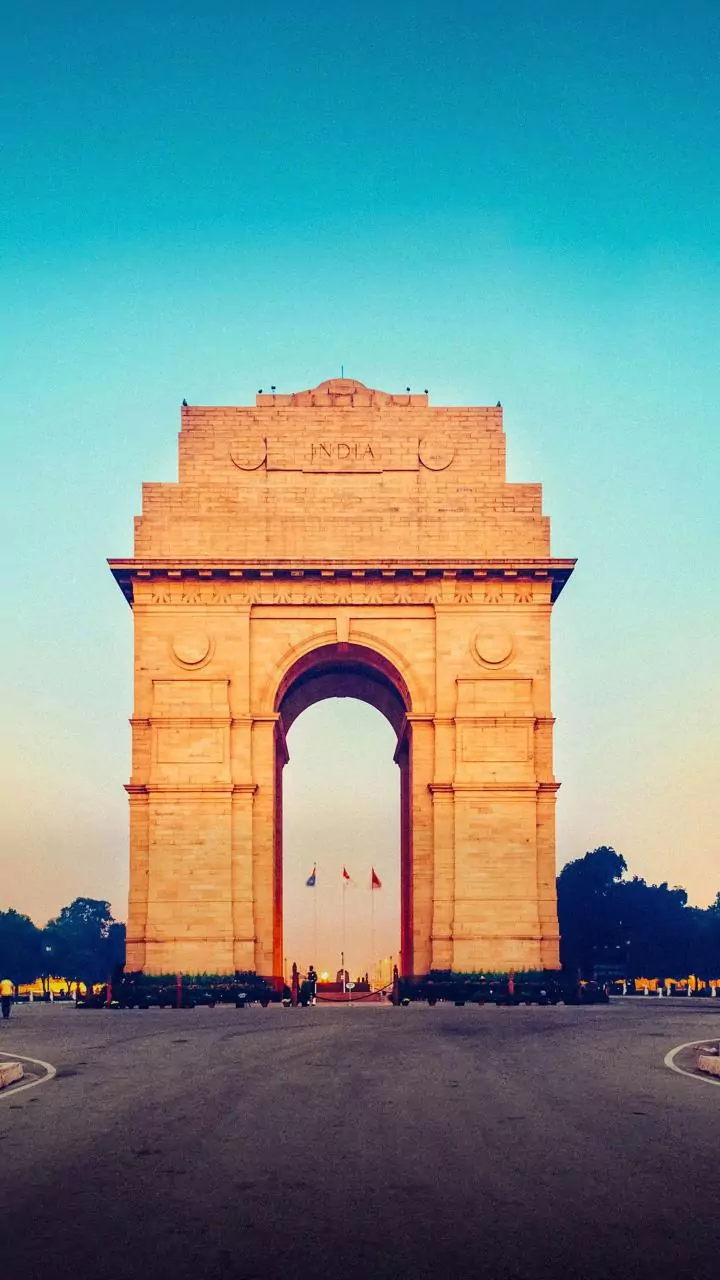
- Redesigned ceremonial spaces like Kartavya Path (formerly Rajpath).
- Conversion of historic buildings (South/North Block) into museums.
Strategic Location
Located near Raisina Hill in central Delhi, the move is seen as part of a broader vision to consolidate central government functions efficiently and also replace colonial-era administrative symbolism with contemporary design and values.
Sustainable Buildings
Designed in accordance with 4-Star GRIHA standards, the complex incorporates renewable energy systems, water conservation measures, waste management solutions and high-performance building envelopes. These measures significantly reduce environmental impact while enhancing operational efficiency.
The building complex also includes comprehensive safety and security frameworks, such as smart access control systems, surveillance networks and advanced emergency response infrastructure, ensuring a secure and accessible environment for officials and visitors.
Moving Away From Colonial History
The Prime Minister’s Office (PMO) of India has historically operated from South Block, Raisina Hill, New Delhi, since Independence in 1947 till today.
When India became independent on August 15, 1947, the Prime Minister’s Secretariat (as it was then called) began functioning from South Block, part of the British-era Secretariat complex designed by Edwin Lutyens and Herbert Baker. The first PM of Independent India, Jawaharlal Nehru, operated from South Block, and every Prime Minister after him — from Lal Bahadur Shastri to Indira Gandhi, Vajpayee, Manmohan Singh and Narendra Modi — worked from there.
The building also housed the Ministry of External Affairs, Ministry of Defence, Cabinet Secretariat (partly). South Block became the symbolic nerve centre of India’s executive power.
Before 1947, the Viceroy and Governor-General’s Secretariat operated from what is now Rashtrapati Bhavan and the Secretariat buildings (North and South Block). There was no “Prime Minister’s Office” in the modern sense under British rule. The building was part of the British-era Secretariat buildings constructed during the building of New Delhi as the imperial capital. They were inaugurated in 1931.
Initially called the Prime Minister’s Secretariat (PMS) after Independence, the building Renamed as the Prime Minister’s Office (PMO) in 1977 during the Janata Party government.
Despite administrative expansion and structural changes, its physical location remained South Block for nearly eight decades.
The move to Seva Teerth (Executive Enclave) marks the first relocation of the PMO since Independence — a historic administrative break after almost 80 years in South Block.