






As tourist arrivals hit a record high and Kerala doubles down on responsible tourism, the state is asking a bigger question: can it grow as a destination without compromising the landscapes, communities
and culture that make it special?
Kerala’s tourism story is entering an interesting new chapter. The state welcomed a record 2.58 crore tourists in 2025, its highest-ever annual footfall, with domestic arrivals alone rising 12.46% year-on-year. Now, as visitor numbers continue to grow, Kerala is turning its attention to another measure of success: how responsibly it can accommodate that growth.
In July, the Kerala Tourism Department launched a Green Marshal Plan, deploying trained personnel at key tourist destinations to promote cleanliness, discourage littering and encourage environmentally responsible behaviour among visitors and local stakeholders. It is a practical intervention, but also symbolic of a much larger ambition, to make sustainability part of the way Kerala experiences tourism, rather than simply another layer of its marketing.
So, can Kerala become India’s leading sustainable tourism destination? For George M. George, Managing Director, Xandari Resorts, the opportunity is less about creating an entirely new tourism philosophy and more about building on something Kerala has always possessed.
“Kerala does not have to discover sustainability from scratch,” George says. Living close to nature, respecting one’s surroundings, participating in communities and using resources responsibly have long been woven into everyday life in the state. The challenge now is to translate those values into a tourism model designed for the future.
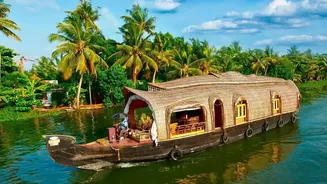
And the timing matters. Across the world, the idea of travel is changing. Increasingly, travellers are looking for more than a checklist of sights. They want destinations that feel authentic, safe, conscious and connected to local life. For a place like Kerala—with its backwaters, forests, coastlines, villages, food traditions and distinctive cultural landscape—that shift could be an advantage.
But it also presents a dilemma. More tourists are not necessarily the same thing as better tourism.
For George, the more important question is not how many people Kerala can bring in, but what happens when they arrive.
The Next Phase Of Kerala Tourism
Kerala’s Responsible Tourism journey is not new. The state began experimenting with responsible tourism in destinations including Kumarakom, Kovalam, Thekkady and Vythiri as early as 2008, before establishing the Responsible Tourism Mission in 2017. Its approach is built around economic, socio-cultural and environmental responsibility, with an emphasis on ensuring that tourism benefits local communities as well as visitors.
That history gives Kerala something many destinations attempting to embrace sustainability today do not have: an existing framework on which to build.
George believes the next step is to make sustainability a standard across the entire tourism ecosystem.
That means looking beyond individual eco-friendly hotels or isolated conservation projects and asking harder questions about how destinations are planned, how water and waste are managed, how natural habitats are protected, how hotels consume resources and, crucially, how local communities participate in tourism.
The ambition is not to make sustainability a niche category of travel. It is to make it the default.
What Happens Inside Kerala’s Hotels Matters Too
For Sachin Malhotra, Multi-Property General Manager, Kochi Marriott, Courtyard by Marriott Kochi Airport and Port Muziris – Tribute Portfolio, that transformation is already underway across the hospitality sector.
“Sustainability is no longer a temporary trend or a media gimmick,” Malhotra says. In modern hospitality, he believes, it has to become part of everyday operations.
Across Kerala, hotels and hospitality businesses are introducing measures designed to reduce their environmental footprint. These include phasing out single-use plastics, replacing plastic straws with paper alternatives, moving towards paperless systems, introducing electric vehicle fleets and establishing in-house glass bottling plants.
On paper, these may seem like small operational changes. Collectively, however, they can influence how an entire industry consumes energy, water and materials.
But Malhotra believes the bigger challenge lies in what happens behind the scenes.
Sustainability, he argues, cannot simply be something a hotel advertises to guests. It has to be understood by everyone within the organisation, from entry-level employees to senior management.
That requires training, consistency and a willingness to examine the less glamorous aspects of hospitality: procurement, waste, energy use, water consumption, logistics and everyday operating practices.
In other words, the future of sustainable hospitality may be less about the impressive green initiative a guest sees and more about the hundreds of decisions they never notice.
Can Tourism Actually Benefit The People Who Live There?
Perhaps the most important question in Kerala’s sustainability story is also the most human: who benefits from tourism?
The Kerala Responsible Tourism Mission has made community participation a central part of its model, encouraging local enterprises, creating opportunities for women and connecting communities with the tourism economy. The state’s own framework describes responsible tourism as an approach that seeks to minimise negative environmental and social impacts while increasing economic benefits for local people.
That philosophy becomes particularly significant as tourism expands beyond traditional circuits.
Kerala’s appeal is not confined to its famous beaches and backwaters. Its smaller towns, villages, farms, craft traditions, food culture and community experiences are increasingly part of the traveller’s imagination.
For Malhotra, giving local communities a meaningful stake in tourism is essential to creating a resilient model.
When tourism creates livelihoods, supports local businesses and protects the cultural identity of a place, sustainability becomes more than an environmental exercise. It becomes an economic and social one too.
And that is where Kerala’s existing strengths could prove valuable.
A Destination That Does Not Have To Choose Between Luxury And Sustainability
There is also an important misconception that sustainable tourism necessarily means sacrificing comfort. Kerala has the opportunity to challenge that idea.
The state has developed a sophisticated hospitality ecosystem that includes luxury resorts, heritage properties, wellness retreats and experiential stays. The opportunity now is to make those experiences increasingly responsible without making them feel less indulgent.
A beautifully designed resort can coexist with water conservation. A luxury stay can support local producers. A memorable culinary experience can showcase regional ingredients. A high-end property can reduce waste without making the guest feel that they are compromising on comfort.
The most successful sustainable destinations of the future may be those where the traveller does not feel that sustainability is an additional choice but simply part of the experience.
The Real Test Will Be Scale
This is where Kerala’s record tourist numbers create both an opportunity and a challenge.
The state recorded more than 2.5 crore domestic visitors in 2025, alongside 8.2 lakh foreign tourists, while tourism earnings reached Rs 50,702.3 crore, according to the Kerala government’s 2026 report.
That growth is a major economic opportunity. But the larger the tourism ecosystem becomes, the more important responsible planning becomes.
A destination can protect a forest while receiving a limited number of visitors. The harder question is what happens when millions arrive.
Can waste systems keep pace? Can water resources withstand demand? Can fragile ecosystems be protected? Can local communities continue to benefit? Can popular destinations avoid becoming victims of their own success?
The Green Marshal Plan is one response to that challenge. The Responsible Tourism Mission is another. Hospitality companies are experimenting with more efficient operations. Communities are increasingly being brought into the tourism conversation.
The real opportunity lies in connecting all of these efforts.
Kerala’s Bigger Opportunity
For George, Kerala’s advantage ultimately comes down to the fact that sustainability does not have to be imported into the state as a fashionable new idea.
Its social development, community networks and long-standing relationship with nature provide a foundation. What is required now is to integrate those strengths into a tourism ecosystem capable of handling the scale of modern travel.
For Malhotra, meanwhile, the industry has a responsibility to move beyond symbolic gestures and make sustainability measurable, operational and consistent.
Put those two ideas together and a larger picture emerges.
Kerala does not necessarily need to become India’s most sustainable destination by attracting fewer travellers. It could become a leader by demonstrating how a popular destination can grow responsibly. That distinction matters.
The future of travel may not belong to places that remain untouched, but to destinations that know how to evolve without destroying what makes them worth visiting.
Kerala already has the landscapes. It has the culture, the communities and a tourism ecosystem that is attracting record numbers of visitors.
Now comes the harder part: ensuring that the more people who discover Kerala, the more reason there is to protect it. If the state can get that balance right, it could offer India something more valuable than another tourism success story. It could offer a blueprint for how to welcome the world without losing yourself in the process.