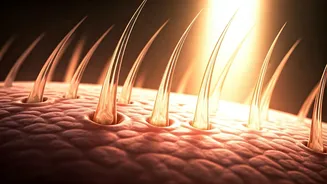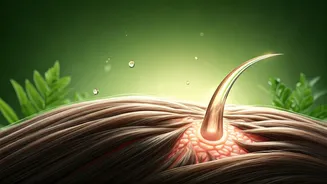





Scroll through Instagram Reels or TikTok today and it is hard to miss the promise: a few drops of rosemary oil, massaged into the scalp, can reverse hair loss and spark fresh regrowth. Influencers swear
by it, before-and-after photos rack up millions of views, and comment sections are filled with people desperate to know if this is the fix they have been waiting for.
The trend is not limited to rosemary alone. Castor oil, onion oil, amla oil, bhringraj blends and countless “hair growth oils” have flooded the market, backed by testimonials rather than trials. For Indians, already culturally inclined towards oiling hair, the idea feels intuitive, affordable and non-invasive.
But viral popularity does not equal scientific proof. The real question is not whether oils can make hair look better, but whether they can actually regrow hair once it has begun thinning or falling out.
What The Science Really Says About Rosemary Oil
The excitement around rosemary oil largely traces back to a small 2015 study that compared rosemary oil with 2% minoxidil, a well-established hair loss treatment. After six months, participants in both groups showed some increase in hair count, and those using rosemary oil reported less scalp itching.
This study is often cited online as evidence that rosemary oil “works like minoxidil.” That interpretation, however, is overly generous. The trial had a limited sample size, relied on self-reporting for some outcomes, and did not establish rosemary oil as a superior or equivalent treatment. Importantly, hair regrowth was modest and slow, and the study did not examine different causes of hair loss.
Beyond this, laboratory studies suggest rosemary has anti-inflammatory and antioxidant properties. It may improve blood flow to the scalp and reduce irritation—factors that can support overall scalp health. But supportive is not the same as restorative. There is no strong clinical evidence showing that rosemary oil can revive dormant hair follicles or reverse genetic hair loss on its own.
Most dermatology literature treats rosemary oil as an adjunct at best, not a primary therapy.
What About Other Oils?
Rosemary oil is only the latest in a long line of oils marketed as hair saviours. Coconut oil, one of the most widely used in the country, is excellent at reducing protein loss from hair shafts. It helps prevent breakage, adds shine and improves manageability. What it does not do is stimulate new hair growth.
Castor oil is often promoted as a miracle oil because of its thick texture and ricinoleic acid content. While it may moisturise the scalp and make hair appear fuller, there is no credible clinical evidence linking castor oil to actual regrowth.
Traditional Ayurvedic oils containing amla, bhringraj or neem are rich in antioxidants and may improve scalp condition. They can reduce dryness, irritation and sometimes dandruff. But again, their benefits stop at maintenance. They do not address follicle miniaturisation or hormonal triggers that drive most forms of hair loss.
This is where oils differ sharply from clinically proven treatments. Topical minoxidil has decades of evidence showing it can stimulate hair growth in androgenetic alopecia. Oral finasteride works by blocking the hormone responsible for male-pattern hair loss. Procedures like low-level laser therapy and platelet-rich plasma have mixed but growing clinical support.
Oils simply do not operate at the same biological level.
What Dermatologists Are Actually Saying
Dermatologists across India are largely aligned on one point: oils can improve scalp health, but they cannot cure hair loss.
In cases of dry scalp, mild dandruff or hair breakage caused by harsh styling or pollution, oiling can help restore balance. Gentle massage may improve circulation slightly, and better scalp health can reduce shedding linked to inflammation.
But when it comes to androgenetic alopecia—the most common cause of hair thinning in both men and women—oils do not stop follicle shrinkage. Nor do they restart growth once follicles become inactive.
Many dermatologists also caution against excessive oiling. Heavy oils can clog pores, worsen dandruff in oily scalps and trigger folliculitis. The belief that “more oil equals more growth” often backfires.
In clinical practice, oils are typically recommended as a supportive step alongside medical treatments, not as replacements.
Why The Hype Runs Ahead Of Evidence
Hair loss is deeply emotional. It affects confidence, self-image and, for many people, social identity. That makes people especially vulnerable to simple, hopeful solutions.
Social media amplifies this vulnerability. Algorithms reward dramatic transformations, not nuanced explanations. Before-and-after images rarely account for natural hair cycles, lighting differences, styling or even hair fibres. Few creators disclose whether they are also using medications or treatments alongside oils.
The marketing of herbal and Ayurvedic products further blurs lines. Terms like “nourishes roots” and “strengthens follicles” sound scientific but are often undefined. Conditioning benefits are framed as regeneration, and consumers are left to fill in the gaps.
In this environment, rosemary oil feels like a natural, low-risk bet, even when expectations are unrealistic.
How Oils Fit Into A Realistic Hair-Care Strategy
The key is not to abandon oils entirely, but to understand their role. Oils can help reduce dryness, improve hair texture and minimise breakage. A healthier scalp environment may reduce excessive shedding caused by irritation or poor care. Used correctly, oils can be part of a supportive routine.
They should be diluted, especially essential oils like rosemary, and used sparingly. Patch testing is important, as essential oils can cause allergic reactions. Over-oiling, overnight applications on oily scalps and aggressive massage can do more harm than good.
What oils cannot do is regrow hair lost to genetics, hormones or medical conditions. Persistent thinning, widening part lines, sudden hair fall or patchy loss are signals to consult a dermatologist, not an influencer.
What To Conclude?
Rosemary oil and other hair oils are not scams, but they are not cures either. They sit firmly in the category of scalp and hair maintenance, not medical treatment.
For urban consumers, the smartest approach is to use the oils, which support scalp health and hair quality. At the same time, one should understand that meaningful regrowth requires evidence-based interventions. Expecting oils to reverse hair loss sets people up for disappointment and wasted money.
What one needs to understand is that healthy hair starts with understanding the cause of hair loss. Oils may help along the way, but they are not the destination.