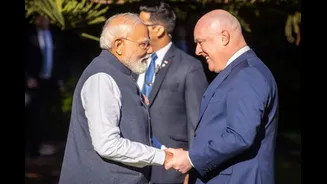






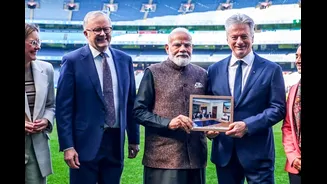


Prime Minister Narendra Modi’s first visit to New Zealand has produced a major upgrade in bilateral ties, with India and New Zealand announcing a Strategic Partnership and adopting a roadmap to expand
cooperation until 2030.
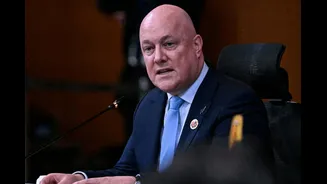
During delegation-level talks in Auckland on Saturday, PM Modi and his New Zealand counterpart Christopher Luxon endorsed the ‘India-New Zealand Strategic Partnership: Roadmap to 2030’, which lays out plans to strengthen cooperation in trade, agriculture, security, innovation, tourism and people-to-people ties.
Calling it a “turning point” in bilateral relations, PM Modi said the upgrade was “not merely a diplomatic milestone” but a new commitment to the two countries’ shared future.
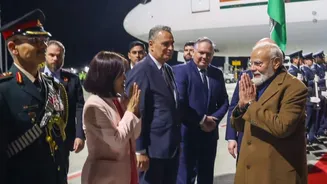
The visit, taking place on July 10 and 11, is the first by an Indian prime minister to New Zealand in 40 years. PM Modi said the visit had injected fresh momentum into the relationship and described the recently signed Free Trade Agreement as a historic milestone.
Here are the key takeaways from the talks:
India-New Zealand Ties Elevated To Strategic Partnership
India and New Zealand formally elevated their bilateral relationship to a Strategic Partnership, signalling an expansion of ties beyond trade and economic engagement.
According to the joint statement, the two leaders agreed on a long-term vision aimed at strengthening existing mechanisms and exploring new areas of cooperation at both bilateral and multilateral levels.
The Roadmap to 2030 will guide joint initiatives over the next four years across trade, security, agriculture, technology, clean energy, education and cultural exchanges.
Bilateral Trade Target Set At Rs 35,000 Crore By 2030
One of the most significant announcements was the decision to work towards doubling two-way trade in goods and services to NZD 7 billion, or around Rs 35,000 crore, by 2030.
The target is part of the trade and economic cooperation pillar of the Roadmap to 2030 and is aimed at expanding market access, reducing trade barriers and increasing investment flows between the two countries.
The two sides also agreed to operationalise the Authorised Economic Operators Mutual Recognition Arrangement, which will simplify customs procedures and allow faster clearance of goods for trusted traders.
New Zealand Commits $20 Billion Investment In India
PM Modi said New Zealand has committed to investing $20 billion in India over the next 15 years, describing it as a sign of confidence in the country’s economic growth.
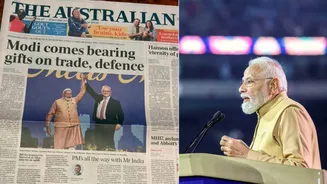
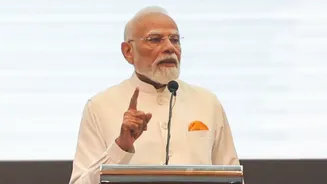
“This is not just a commitment to investment, but also to being a partner in India’s development journey,” he said while addressing a Business and Sports Engagement event in Auckland.
FTA To Help Double Bilateral Trade By 2030
PM Modi and Luxon welcomed the conclusion and signing of the India-New Zealand Free Trade Agreement and agreed to work towards its early entry into force and effective implementation.
The negotiations were launched during Luxon’s visit to India in March 2025, concluded in December 2025 and the agreement was signed in New Delhi on April 27, 2026.
According to the government, the pact was negotiated in around nine months, making it the fastest trade agreement India has concluded.
Addressing business leaders in Auckland, PM Modi said the FTA would create new opportunities in market access, investment, services and technology.
“This agreement will create new opportunities for all of you in market access, investment, services and technology. I am confident that together we will double our bilateral trade by 2030,” he said.
Direct India-New Zealand Flights On The Agenda
The two leaders welcomed the signing of a Memorandum of Arrangement on tourism and encouraged airlines to begin direct, non-stop flights between India and New Zealand.
The absence of direct connectivity has long been seen as an impediment to tourism, business travel and closer people-to-people engagement between the two countries.
Direct services could also benefit the large Indian-origin community in New Zealand and help increase tourist movement in both directions.
Agriculture, Kiwifruit And Dairy Cooperation To Expand
Agriculture emerged as another major focus of the partnership, with the two countries agreeing to expand cooperation in horticulture, forestry, animal husbandry and dairying.
Under the Agricultural Productivity Partnership linked to the FTA, New Zealand will work with India on productivity plans for kiwifruit, apples and honey.
The two sides also welcomed New Zealand’s support for establishing Centres of Excellence for kiwifruit in India.
A Memorandum of Cooperation on Animal Husbandry and Dairying was also concluded, opening the way for collaboration in agricultural technology, livestock management and productivity.
The agricultural partnership is significant as New Zealand has considerable expertise in horticulture and dairy production, while India offers a large consumer and production market.
Seafarer Mobility And Maritime Cooperation
India’s Directorate General of Shipping and Maritime New Zealand will continue discussions on strengthening the recognition of seafarer competency certificates.
Improved recognition would make it easier for qualified Indian seafarers to work on New Zealand-linked vessels and support greater mobility of maritime professionals.
The two countries said the move would also strengthen institutional cooperation between their maritime authorities.
Greater Indo-Pacific And Security Cooperation
Although trade dominated the announcements, PM Modi placed the Strategic Partnership within the broader Indo-Pacific framework. He said cooperation between India and New Zealand as maritime nations would lend “new strength” to the region and enhance their contribution to global peace and stability.
The Roadmap to 2030 is expected to deepen exchanges on maritime security, regional stability and other shared challenges, reflecting New Zealand’s growing engagement with India’s Indo-Pacific approach.