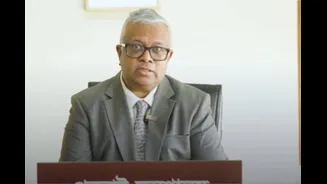








Bangladesh has further postponed the arrival of its newly appointed High Commissioner to India, Asad Alam Siam, raising fresh questions over the trajectory of diplomatic ties between the two neighbouring
countries.
The delay comes amid uncertainty over a possible India visit by Bangladesh Prime Minister Tarique Rahman and the impending expiry of the Ganges Water Sharing Treaty, according to a report by The Economic Times.
Siam was expected to arrive in New Delhi shortly after handing over charge as Bangladesh’s foreign secretary on November 8. However, his arrival has now been pushed back, with the new high commissioner expected to reach India later this month, diplomatic sources were quoted by the report as saying.
The postponement comes at a time when several important issues remain unresolved between New Delhi and Dhaka, including the possibility of a visit by Rahman to India and the future of the Ganges Water Sharing Treaty, which is due to expire on December 12.
According to the report, neither the proposed India visit nor the renewal of the water-sharing agreement appears to be a priority for the Rahman-led government at present.
The delay in Siam’s assumption of charge has added another layer of uncertainty to bilateral engagements, particularly as the two countries face questions over the future course of their diplomatic relationship.
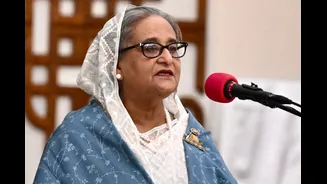
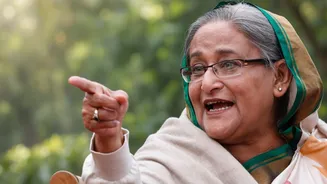
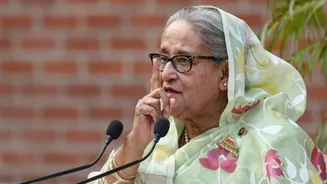
The development also comes against the backdrop of political tensions in Bangladesh, where the issue of former Prime Minister Sheikh Hasina’s proposed return from India and Dhaka’s efforts to secure her extradition have remained contentious.
HASINA’S RETURN PLAN TRIGGERS VIOLENT PROTESTS IN GOPALGANJ
Meanwhile, hundreds of supporters of deposed Bangladesh Prime Minister Sheikh Hasina’s Awami League party staged violent demonstrations in her hometown of Gopalganj on Sunday, attacking police vehicles and installations amid rising political tensions over her stated plan to return to the country in December, news agency PTI reported.
According to officials and media reports cited by PTI, demonstrators carrying machetes and spears set a police armoured personnel carrier on fire and vandalised a police outpost.
Protesters also pulled down a monument erected to mark the ouster of Hasina’s government on August 5, 2024, and broke through police barricades to enter several roads in Gopalganj town.
The demonstrations came amid renewed tensions over Hasina’s proposed return from India, where she has been staying since fleeing Bangladesh in August 2024 following a student-led uprising that toppled her government.
Hasina, 79, was sentenced to death in absentia by Bangladesh’s International Crimes Tribunal in November 2025 for crimes against humanity over her government’s crackdown on protesters. She has rejected the charges and the proceedings.
PTI reported that Hasina has repeatedly said since July that she intends to return to Bangladesh in December and face legal proceedings despite the sentence.
The Bangladesh government has been seeking her extradition from India under a bilateral treaty. It has also linked progress on the issue to a possible India visit by Prime Minister Tarique Rahman, saying the return of Hasina and other fugitives sought by Dhaka would help create a conducive environment for the visit.
India has acknowledged receiving Bangladesh’s extradition requests but has not announced a decision. On Friday, Ministry of External Affairs spokesperson Randhir Jaiswal said in New Delhi that Hasina’s extradition was a legal matter and would be dealt with accordingly, PTI reported.
The protests in Gopalganj followed the overnight setting on fire of two offices of the ruling Bangladesh Nationalist Party (BNP) in Tungipara, Hasina’s birthplace, by unidentified persons, according to reports cited by PTI.
The developments prompted the government to withdraw the district’s deputy commissioner and police superintendent.
Authorities also called out platoons of paramilitary Border Guard Bangladesh (BGB) to remain on standby alongside riot police in the district, considered an Awami League stronghold.