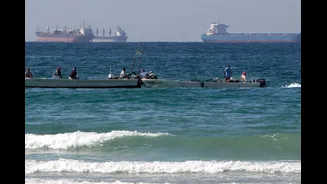








Iran on Monday rejected reports that it has been demanding $2 million fee for vessels to transit the Strait of Hormuz and called the claims as “unfounded”.
In a post on X, the Iranian embassy in India said
that reports of an “alleged receipt of a sum of 2 million dollars by the Islamic Republic of Iran from vessels transiting the Strait of Hormuz” are unfounded.
“The statements made in this regard merely reflect the personal views of individuals and do not, in any way, represent the official position of the Islamic Republic of Iran,” it said.
Check Latest Updates On Iran-Israel War Status Today
This comes days after a report by Lloyds List emerged that Iran took $2 million from a private oil tanker company to allow safe passage through the Strait of Hormuz.
It stated that Tehran has created a ‘safe’ shipping corridor through its territorial waters in the Strait of Hormuz, offering vetted vessels passage in exchange for approval.
Also Read: ‘If You Strike Electricity, We Will Strike Electricity’: Iran Warns US Amid Hormuz Standoff
The report claimed that multiple countries, including India, Pakistan, Iraq, Malaysia and China are discussing vessel transit plans directly with Tehran, where officials within the Islamic Revolutionary Guard Corps have established a nascent ship registration system for ‘approved’ vessels to agree to safe passage.
Meanwhile, the Ministry of External Affairs has rejected claims that an Indian oil tanker had paid Iran in Chinese Yuan to be allowed to pass through the Strait.
Please stay alert against such false and baseless claims and posts on social media. pic.twitter.com/TVQTMPNqsM
— MEA FactCheck (@MEAFactCheck) March 23, 2026
“Fake News Alert! Please stay alert against such false and baseless claims and posts on social media!” the MEA FactCheck handle posted on X.
As the war continues into its fourth week, the struggle over the Strait of Hormuz has become central to both the military and economic dimensions of the conflict, with global markets, regional security and geopolitical alliances increasingly shaped by developments around the critical waterway.
Also Read: US Deploys Nearly 5,000 Troops, Marines Amid Strait Of Hormuz Crisis, Signals Move On Kharg Island
According to AFP, Iran’s actions have amounted to a de facto blockade of the waterway, contributing to a surge in crude prices.
A barrel of Brent crude has risen more than 50 per cent over the past month, climbing above $105 amid fears of prolonged disruption.