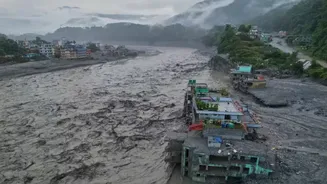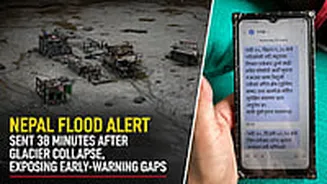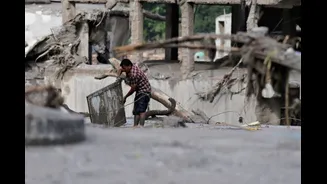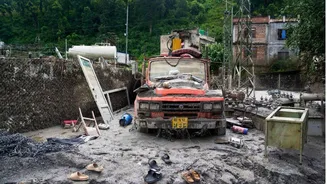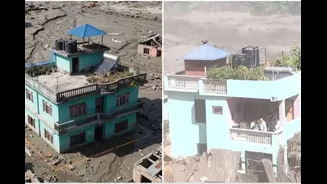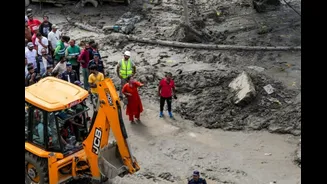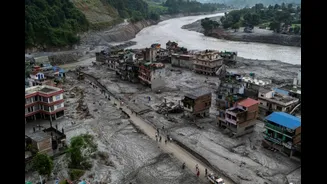







Drone footage from Devighat in Nepal’s Nuwakot district shows the scale of devastation left by the flash floods that swept through the region on August 26.
The death toll from the floods in Nepal has climbed
to 1,204, while 4,216 people remain missing, according to the disaster authority.
#WATCH | Drone visuals of devastation in Devighat, Nuwakot. The current death toll of the Nepal flash floods stands at 1204. pic.twitter.com/beXMhu4rWB
— ANI (@ANI) September 3, 2026
The scale of the disaster extends across the China-Nepal border. Chinese state media reported 21 deaths and 541 people missing in Tibet on Wednesday.
With the latest figures from both sides of the border, the overall toll from the August 26 disaster has risen to 1,225 deaths, while 4,757 people are still missing.
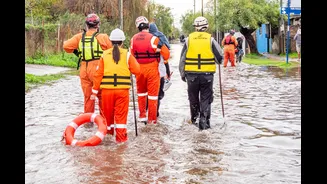
Rescue and recovery operations continue across the affected areas as authorities search for those still unaccounted for and assess the extensive damage caused by the floods.
Hope On To Find Survivors
Meanwhile, hopes of finding survivors trapped inside hydropower tunnels were fading on Wednesday, a week after the devastating floods, as Nepali and foreign rescue teams struggled to make headway through thick mud, rocks and debris.
The government had initially estimated that more than 100 workers could still be alive inside several tunnels. However, rescue teams have yet to confirm any survivors.
#WATCH | Drone visuals of devastation in Devighat, Nuwakot. The current death toll of the Nepal flash floods stands at 1204. pic.twitter.com/XBjuxahx8i
— ANI (@ANI) September 3, 2026
“The search and rescue operation is still underway, and foreign teams are also supporting it at the hydropower tunnels,” said Shanti Mahat, spokesperson for the National Disaster Risk Reduction and Management Authority (NDRRMA).
“They are continuing to work despite difficulties. There is a heavy volume of mud and debris and sludge,” Mahat said.
The workers feared trapped inside the tunnels are among 639 hydropower workers reported missing since a massive wall of mud and debris swept through the area on August 26, according to NDRRMA figures.
“In some cases it has been difficult to find the entry points and, even when they have been found, the rescuers have found the tunnels blocked inside,” Mahat told AFP. “But efforts continue.”
Rescuers pulled at least three bodies from two tunnels on Monday and managed to enter several hundred metres into some of the others before being stopped by heavy mud and debris.
“We have access to all the tunnels, but it’s problematic to get inside, as there are rocks and sludge,” Energy Minister Biraj Bhakta Shrestha told reporters on Tuesday.