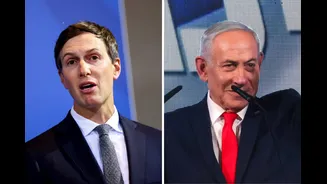





Presidential envoy Jared Kushner has pressed Israeli Prime Minister Benjamin Netanyahu to follow through on commitments made to United States President Donald Trump and move ahead with implementing the
Gaza peace plan, according to an Axios report.
During a call on Tuesday, Kushner reportedly urged Netanyahu to take concrete steps towards implementing the agreement, with the White House growing increasingly frustrated over what it sees as the Israeli leader’s reluctance to move forward.
The Trump administration and its Board of Peace believe Netanyahu has been putting his political interests ahead of the Gaza roadmap, which has remained stalled for months.
Netanyahu Faces Uncertainty Over Political Future
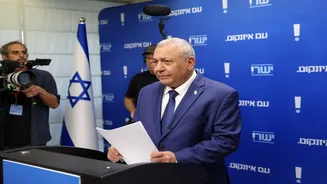
Kushner’s remarks come amid growing uncertainty over Netanyahu’s political future, with his rival Gadi Eisenkot making progress towards forming a government.
Also Read: Netanyahu’s Likud Invited For Coalition Talks As Eisenkot Seeks To Form Israel Government
Eisenkot had pledged during his election campaign to implement Trump’s Gaza plan and ensure Hamas no longer controls the territory within 18 months.
Kushner On Israel’s Next PM
Speaking about the political developments, Kushner said, “Whoever the next Israeli prime minister is, he will make implementing the Gaza plan a priority because there is no other alternative.”
He also said Eisenkot had expressed a positive stance towards the proposed roadmap, adding, “Eisenkot spoke very positively about making Gaza a priority.”
Kushner, however, indicated that Netanyahu’s commitment to the agreement had not translated into progress on the ground.
“Netanyahu signed the Gaza agreement, but he is still making it difficult to reach understandings,” he said.
Netanyahu, Kushner Hold Talks
According to Axios, the conversation between Kushner and Netanyahu was described by two sources familiar with the discussion as “positive and constructive”.
One source said the Israeli prime minister had reiterated his willingness to proceed with the steps sought by the White House. A third source also confirmed that Netanyahu had reaffirmed his commitment to the Gaza plan.
The Israeli Prime Minister’s Office acknowledged that the call had taken place but declined to comment further.
Also Read: Netanyahu, Eisenkot To Join Hands? Decoding What’s Next For Israel After Sunday Negotiations
What Is Holding Up The Gaza Plan?
The roadmap, agreed upon by the Board of Peace and Hamas in July, outlines the disarmament of armed groups in Gaza and the transfer of civilian and security responsibilities to a new Palestinian technocratic administration.
However, Netanyahu’s government has largely refrained from taking the necessary steps towards its implementation.
The Israeli prime minister has repeatedly expressed scepticism about Hamas agreeing to disarm, arguing that the group is rebuilding its capabilities and rearming in Gaza.
The issue was also raised during Netanyahu’s recent conversation with Trump, who urged him to move forward with the plan. Although Netanyahu reportedly agreed to approve the necessary measures, there has been little progress since that discussion.
Netanyahu had argued that his position as head of a caretaker government prevented him from authorising certain measures in Gaza. However, a source familiar with the matter questioned that reasoning, pointing out that the government had already accepted the agreement before the elections.
“Bibi claimed he can’t do small things in Gaza he already agreed to because he is a caretaker prime minister, but at the same time he claimed there is no problem for him to go to war with Iran. This wasn’t a serious argument,” the source said to Axios.
What Does The US Want Israel To Approve?
The White House and the Board of Peace have been seeking Israeli approval for several measures considered essential to advancing the Gaza roadmap. These include:
- Allowing the International Stabilisation Force (ISF) to deploy in Gaza.
- Permitting 4,000 Palestinians, cleared by Israeli security agencies for a future Gaza police force, to travel to Egypt for training before returning to the enclave.
- Allowing materials required for water and sanitation projects to enter Gaza.
- Facilitating the entry of temporary mobile homes to provide shelter during winter.
- Permitting construction materials to enter Gaza for the establishment of ISF bases.
- Allowing a Palestinian technocratic administration to begin functioning in a designated area in southern Gaza as part of a pilot initiative.
There are indications that pressure from the Trump administration, both publicly and privately, along with the outcome of the Israeli elections, may have made Netanyahu’s government more receptive to the proposed measures, Axios reported.
However, despite the reportedly constructive conversation between Kushner and Netanyahu, it remains uncertain whether Israel will approve the steps Washington has been pushing for.