




The upcoming Fourth India–Africa Forum Summit, which was scheduled to take place in New Delhi next week, has been postponed in view of the Ebola outbreak.
The decision to postpone the summit was made after
consultations were held between the Government of India, the Chairperson of the African Union, and the African Union Commission regarding the holding of the Summit and associated activities.
As per a statement of the Ministry of External Affairs (MEA), the Government of India and the African Union exchanged views on the evolving health situation in parts of Africa and reaffirmed the importance of continued cooperation in strengthening public health preparedness and response capacities across the continent, including through support to Africa CDC and relevant national institutions.
India has reaffirmed its solidarity with the people and Governments of Africa and expressed its readiness to contribute to Africa CDC-led efforts aimed at addressing the evolving health situation, in line with the shared commitment to an Africa-led response.
The new dates for the Summit and its associated meetings will be finalised through mutual consultations and communicated in due course, the MEA said.
“India and Africa reaffirmed their longstanding partnership founded on solidarity, mutual respect, South–South cooperation, and a shared commitment to peace, development, prosperity, and the well-being of their peoples,” read the statement.
Ebola Outbreak
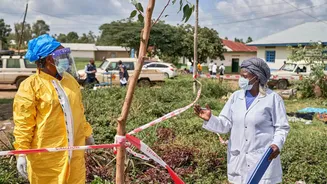
Ebola is a severe and often fatal disease transmitted through direct contact with bodily fluids such as blood, vomit or semen from infected individuals. The virus has historically spread rapidly during community funerals and caregiving activities.
The World Health Organization (WHO) has declared the Ebola outbreak in eastern Democratic Republic of the Congo a Public Health Emergency of International Concern, amid growing fears over the rapid spread of the rare and highly contagious Bundibugyo strain of the virus.
The outbreak, officially declared on Friday, has triggered alarm after suspected deaths surged sharply in recent days. WHO Director-General Tedros Adhanom Ghebreyesus on Tuesday expressed concern over the “scale and speed” of the outbreak, warning that the virus had spread undetected for weeks.
According to the WHO, at least 139 suspected deaths and nearly 600 suspected cases have now been reported, while 51 cases have been laboratory-confirmed in Congo’s Ituri and North Kivu provinces. Two additional confirmed cases have also been detected in neighbouring Uganda.
The WHO said it was first alerted on May 5 to around 50 deaths in Mongbwalu, including four healthcare workers. However, the first confirmed Ebola diagnosis only came on May 14 after initial testing for another, more common Ebola strain returned negative results. Health experts say the delay allowed the virus to spread silently through communities.
The current outbreak involves the rare Bundibugyo variant of Ebola, for which there are currently no approved vaccines or specific medicines. The WHO has called for an urgent and coordinated international response to contain the outbreak before it spreads further across borders in the region.
During the devastating West Africa Ebola outbreak more than a decade ago, over 11,000 people lost their lives, with many infections linked to traditional burial practices involving direct contact with bodies.
Also Read | ‘It Doesn’t Spread Like Covid’: 7 Biggest Ebola Myths Busted As WHO Warns About ‘Scale & Speed’ Of Outbreak
Ebola Preparedness In India
At present, no case of Ebola has been detected in India so far. Union Health Secretary Punya Salila Srivastava on Wednesday chaired a high-level review meeting with health secretaries of all states and Union territories to assess preparedness and response measures for Ebola.
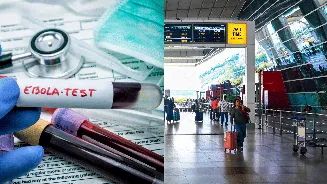
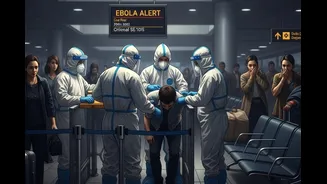
India has also issued a health advisory for passengers arriving from or transiting through Ebola-affected countries, asking those with symptoms or exposure history to immediately report to airport health authorities before immigration clearance.
The advisory, issued by the Directorate General of Health Services (DGHS), specifically mentions travellers coming from the Democratic Republic of Congo, Uganda and South Sudan, all of which have been categorised as “high-risk countries” by the World Health Organisation (WHO).
The advisory has been displayed at the Delhi airport by the Airport Health Organisation (APHO). It advises passengers to watch out for symptoms such as fever, weakness, headache, muscle pain, vomiting, diarrhoea, sore throat and unexplained bleeding.