





The Indian National Developmental Inclusive (INDI) Alliance currently governs six states and one Union Territory following significant political shifts in recent assembly elections.
The alliance’s footprint
has shrunk slightly from its peak after the 2024 general elections, primarily due to the National Democratic Alliance (NDA) gaining ground in the East.
States governed by the INDI Alliance
While the INDI Alliancestill exists, it functions more as a flexible anti-BJP platform than a unified coalition. State-level rivalries limit full coordination.
The following regions are currently under the administration of parties belonging to the INDIA bloc:
Himachal Pradesh: Governed by the Indian National Congress.
Karnataka: Governed by the Indian National Congress.
Telangana: Governed by the Indian National Congress.
Kerala: Governed by the CPI(M)-led Left Democratic Front (LDF), which is part of the national INDIA bloc.
Jharkhand: Governed by the Jharkhand Mukti Morcha (JMM).
Jammu and Kashmir (UT): Governed by the JK National Conference (JKNC).
What are the recent changes?
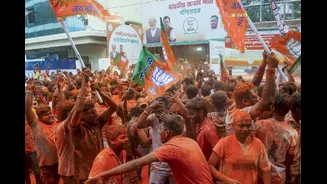
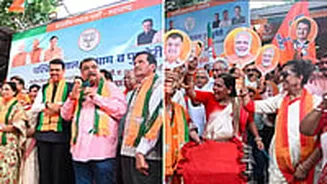
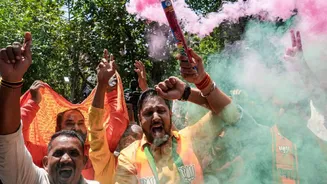
West Bengal: In a major upset during theMay 2026 elections, the BJP-led alliance reportedly unseated the Trinamool Congress (TMC) after three terms.
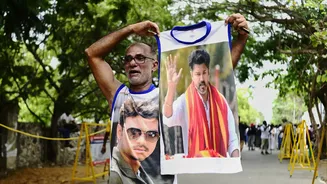
Tamil Nadu: Reports from the 2026 polls indicate a major disruption, with the DMK-led alliance facing stiff competition from a new political force led by superstar Vijay (TVK), though official government formation is often still in progress during early May.
Independent Regions: The Aam Aadmi Party (AAP) continues to govern Punjab independently, while the Zoram People’s Movement (ZPM) holds power in Mizoram; both currently operate outside the two main national alliances.
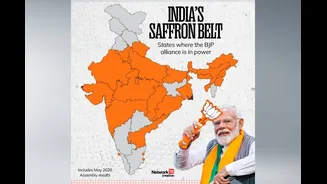
Alliance presence as of May
NDA: BJP, TDP, SKM, NPF, NPP, AINRC
States/UTs in power: 22
INDIA: (INC, DMK, JMM, JKNC, CPI(M)
States/UTs in power: 7
Others: AAP (Punjab), ZPM (Mizoram)
States in power: 2
What are their challenges?
The INDIA Alliance isn’t short on issues to campaign on—but its bigger problem is internal friction and execution. Here are the real challenges holding it back:
No clear national leader: Unlike the centralised leadership of the National Democratic Alliance, the INDIA bloc hasmultiple power centres. The Indian National Congress is the largest party, but not universally accepted as the leader by others like Trinamool Congress or Aam Aadmi Party.
Seat-sharing conflicts: Alliances look good on paper but break on ground. In key states like West Bengal, Punjab, and Delhi, partners often fight each other instead of the BJP.
State-level rivalries: Many allies are direct competitors locally. This makes a cohesive national campaign almost impossible.
Weak common narrative: “Anti-BJP” alone isn’t enough. There’s no single, compelling alternative vision that all parties consistently communicate across India.
Organisational imbalance: Some allies are strong regionally but weak nationally. The Congress machinery has declined in several states, while regional parties don’t expand beyond their turf.
Coordination gaps: No permanent structure for decision-making, campaign strategy, or crisis response. It often looks reactive rather than planned.
Voter perception problem: Voters may see the alliance as opportunistic rather than ideological, especially when rivals suddenly become partners.
With agency inputs